
Gluten free BBQ safety requires strict protocols to prevent cross-contamination on shared grills, such as using dedicated foil barriers or BBQ liners. It involves vetting ingredients for hidden gluten in marinades, sausages, and condiments, while utilizing separate utensils (tongs) to ensure food remains safe for those with Coeliac disease.
For many New Zealanders, summer is synonymous with the sizzle of a sausage on a hot plate, the smell of caramelized onions, and the gathering of friends and whānau at the bach or local park. However, for those living with Coeliac disease or non-coeliac gluten sensitivity, the classic Kiwi BBQ can act as a minefield of potential health hazards. From wheat-filled sausages to the dreaded shared tongs, navigating these social situations requires planning, vigilance, and confidence.
This comprehensive guide is designed to help you survive and thrive during the BBQ season, ensuring you can enjoy the festivities without compromising your health. We will cover everything from the mechanics of grill safety to the nuances of social etiquette.
Cross-Contamination Risks on Shared Grills
The most significant threat at any barbeque is the cooking surface itself. In a typical Kiwi backyard setting, the BBQ is a communal hub where marinated chicken wings, wheat-binder sausages, and toasted burger buns all share the same real estate. For a Coeliac, this environment presents a high risk of cross-contamination.
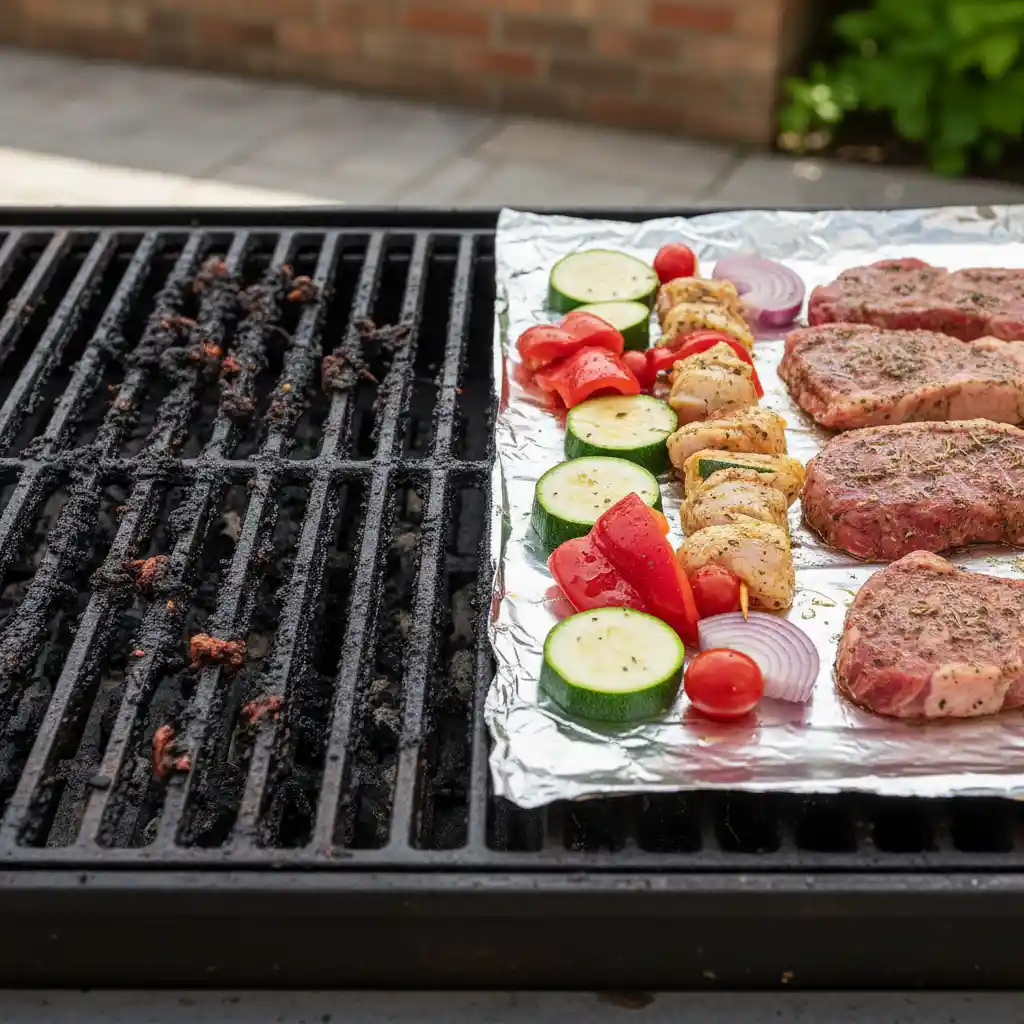
The “Burn It Off” Myth
A common misconception among well-meaning hosts is that heat kills everything. While high heat effectively destroys bacteria like E. coli or Salmonella, heat does not destroy gluten. Gluten is a protein, not a living organism. If a previous guest toasted a bun or cooked a marinated steak on the grill, the gluten protein remains stable and adheres to the grill grates, even after the flames have died down.
Scraping the grill with a wire brush is often insufficient to remove sticky gluten residues, particularly if sugary marinades were used. When your gluten-free steak touches those grates, it picks up that residue, rendering your meal unsafe.
Using Foil and BBQ Liners
The safest way to cook on a shared BBQ is to create a physical barrier. There are two primary methods to achieve this:
- Heavy-Duty Aluminum Foil: This is your best friend at a BBQ. Request a corner of the grill, clean it as best as possible, and lay down a double layer of foil. Ensure the edges are turned up to prevent juices from other foods running onto your area.
- Reusable BBQ Liners: These are non-stick, heat-resistant mats (often made of fiberglass coated in PTFE) that you can bring with you. They provide a flat, clean surface for your food. Just remember to transport the dirty mat home in a sealed bag to wash later.
Hidden Gluten in Marinades and Sausages
Once you have secured a safe cooking surface, the next hurdle is the food itself. The New Zealand BBQ culture relies heavily on processed meats and savory sauces, both of which are notorious hiding spots for wheat.
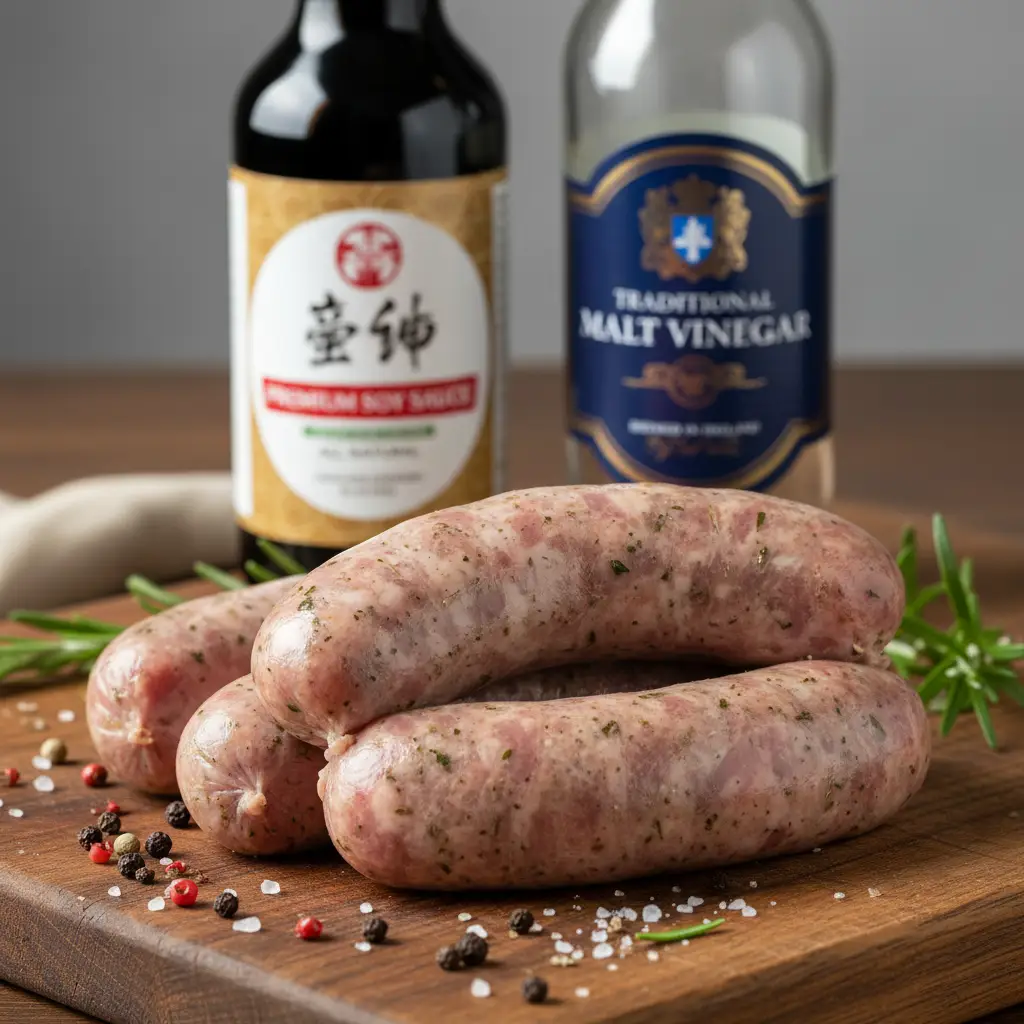
The NZ Sausage Situation
Historically, the humble Kiwi sausage was packed with wheat flour as a binder and filler. While the market has improved significantly with many artisan and supermarket brands now offering gluten-free options, you cannot assume a sausage is safe by looking at it.
What to look for:
- The Crossed Grain Logo: This is the gold standard in New Zealand and Australia, endorsed by Coeliac NZ.
- “Gluten Free” Label: Under FSANZ (Food Standards Australia New Zealand) codes, a product labelled “gluten free” must contain no detectable gluten.
- Ingredient List: If there is no explicit claim, check for “wheat,” “rye,” “barley,” or “oats” in the allergens list. Common fillers include wheat flour, breadcrumbs, and hydrolyzed vegetable protein (if derived from wheat).
Sauces and Marinades to Watch
Marinades are often applied liberally to meats before they even reach the BBQ. If the host has pre-marinated the meat, it is generally safer to decline unless you can see the bottle it came from.
Common culprits include:
- Soy Sauce: Traditional soy sauce contains wheat. Tamari is the safe alternative.
- Malt Vinegar: Often found in chutneys, relishes, and BBQ sauces. Malt is derived from barley and is not gluten-free.
- Beer Marinades: Using beer to tenderize meat is a popular technique. Unless gluten-free beer was used, this meat is off-limits.
- Store-bought BBQ Sauces: Many contain thickeners derived from wheat or barley malt flour.
BYO Strategies: Bringing Your Own Meat and Tongs
The only way to be 100% certain of your safety is to control the supply chain. Bringing your own (BYO) food and equipment is not rude; it is a medical necessity that most hosts will respect once they understand the stakes.

The “Chilly Bin” Separation
Cross-contamination can happen before the food even hits the grill. If you toss your gluten-free patties into the communal chilly bin (cooler) alongside a leaking packet of marinated chicken wings, your food is compromised.
Strategy: Bring a small, personal soft-cooler or chilly bin. Keep your meat in sealed Tupperware containers. This ensures that no meat juices from other packages can drip onto your food. It also clearly demarcates which food is yours, preventing a helpful guest from accidentally grabbing your steak and putting it on the dirty grill.
Dedicated Utensils: The Tongs Dilemma
One of the most frequent vectors for cross-contamination is the “wandering tongs.” The chef flips a gluten-filled burger bun, then immediately reaches for your gluten-free sausage. The crumbs transfer, and the damage is done.
The Fix: Bring your own tongs. Buy a pair with a bright handle (e.g., red or neon green) so they stand out. When you hand your meat to the chef (or when you cook it yourself), hand them your tongs and say, “Could you please use these specific tongs for my food? It stops me from getting sick from the other crumbs.”
Navigating the Potluck Table
The “bring a plate” tradition is a staple of Kiwi hospitality, but potlucks are notoriously difficult for Coeliacs. Even if a dish is prepared with gluten-free ingredients, the risk of cross-contact in a chaotic kitchen or serving table is high.
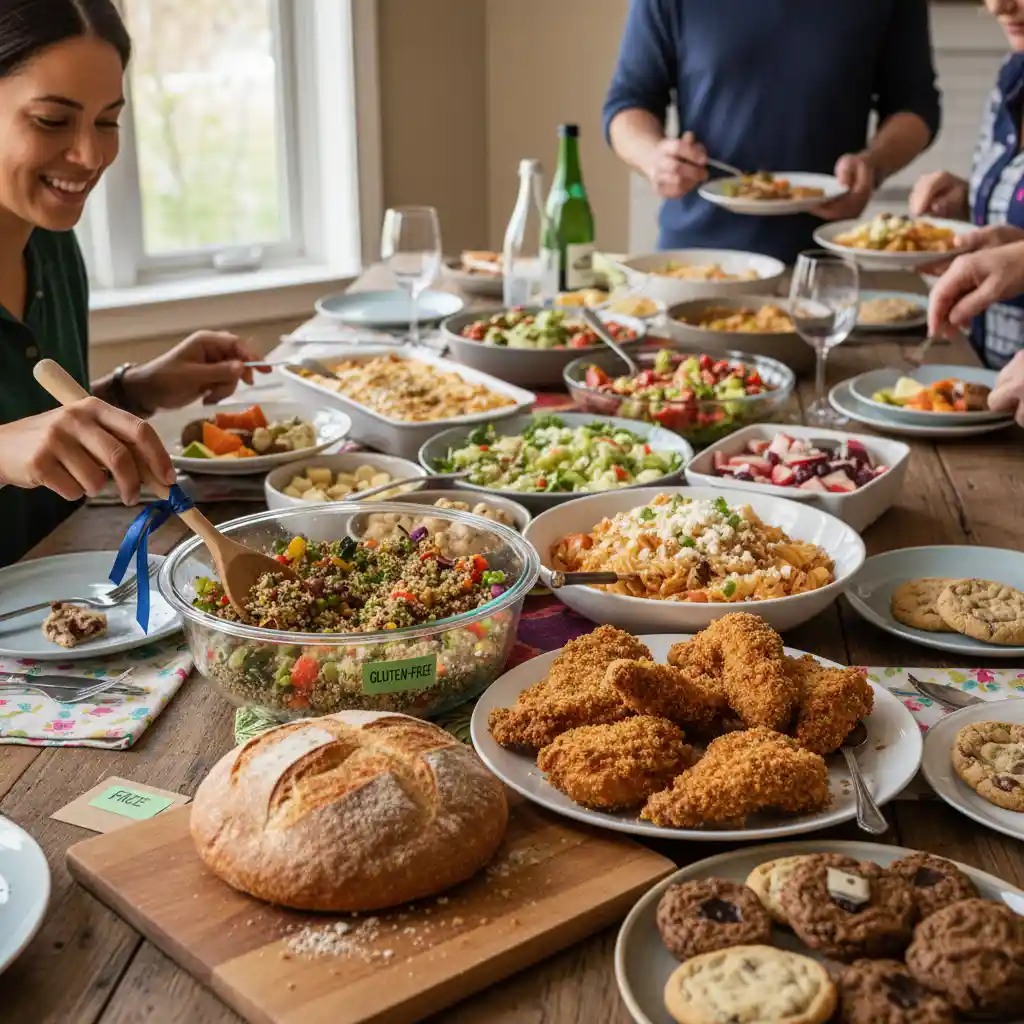
The Serving Spoon Hazard
Picture a bowl of gluten-free potato salad next to a bowl of pasta salad. A guest takes a scoop of pasta, then uses the same spoon to take some potato salad. The potato salad is now contaminated. This is known as “double-dipping” the utensils.
Serving Yourself First
The most effective strategy at a potluck is to serve yourself first. Arrive early or ask the host if you can grab your plate before the buffet line opens to the general crowd. This ensures you get to the food before spoons have been swapped or bread rolls have been dragged over the salads.
If you are bringing a plate to share, make it something substantial that you can eat as a main meal (like a quinoa salad with chicken or a heavy potato bake). This guarantees you have at least one safe item to eat if everything else is questionable.
Polite Communication with Hosts
Many people with Coeliac disease fear being labelled as “fussy” or “high maintenance.” However, clear communication is essential for your safety. Most Kiwi hosts want their guests to be happy and fed; they just need guidance on how to do it safely.
Pre-Event Texting Scripts
Don’t wait until you arrive to discuss your dietary needs. Send a text a few days before.
Option 1 (The Casual Approach):
“Hey! Really looking forward to the BBQ on Saturday. Just a heads up, I have to be strictly gluten-free for medical reasons. I’ll bring my own meat and some foil to cook it on so I don’t hassle you. I’ll bring a GF salad to share too!”
Option 2 (The Offer to Help):
“Hi! Can’t wait for the catch-up. Regarding food, I have Coeliac disease so I have to be super careful with cross-contamination. Is it okay if I bring my own separate chilly bin and tongs? I’m happy to manage my own cooking so the chef doesn’t have to worry about it!”
How to Say “No” Without Being Rude
If a host offers you food and you aren’t 100% sure it’s safe, you must decline. A bout of gluten poisoning can knock you out for days or weeks. It is not worth the risk for the sake of politeness.
What to say:
“That looks absolutely delicious, but my tummy is extremely sensitive to even tiny traces of gluten, so I better stick to the food I brought. I’d love a drink though!”
By framing it about your sensitivity rather than their cooking, you reduce the chance of offense. Most people will understand and appreciate your caution.
Frequently Asked Questions
Can I eat food cooked on the upper rack of a BBQ?
No, this is not recommended. Food cooking on the upper rack can drip juices onto food below, but more importantly, if gluten-containing buns or meats are cooking below, heat currents can carry crumb particles upward. Additionally, the upper rack is rarely cleaned thoroughly.
Does alcohol burn off gluten on a BBQ?
No. Pouring beer or spirits over a BBQ plate does not remove gluten. In fact, if you pour regular beer (which contains barley) onto the plate to “clean” it, you are adding more gluten to the surface. Stick to water and scrubbing, followed by a foil barrier.
Are all BBQ charcoal briquettes gluten-free?
Generally, pure charcoal is gluten-free. However, some briquettes use wheat starch as a binder. While the risk is low since the food doesn’t touch the fuel, ash blowing onto the food could theoretically pose a risk. It is safer to use lump charcoal or check the brand of briquettes.
What if the host insists their marinade is gluten-free?
Ask to see the bottle. Ingredients like “thickener (1400 series)” or “yeast extract” can be tricky. If the marinade was homemade, ask about every ingredient (soy sauce, stock cubes, sauces). If in doubt, politely decline and stick to your BYO food.
Is it safe to share a chilly bin/cooler?
It is risky. If a container of pasta salad spills or a bag of buns opens inside the cooler, everything becomes contaminated. It is much safer to have a small, dedicated cooler for your gluten-free items to ensure they remain isolated.
Can I use the community tomato sauce bottle?
Squeeze bottles are usually fine, but be careful with the nozzle touching a gluten-bun. Pump bottles are also generally safe. However, avoid jars where people dip knives or spoons, as these are almost certainly contaminated with crumbs.