
Living in a mixed gluten household requires strict cross-contamination protocols to ensure safety for those with Coeliac disease. This involves establishing separate preparation zones, utilizing color-coded equipment, maintaining distinct storage areas, and educating all family members on the dangers of crumb transfer and airborne flour to prevent accidental gluten exposure.
The Challenge of Living in a Mixed Gluten Household
For individuals diagnosed with Coeliac disease, the home should be a sanctuary—a place where food anxiety dissipates. However, when living in a mixed gluten household, the kitchen can quickly become a zone of high alert. The reality for many families is that making the entire home gluten-free isn’t always financially or socially feasible. Family members without dietary restrictions may rely on standard bread, pasta, and cereals for convenience and cost-effectiveness.
The primary challenge lies in managing cross-contact. Unlike an allergy where a reaction might require ingesting a visible amount of the allergen, Coeliac disease is an autoimmune condition triggered by microscopic particles of gluten (wheat, barley, rye, and oats). A single crumb of whole-wheat toast in a tub of butter, or flour dust settling on a clean plate, can trigger an immune response that damages the small intestine.
Successfully navigating this environment requires more than just good intentions; it requires a systematic approach akin to a laboratory safety protocol. It demands a shift in mindset from “cleaning up messes” to “preventing microscopic transfer.” This guide outlines the professional standards required to maintain a safe environment within a shared space.

Setting Up the Kitchen for Safety
The foundation of a safe mixed household is the physical layout of the kitchen. You cannot rely on memory alone to keep food safe; the environment must be designed to minimize error.
Zoning the Workspace
The most effective strategy is to establish dedicated zones. Ideally, the gluten-free preparation area should be separate from the gluten-containing area. If counter space allows, designate one side of the kitchen exclusively for gluten-free prep. This area should be far removed from the toaster and the flour bin.
If separate counters are not possible, you must adopt a “Time Zoning” strategy. This means gluten-free food is always prepared before any gluten-containing food touches the surface. Once gluten has been introduced to the environment (e.g., making sandwiches for school lunches), the kitchen is considered “contaminated” until a thorough cleaning protocol is executed.
The “No-Fly” Zone for Flour
One of the most dangerous elements in a mixed household is loose wheat flour. Flour dust can linger in the air for up to 24 hours before settling on surfaces, utensils, and open gluten-free products. For this reason, many experts recommend that mixed households become baking-free zones regarding gluten. If family members wish to bake with wheat flour, it is safer to buy pre-made glutenous baked goods or bake with gluten-free flour blends that everyone can enjoy.
Equipment: What Must Be Separate?
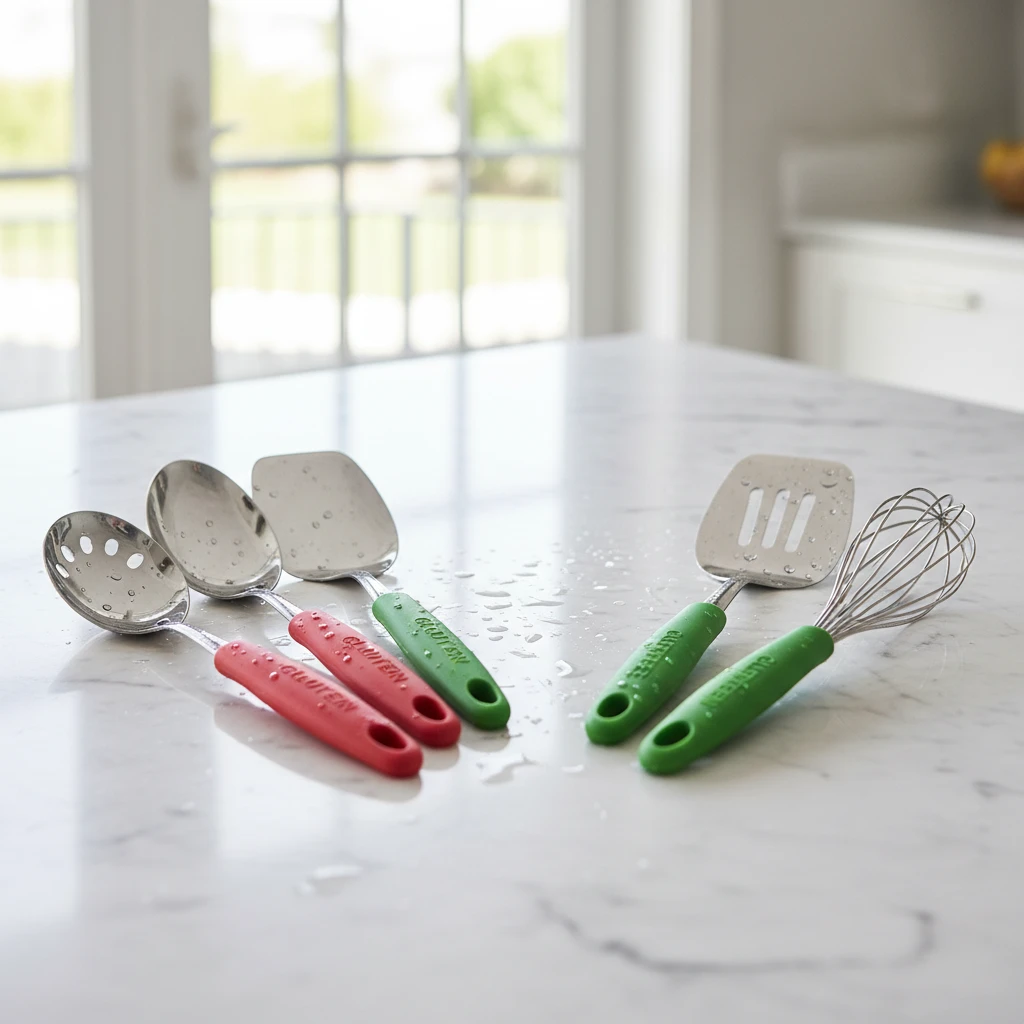
Not all kitchen tools can be shared, even with thorough washing. Gluten is a sticky protein that can adhere to scratches in plastic, pores in wood, and the mesh of strainers. To live safely in a mixed gluten household, you must invest in duplicate equipment for specific items.
The “Must-Have” Duplicates
You must purchase separate versions of the following items, and they should be visually distinct (e.g., different colors) to prevent accidental swapping:
- Toaster: You cannot clean the heating elements of a toaster. A dedicated gluten-free toaster is mandatory. Label it clearly. Alternatively, use toaster bags, but a separate appliance is safer.
- Colanders and Sieves: The mesh traps gluten paste that is impossible to fully remove.
- Wooden Spoons and Cutting Boards: Wood is porous and retains gluten. Use plastic or glass cutting boards for gluten-free prep, or have a dedicated wooden set marked with permanent paint.
- Cast Iron Skillets: If a skillet is seasoned, the seasoning layer likely contains trapped gluten. You need a dedicated gluten-free pan.
- Non-Stick Pans: If the coating is scratched, gluten can hide in the crevices.
- Baking Trays: Scratched metal trays harbor residue. Use foil or parchment paper if you must share, but dedicated trays are superior.
Stainless steel pots, glass bowls, and ceramic plates are generally safe to share provided they are washed thoroughly with hot, soapy water or in a dishwasher.
Storage Solutions: The Top-Down Rule
Gravity is the enemy in a mixed pantry. Crumbs fall downward. Therefore, your storage hierarchy must respect the laws of physics to prevent contamination.
Pantry Organization
Always store gluten-free products on the top shelves. Gluten-containing items, such as regular pasta, cereal, and crackers, should be stored on the lower shelves. This ensures that if a bag of flour spills or a box of crackers leaks crumbs, they will fall onto the floor or other gluten items, not into your safe gluten-free supply.
All open gluten-containing items should be stored in sealed, airtight containers. Never leave bags of wheat flour or breadcrumbs rolled up with a clip; they must be decanted into hard plastic or glass jars to contain the dust.
Refrigerator Logic
The same “Top-Down” rule applies to the fridge. Keep ready-to-eat gluten-free foods and leftovers on the top shelf. Additionally, beware of the condiment danger zone.
The Condiment Protocol
Jars of jam, butter tubs, mayonnaise, and peanut butter are prime vectors for cross-contamination. This occurs via “double-dipping”—a knife spreads butter on wheat toast and then returns to the tub, carrying crumbs with it.
Solutions:
- Squeeze Bottles: Use squeeze bottles for mayo, ketchup, and mustard. This eliminates the need for a knife to enter the container.
- Labeling: Buy separate jars for the person with Coeliac disease. Label them boldly with “GF” or use a sticker system (e.g., bright neon stickers).
- The Butter Hack: If you must share a butter block, always slice a portion off onto a plate before spreading. Never spread and return the knife to the block. However, a separate butter dish is strongly recommended.

Cleaning Protocols and Hygiene
Cleaning in a mixed household requires specific techniques. A quick wipe with a damp cloth can often spread gluten rather than remove it.
Dishwashing
Dishwashers are generally safe for mixed households. The high heat and water pressure are sufficient to remove gluten from ceramic, glass, and stainless steel. However, ensure that the filter at the bottom of the dishwasher is cleaned regularly to prevent the recirculation of glutenous particles.
Hand Washing and Sponges
Sponges are notorious traps for debris. A sponge used to scrub a pasta pot will retain gluten. You have two options:
- The “No Sponge” Method: Use dish cloths that are laundered after every use.
- Designated Sponges: Maintain two sponge holders. A yellow sponge for gluten, a blue sponge for gluten-free. This requires strict discipline from all household members.
Surface Cleaning
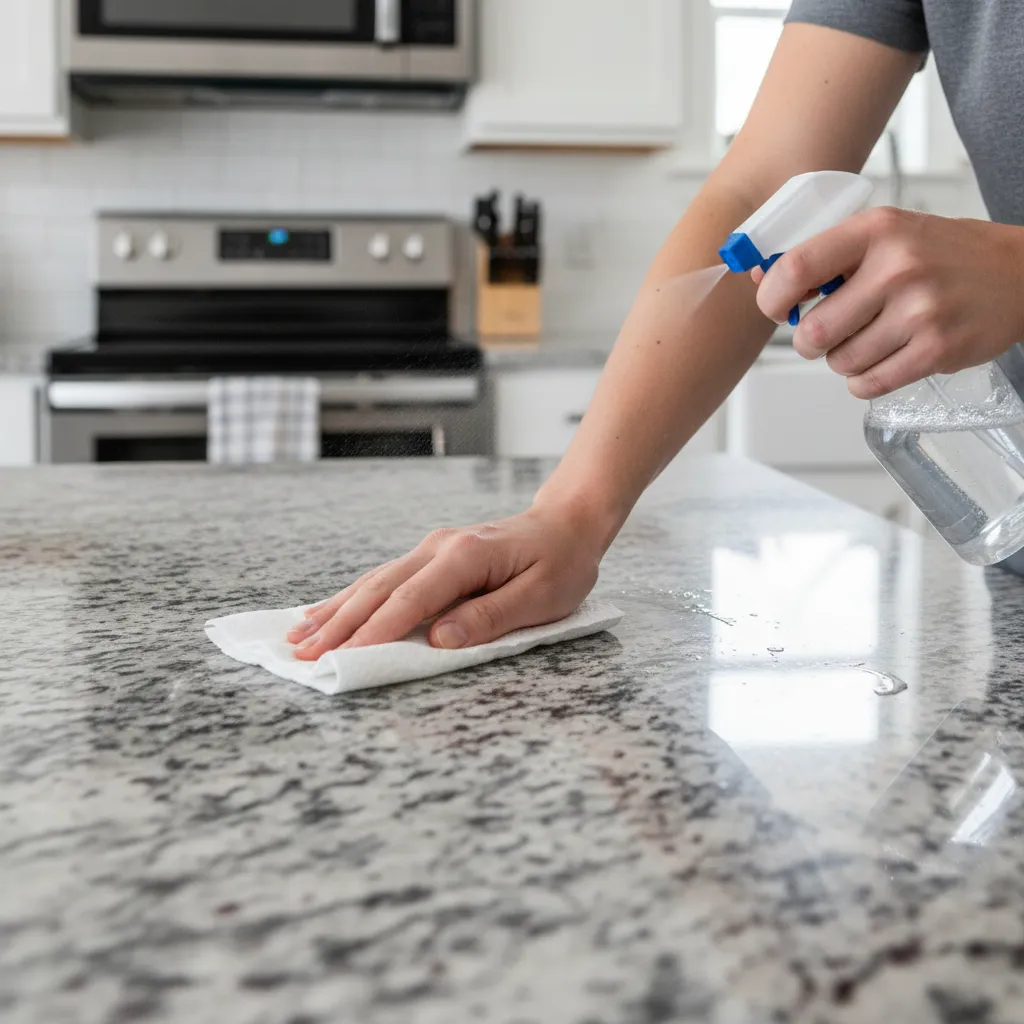
When cleaning a counter that has had gluten on it, do not just wipe it in circles. This spreads the gluten film. Use a disposable paper towel and a spray cleaner to lift the crumbs and grease first. Discard the towel. Then, do a second pass with a fresh cloth or paper towel to sanitize the surface. Ideally, verify the surface is clean before placing any gluten-free items down, or use a clean placemat or cutting board as a barrier.
Cooking and Meal Preparation
When cooking a meal that involves both gluten and gluten-free components, the order of operations is critical.
Cook Gluten-Free First
Always prepare the gluten-free portion of the meal first. For example, if you are making pasta, drain the gluten-free pasta in the dedicated colander and set it aside (covered) before cooking the wheat pasta. If you cook the wheat pasta first, the steam, the water splash, and the spoon usage all become contamination risks.
Buffet and Serving Safety
If serving family-style or buffet-style, keep the gluten-free dishes physically separated from the gluten-containing ones. Do not place the gluten-free bread basket next to the regular bread basket. It only takes one person reaching over with a gluten-crumbed sleeve to contaminate the safe food.
Communication and House Rules
The most robust systems fail without communication. Living in a mixed gluten household is a team effort.
Educating Children and Guests
Children need to be taught early that “sharing is caring” does not apply to food in a Coeliac household. Teach them to wash their hands immediately after eating gluten snacks. For guests, it is often easier to make the entire meal gluten-free to avoid awkward policing of their eating habits. If guests bring food, graciously accept it but serve it on a separate table or keep it in its packaging.
The “Kissing” Rule
It is a valid concern that gluten can remain in the mouth after eating. For partners, brushing teeth or waiting a significant period after eating gluten is recommended before intimacy to avoid transferring gluten traces.
By implementing these rigorous standards—zoning, dedicated equipment, top-down storage, and strict hygiene—living in a mixed gluten household becomes a manageable routine rather than a source of constant stress. The goal is to create a system where safety is the default, allowing everyone to enjoy their meals without fear.
People Also Ask
Can you share a toaster in a mixed gluten household?
No, you cannot safely share a toaster. Toasters harbor crumbs on the heating elements and in the trays that are impossible to fully clean. Inserting gluten-free bread into a standard toaster will almost certainly result in cross-contamination. You must have a dedicated gluten-free toaster or use toaster bags.
Is it safe to use the same dishwasher for gluten and gluten-free items?
Yes, generally speaking, a modern dishwasher is safe for mixed items. The high water temperature and detergent are effective at removing gluten. However, ensure that no large chunks of gluten food (like pasta) are left on plates, and clean the dishwasher filter regularly.
Can I use the same sponge for washing dishes?
No, sponges trap food particles and gluten proteins in their porous structure. It is safer to use separate sponges (color-coded) or use dishcloths that are laundered in the washing machine after every single use.
How do I organize a fridge for a mixed household?
Follow the “Top-Down” rule. Store all gluten-free items on the top shelves to prevent crumbs or spills from gluten items falling onto them. Use squeeze bottles for condiments to prevent knife contamination, or maintain separate labeled jars for the gluten-free family member.
Is airborne flour dangerous for Coeliacs?
Yes. Wheat flour can hang in the air for up to 24 hours and settle on surfaces, utensils, and uncovered food. In a mixed household, it is highly recommended to ban loose wheat flour entirely and use gluten-free flour blends for all baking, or only buy pre-baked gluten items.
Can you get gluten poisoning from kissing?
Yes, it is possible. If a partner has recently eaten gluten-containing food, traces can remain in the mouth. It is recommended that the partner brushes their teeth or waits several hours and drinks water before intimate contact to ensure safety.