
A comprehensive gluten-free pantry staples list is the foundation of safe cooking for Coeliacs, replacing wheat-based ingredients with certified alternatives. In New Zealand, this essential inventory includes GF flour blends like Edmonds or Bakels, wheat-free Tamari, safe stock cubes, and cross-contamination-free grains to ensure every meal remains delicious and compliant with strict gluten-free standards.
Transitioning to a gluten-free lifestyle, whether due to Coeliac disease or gluten intolerance, requires more than just willpower; it demands a strategic overhaul of your kitchen infrastructure. The pantry is the heart of the home, and for those navigating the aisles of New World, Woolworths (formerly Countdown), or Pak’nSave, knowing exactly what to swap is critical for health and peace of mind. This guide provides a definitive roadmap for building a robust, safe, and versatile gluten-free pantry in New Zealand.
What are the best gluten-free flour blends for baking in NZ?
One of the most daunting tasks for a beginner is baking without wheat. Gluten provides elasticity and structure, so removing it often results in crumbly, dense disasters unless you use the right blend. In New Zealand, we are fortunate to have high-quality pre-mixed blends that take the guesswork out of the chemistry.
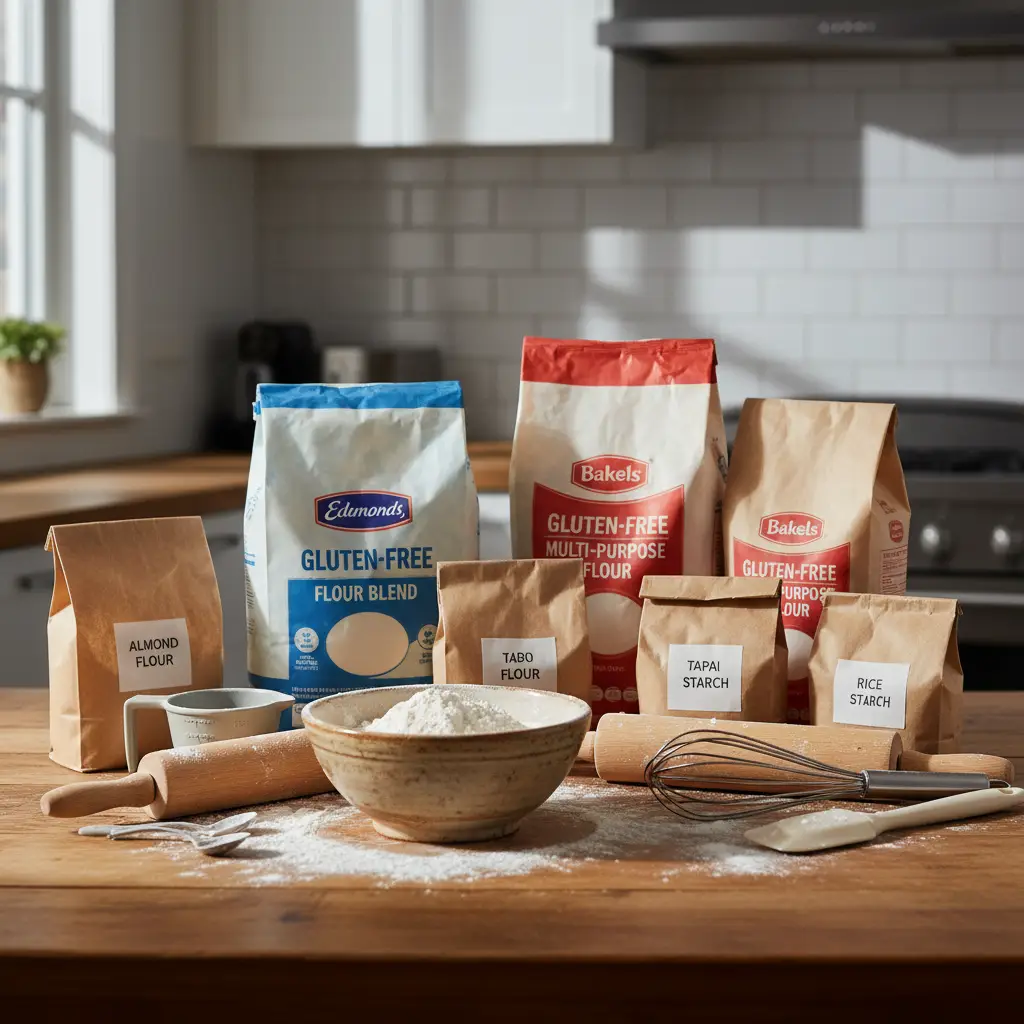
The Reliable All-Rounders: Edmonds and Bakels
For the average home cook, buying individual bags of rice flour, tapioca starch, and potato starch is cumbersome and expensive. Pre-mixed blends are the standard pantry staple.
- Edmonds Gluten Free Flour (Standard and Self-Raising): This is arguably the most ubiquitous brand in Kiwi cupboards. It is widely available and relatively affordable. The blend is designed to mimic standard wheat flour, though it tends to be thirstier (requires more liquid). It usually contains a mix of maize starch, rice flour, and tapioca starch.
- Bakels Gluten Free Baking Mixes: Bakels is a professional bakery supplier that offers consumer ranges. Their blends often yield a softer, more bakery-style texture. They are excellent for cakes and muffins where a tender crumb is required.
- Healtheries: Another staple in the health food aisle, Healtheries offers simple rice flours and baking mixes that are certified Coeliac New Zealand approved (crossed grain logo).
Understanding Xanthan Gum
When stocking your pantry, check if your chosen flour blend contains Xanthan Gum or Guar Gum. These ingredients act as the “glue” to replace gluten. If your blend does not list them, you must buy a small jar of Xanthan Gum separately. Without it, your cookies will spread into puddles and your cakes will crumble upon cutting. A standard rule of thumb is to add 1/4 to 1/2 teaspoon per cup of flour if the blend lacks it.
How do you replace soy sauce and hidden gluten in condiments?
Condiments are a minefield for hidden gluten, primarily in the form of wheat thickeners or barley malt. A fully stocked pantry needs safe alternatives to add umami and depth to your cooking.
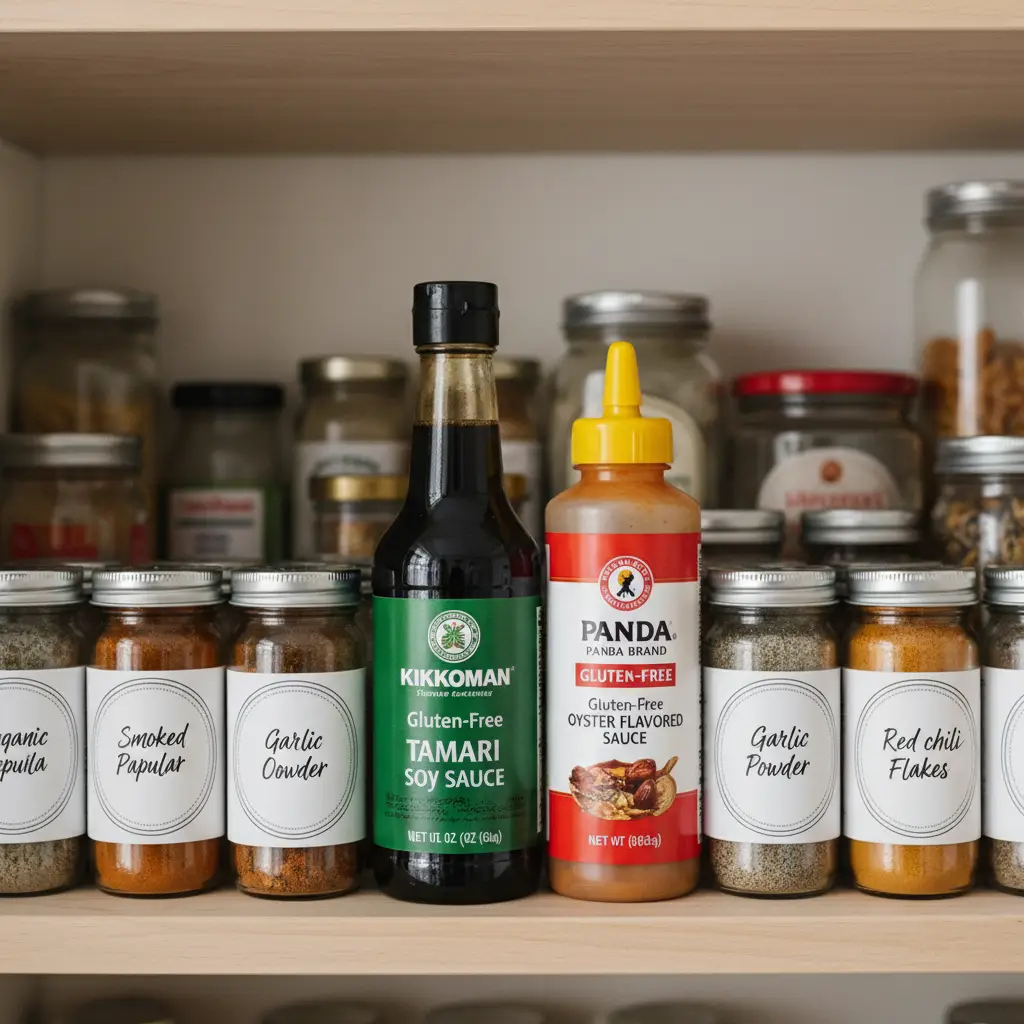
The Soy Sauce Swap: Tamari
Standard soy sauce is brewed with equal parts soybeans and wheat. It is strictly off-limits. The direct swap is Tamari. While traditionally a Japanese soy sauce made with little to no wheat, you must ensure the bottle specifically says “Gluten-Free” or “Wheat-Free.” Brands like Ceres Organics and Kikkoman (GF label) are staples in NZ. Tamari has a richer, smoother flavour than regular soy sauce and works perfectly in stir-fries and marinades.
Worcestershire and BBQ Sauces
Many people are surprised to learn that Worcestershire sauce often contains malt vinegar derived from barley. Always check the label. In New Zealand, Lea & Perrins makes a gluten-free version, but the standard bottle may not be safe depending on the formulation batch—always read the ingredient list for “barley.” For BBQ sauces, look for brands that use molasses or corn syrup rather than wheat-based thickeners. Whitlock’s and certain Heinz varieties are often safe, but label vigilance is required.
Malt Vinegar Substitute
Fish and chips is a Kiwi classic, but malt vinegar is made from barley. Your pantry should be stocked with White Vinegar, Cider Vinegar, or Wine Vinegar, all of which are naturally gluten-free. Balsamic vinegar is also generally safe, but watch out for cheap glazes that might contain thickeners.
Which gluten-free bread brands actually hold together?
Bread is the “Holy Grail” of the gluten-free diet. Early iterations of GF bread were rock-hard and tasteless, but the NZ market has improved significantly. Pantry management for bread differs from wheat bread; most GF breads are best stored in the freezer to maintain freshness and texture.
Top NZ Brands
- Vogel’s Gluten Free: Vogel’s is an institution in NZ. Their GF range includes options with seeds and grains that closely mimic the texture of their famous wheat bread. It toasts exceptionally well.
- Venerdi: Based in Auckland, Venerdi offers organic, sourdough, and paleo options. Their “Broken Black Rice” and “Sourdough” loaves are robust and don’t crumble easily. They are denser but packed with nutrition.
- Rebel Bakehouse: Known for their wraps and bagels. Finding a GF wrap that doesn’t crack when you roll it is difficult, but Rebel Bakehouse has formulated a sourdough wrap that is surprisingly pliable.
Storage Tips
Unlike standard bread, GF bread lacks preservatives and dries out rapidly on the bench. The best practice is to slice the loaf immediately (if not pre-sliced), place baking paper between slices if they stick, and freeze the entire loaf. Toast straight from frozen for the best eating experience.
What stock cubes and gravy powders are safe for Coeliacs?
Savoury cooking relies heavily on stocks and gravies, yet these are common hiding spots for wheat flour (used as a carrier for flavours) and yeast extract grown on barley.
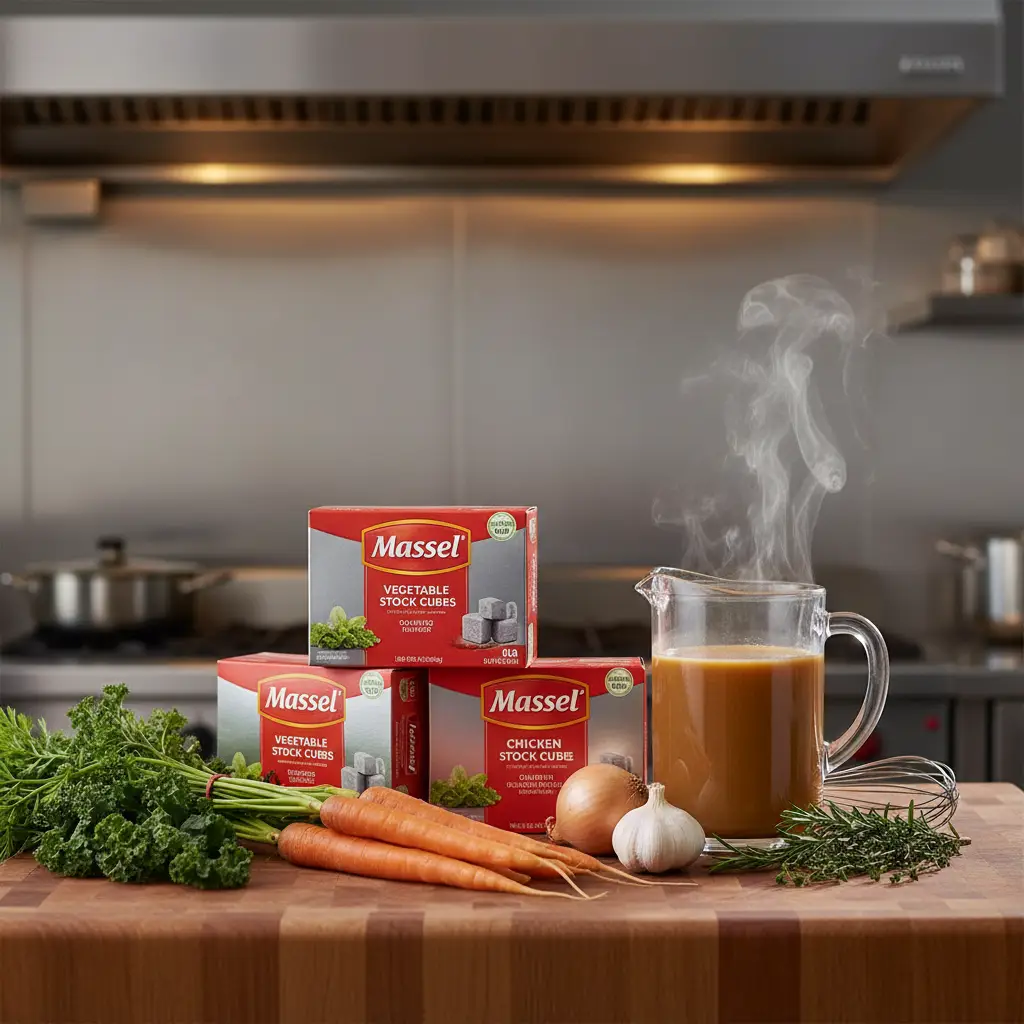
Stock Cubes and Powders
The gold standard for gluten-free stocks in New Zealand is Massel. Every product in the Massel range—including their “chicken style” and “beef style” stocks—is plant-based and certified gluten-free. They are essential for your pantry. Other brands like Maggi and Continental have specific “Gluten Free” labeled products, but you must be careful not to grab the standard version by mistake as the packaging can look very similar.
Gravy Powders
Standard Bisto or Maggi gravy powders are thickened with wheat starch. For a pantry swap, look for Bisto Gluten Free (clearly marked) or Massel Gravy Powder. Alternatively, you can easily make your own gravy using cornflour (cornstarch) to thicken meat juices. Ensure your cornflour is pure maize cornflour; while usually GF, wheat-starch based cornflour exists in some international sections, so always check the source.
How to choose the best gluten-free pasta and grains?
Pasta nights are back on the menu with the right pantry staples. Early GF pasta turned to mush instantly, but modern formulations using corn, rice, and quinoa blends hold their shape well.
Pasta Brands
- San Remo Gluten Free: Easily found in supermarkets, this pasta is made mostly from maize starch and soy flour or rice flour. It holds its texture well if not overcooked.
- Barilla Gluten Free: Often cited as the closest to “real” pasta, Barilla uses a blend of white corn, yellow corn, and rice. It has excellent bite (al dente) characteristics.
- Explore Cuisine: For a healthier twist, these are bean-based pastas (edamame, chickpea). They are high in protein but have a different texture than traditional pasta.
Alternative Grains
Your pantry should include naturally gluten-free grains to bulk out meals. Quinoa, Buckwheat (despite the name, it is wheat-free and related to rhubarb), Polenta, and Arborio Rice are excellent staples. Note on Oats: In New Zealand and Australia, oats are generally not considered gluten-free due to high contamination risk and a protein called avenin that mimics gluten. Only oats labeled “Wheat Free” or imported certified GF oats should be considered, and only if you have tested your tolerance under medical guidance.
How should you organize a mixed pantry to ensure safety?
If you live in a household that is not 100% gluten-free, the physical organization of your pantry is just as important as the food inside it. Cross-contamination—where a crumb of wheat toast touches GF butter—can be enough to trigger a reaction in a Coeliac.
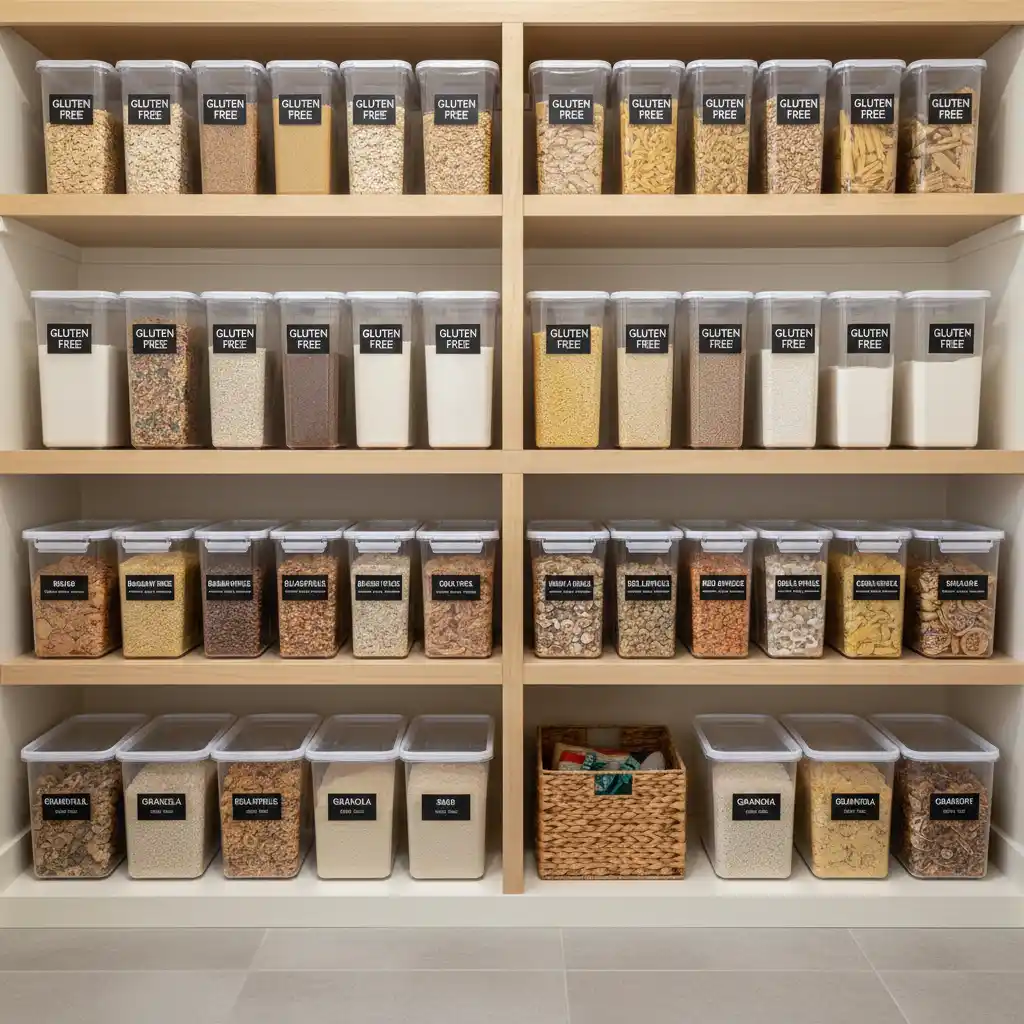
The Top-Shelf Rule
Always store gluten-free items on the top shelves of your pantry. Gravity is the enemy here; if a bag of normal flour spills or crumbs fall from a wheat cracker box, they will fall downwards onto whatever is below. By keeping GF items at the top, you eliminate this risk.
Dedicated Containers and Labeling
Decant gluten-free flours and sugars into dedicated, airtight containers. Flour dust is airborne and can settle on open packets. Use bright stickers or a label maker to clearly mark “GLUTEN FREE” on these containers. In the fridge, apply the same logic to condiments: buying a separate butter tub and jam jar for the GF family member is essential to avoid “double-dipping” crumbs.
By systematically swapping these items, you transform your kitchen from a place of restriction into a culinary playground. The New Zealand market is rich with high-quality gluten-free options, making it easier than ever to maintain a delicious and varied diet without compromising on health.
Can I use normal baking powder on a gluten-free diet?
Usually, yes, but you must check. In New Zealand, most standard baking powders (like Edmonds) are gluten-free, using rice flour or maize starch as a filler. However, some commercial or bulk brands may use wheat starch. Always look for the “Gluten Free” statement on the tub to be sure.
Is yeast gluten-free?
Yes, fresh and active dried baker’s yeast is naturally gluten-free. However, brewer’s yeast (a byproduct of beer making) is not. When buying yeast for baking bread, standard brands like Edmonds Surebake (the yeast sachets, not necessarily the mixes) are generally safe, but always verify ingredients for additives.
What is the best gluten-free thickener for sauces?
Cornflour (Cornstarch) is the most common and effective thickener in NZ kitchens. Arrowroot and Tapioca starch are also excellent alternatives that provide a glossy finish and are naturally gluten-free. Ensure your cornflour is made from maize, not wheat.
Are oats gluten-free in New Zealand?
Under the Australia New Zealand Food Standards Code, products containing oats cannot be labelled “gluten-free.” This is because oats contain a protein called avenin which affects some Coeliacs, and they are often contaminated with wheat during processing. Most Coeliacs in NZ are advised to avoid oats.
Is malt extract gluten-free?
No. Malt extract is derived from barley, which contains gluten. It is commonly found in cereals (like Cornflakes), chocolates, and drinks. You must avoid any product listing “barley malt extract” or “malt flavouring.”
How do I identify gluten on NZ food labels?
New Zealand has strict labelling laws. Allergens, including gluten-containing cereals (wheat, barley, rye, oats), must be declared on the packaging, usually in bold text in the ingredients list or in a “Contains” statement. If a product does not list these grains, it is generally safe, but looking for the “Coeliac New Zealand Crossed Grain” logo is the safest bet.