
Gluten cross contamination prevention requires strict protocols in shared kitchens to protect individuals with Celiac disease. Essential measures include establishing dedicated preparation zones, utilizing separate appliances for porous items like toasters and colanders, implementing a color-coded system for cleaning tools, and strictly avoiding double-dipping in shared condiments to ensure gluten proteins are never transferred to gluten-free foods.
For individuals managing Celiac disease or non-celiac gluten sensitivity, the kitchen—often the heart of the home—can unfortunately become a minefield of potential hazards. While selecting gluten-free ingredients is the first step, ensuring those ingredients remain safe during storage, preparation, and cooking is equally critical. This process is known as preventing cross-contact.
It is a common misconception that heat kills gluten. Unlike bacteria, gluten is a protein structure; it cannot be “sanitized” away with heat or bleach. It must be physically removed or entirely avoided. This guide provides a comprehensive, professional approach to gluten cross contamination prevention, ensuring your shared home environment remains a safe haven.
The Toaster and Colander Rule: Non-Negotiable Items
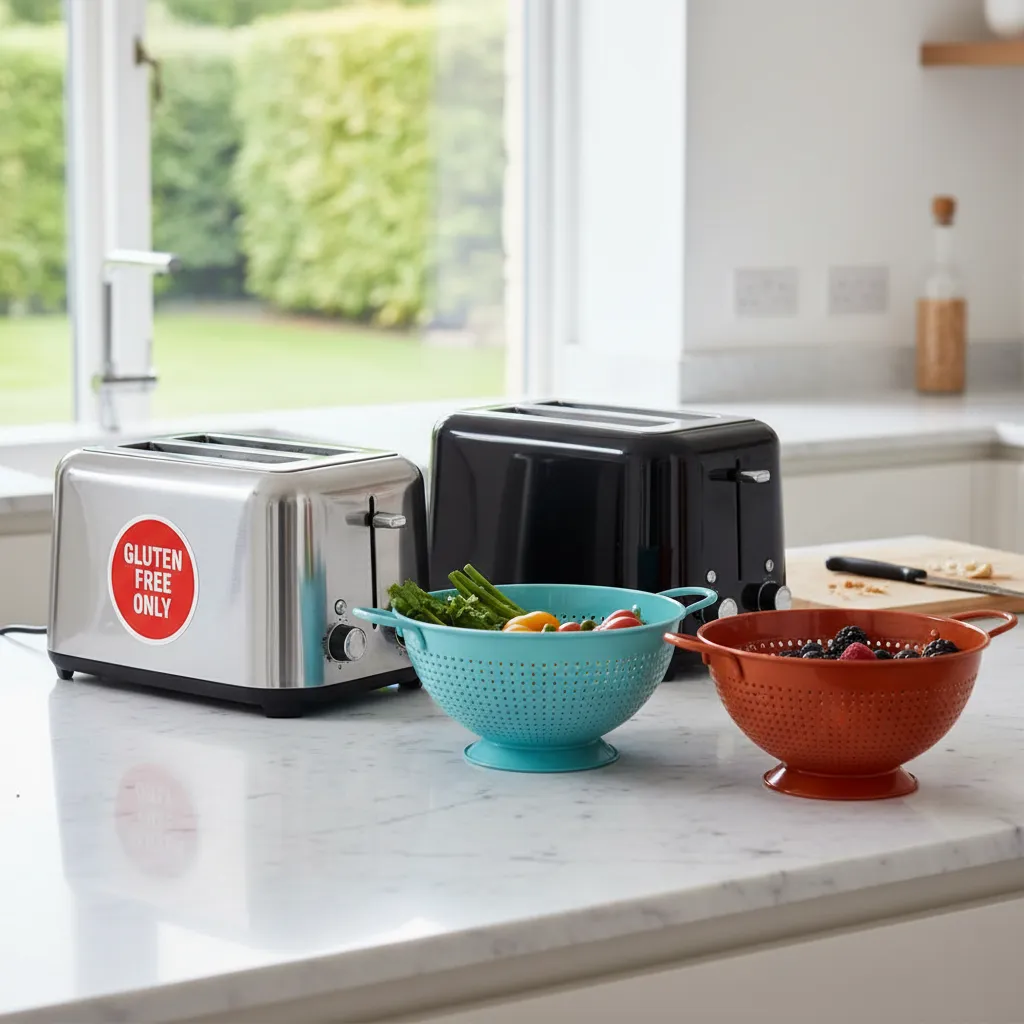
When transitioning to a gluten-free lifestyle within a shared household, many families attempt to clean existing appliances to save money. However, regarding gluten cross contamination prevention, two items are strictly non-negotiable: the toaster and the colander.
Why You Need a Dedicated Toaster
Toasters are notoriously difficult, if not impossible, to clean effectively. The heating elements and internal cages trap crumbs that carbonize and cling to the machinery. Even if you shake a toaster upside down, microscopic crumbs remain. When gluten-free bread is inserted, the risk of these old gluten crumbs adhering to the new slice is nearly 100%.
The Solution: Purchase a separate, dedicated toaster. Label it clearly with a sticker or use a permanent marker to write “GF” on the casing. If counter space is limited, toaster bags (reusable mesh bags) can be used in a shared toaster, though a separate appliance remains the gold standard for safety.
The Physics of the Colander
Colanders present a unique structural problem. Whether made of plastic or metal mesh, the tiny holes and crevices are designed to strain water while holding solids. When pasta is drained, the boiling water creates a glutenous starch film that coats the mesh. Cleaning this film out of every single micro-hole is virtually impossible, especially with plastic colanders which develop scratches over time that harbor protein.
The Solution: Buy a distinct colander, preferably in a different color (e.g., red for gluten, metal for gluten-free) to avoid confusion during the rush of dinner preparation. Stainless steel is generally preferred for the gluten-free colander as it is less porous than plastic, but it must still be dedicated solely to gluten-free use.
Sponges and Dish Towels: The Hidden Vectors
One of the most overlooked areas in gluten cross contamination prevention is the kitchen sink. You may scrub a pot perfectly clean, but if you use a sponge that was just used to clean a pizza cutter, you are re-introducing gluten to the surface.
The Sponge Trap
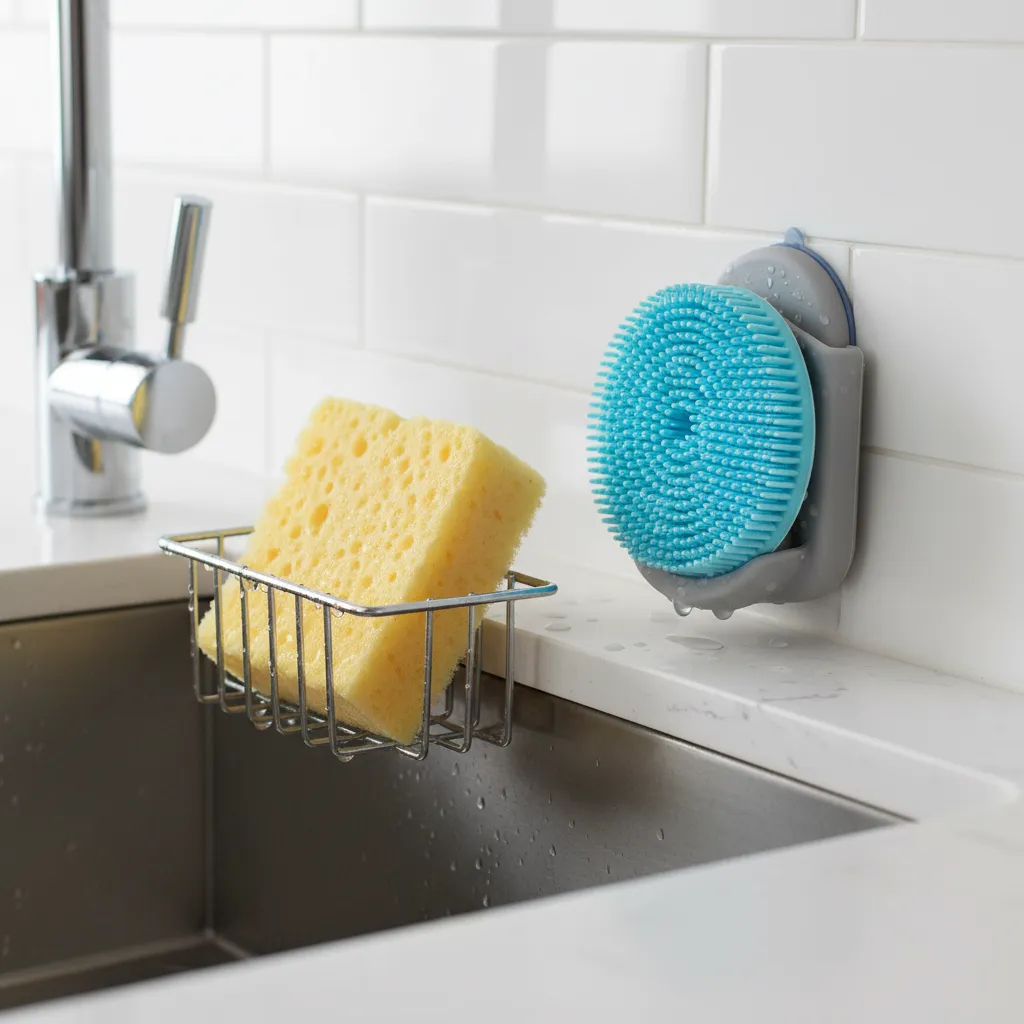
Sponges are porous by design. They absorb liquid and trap particulate matter to facilitate cleaning. When you wash a dish that contained gluten (like a bowl of wheat pasta), the gluten protein gets trapped deep within the pores of the sponge. No amount of rinsing will fully dislodge these proteins.
Best Practices for Sponges:
- Color Coding: Use a specific color for gluten-free washing (e.g., blue for GF, yellow for regular).
- Texture Differentiation: Use a silicone scrubber for gluten-free items and a traditional cellulose sponge for regular items. Silicone does not trap crumbs the way cellulose does and can be sterilized in the dishwasher.
- Segregation: Store the gluten-free sponge in a separate holder to prevent them from touching in the sink.
Dish Towels and Hand Cloths
Dish towels can pick up flour dust from the air or residue from hands. If a family member makes a sandwich, wipes their hands on the hanging towel, and then you use that towel to dry a clean gluten-free plate, cross-contact has occurred.
The Solution: Switch to paper towels for drying hands during cooking in a mixed kitchen, or implement a strict policy where cloth towels are changed daily and washed in hot water. Ideally, use paper towels to dry gluten-free cookware to eliminate the variable of a contaminated cloth.
Condiment Jars and Double Dipping Protocols
The “double dip” is a primary source of cross-contact. This occurs when a knife is inserted into a jar (peanut butter, jelly, mayonnaise, butter), spread onto gluten-containing bread, and then re-inserted into the jar for more condiment. That second dip transfers crumbs back into the jar, contaminating the entire supply.
The Squeeze Bottle Revolution
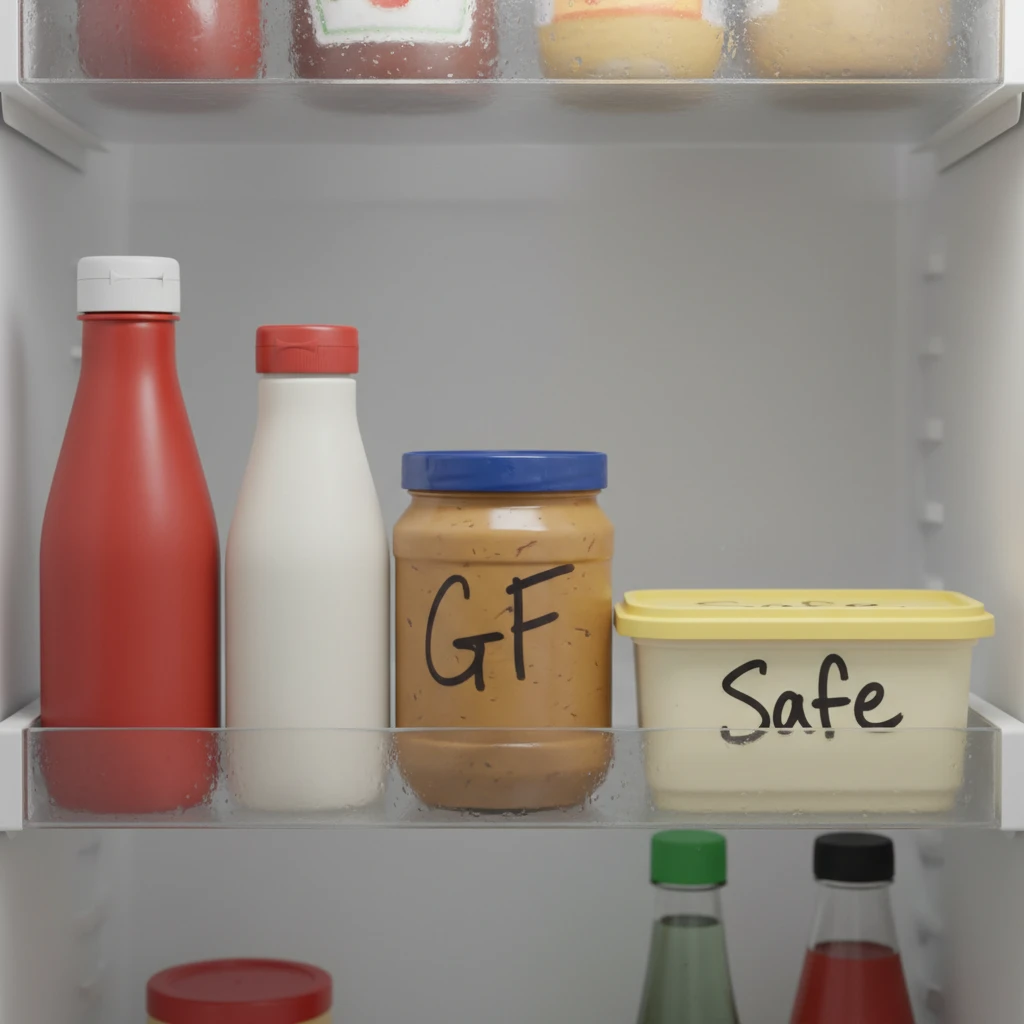
The most effective way to mitigate this risk is to eliminate the need for utensils entirely. Whenever possible, purchase condiments in squeeze bottles. Ketchup, mustard, mayonnaise, and even some jellies and relishes are available in squeeze formats. This prevents any utensil from ever touching the food source.
Managing Jars and Butter
For items that must come in jars (like high-quality peanut butter or pickles) or stick butter, strict segregation is required.
- Labeling: Use bright stickers or permanent markers to label jars “GF Safe.”
- The Butter Dish: A shared butter dish is a hazard. Keep a separate butter dish or container for the gluten-free family member. Alternatively, teach the family the “clean knife” rule: you may slice a pat of butter off, but you must never scrape the knife against the remaining butter block. However, separate tubs remain the safer option.
Zoning Your Countertops and Pantry
In a shared kitchen, gravity is your enemy. Wheat flour can stay airborne for hours after being used, settling on surfaces, floors, and uncovered foods. Therefore, gluten cross contamination prevention relies heavily on vertical and horizontal zoning.
The Pantry Hierarchy
Always store gluten-free products on the top shelves of the pantry. Gluten-containing products should be stored on the lower shelves. This arrangement ensures that if a bag of wheat flour spills or crumbs fall from a cracker box, they fall onto the floor or other gluten items, rather than raining down onto your safe gluten-free supply. Ideally, keep gluten-free items in sealed, plastic bins to provide a second layer of defense.
Countertop Designation
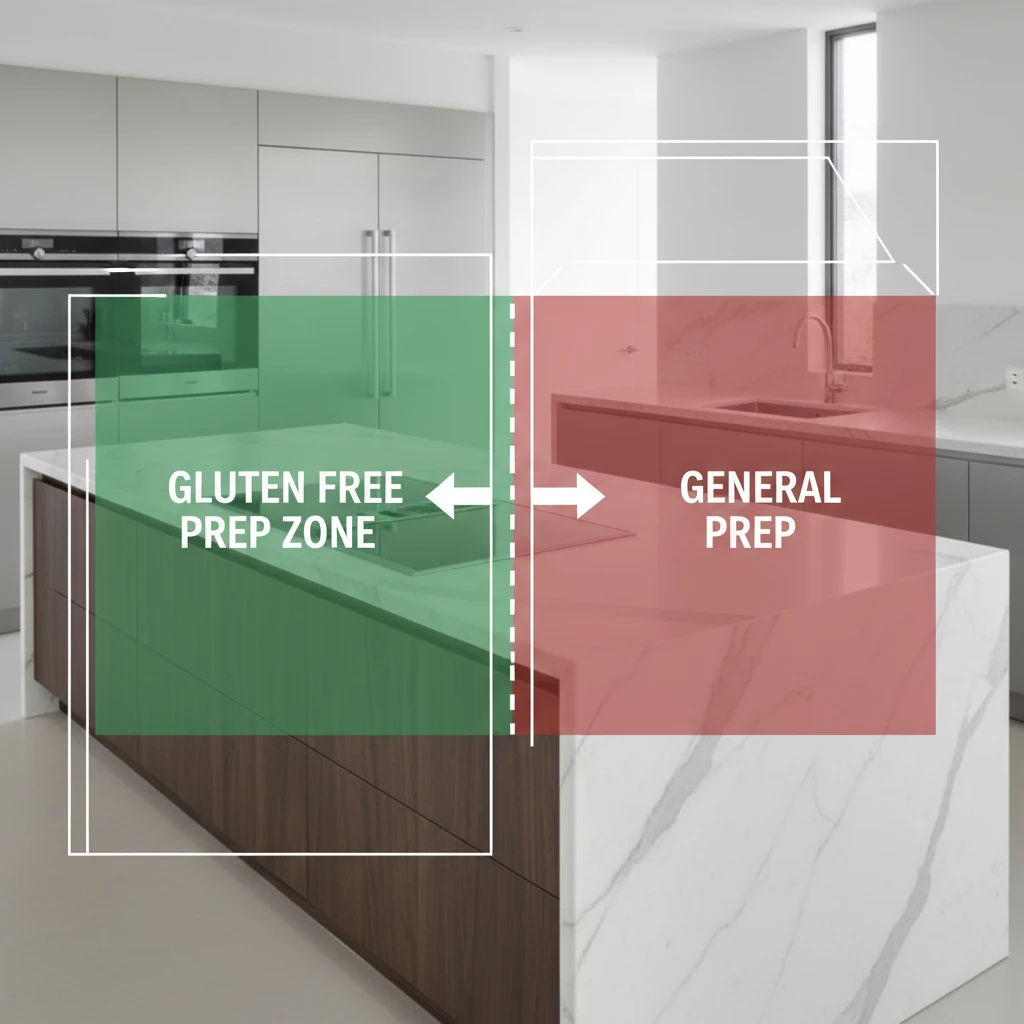
Designate a specific area of the kitchen as the “Gluten-Free Zone.” This area should be far removed from the primary baking area or where bread is sliced.
- No-Go Zone: Do not prepare gluten-free food directly on the counter surfaces, as micro-scratches in laminate or stone can harbor gluten. Always use a clean cutting board or a silicone mat.
- Airflow Awareness: Be mindful of fans or HVAC vents that might blow flour dust from a “gluten” area into the “safe” area.
Cookware and Bakeware: What to Keep and What to Replace
Not all materials react to gluten the same way. When establishing a safe kitchen, you must evaluate your current inventory of pots, pans, and utensils.
Items to Replace or Segregate
- Cast Iron: Cast iron is porous and retains seasoning (oils and food particles) from previous cooks. You cannot scour cast iron enough to make it safe for a Celiac if it has been used with gluten. You must buy a dedicated gluten-free cast iron skillet.
- Non-Stick (Teflon): If your non-stick pans have any scratches, they must be discarded or relegated to “gluten only” use. The scratches can trap protein. If they are brand new and unblemished, they can potentially be shared if washed thoroughly, but dedicated pans are safer.
- Wooden Spoons and Cutting Boards: Wood is highly porous and absorbs oils and juices. It creates deep fissures over time. You cannot safely clean gluten out of wood. Switch to bamboo (harder wood), plastic, or silicone for gluten-free cooking.
- Plastic Containers: Old Tupperware with scratches should be replaced. Glass storage containers are superior as they are non-porous and easier to inspect for cleanliness.
Items That Can Be Shared (With Proper Cleaning)
Stainless steel pots, glass bakeware, and ceramic dishes are generally safe to share, provided they are scrubbed thoroughly with soap and water (using a clean sponge!) and have no deep cracks or chips.
Effective Cleaning Protocols for Shared Surfaces
Understanding the difference between sanitizing and cleaning is vital. Sanitizers kill bacteria; they do not remove gluten. To prevent cross-contact, you must physically remove the protein.
The Soap and Water Method
The most effective method for removing gluten is friction combined with a surfactant (soap) and water. The soap lifts the protein from the surface, and the water rinses it away. Disinfectant wipes are generally insufficient for removing gluten because they often just smear the protein around rather than lifting and removing it.
The Dishwasher Factor
Dishwashers are generally safe for mixed use, provided they are working correctly. The high volume of water, heat, and strong detergent is usually sufficient to remove gluten from stainless steel, glass, and ceramic. However, ensure that the filter at the bottom of the dishwasher is cleaned regularly, as trapped pasta or crumbs in the filter could recirculate during the wash cycle.
People Also Ask
Does the dishwasher kill gluten?
No, the dishwasher does not “kill” gluten because gluten is a protein, not a bacteria. However, the mechanical action of the water jets, combined with detergent and rinsing, effectively removes gluten from non-porous surfaces like glass, ceramic, and stainless steel.
Can I use the same oven for gluten and gluten-free cooking?
Yes, but with caution. If you have a convection oven (fan-forced), do not cook gluten and gluten-free items at the same time, as the fan can blow crumbs or flour dust onto the safe food. Always place gluten-free items on the top rack and gluten items on the bottom rack to prevent crumbs from falling.
Is scrubbing with soap enough to remove gluten?
Yes, scrubbing with soap and water is the most effective way to remove gluten from non-porous surfaces. The friction lifts the protein, and the water rinses it away. Ensure you use a clean sponge or rag to avoid re-contaminating the surface.
Can you share a microwave for gluten-free food?
Yes, a microwave can be shared, but it requires a cover. Always use a microwave splatter cover (dedicated for GF use or washed thoroughly) over your food. This prevents any old food particles stuck to the ceiling of the microwave from falling into your meal.
How long does gluten stay on a surface?
Gluten does not decay or disappear over time like some bacteria might die off. It stays on a surface until it is physically removed. If a crumb falls behind a counter, it remains a gluten hazard indefinitely until cleaned.
What cookware must be strictly replaced for Celiac safety?
You must replace or strictly segregate porous items. This includes wooden spoons, wooden cutting boards, cast iron skillets, stoneware, and scratched non-stick pans. These materials trap gluten in their pores and cannot be safely cleaned.