
When determining safety, the most critical questions to ask a chef regarding gluten-free preparation focus on cross-contact protocols. You must ask: “Do you use a dedicated fryer for gluten-free items?”, “Is pasta boiled in fresh water or a shared pot?”, “Are your sauces thickened with roux or cornstarch?”, and “Do you have a designated prep area to avoid crumb contamination from regular bread?”
Dining out with Celiac disease or non-celiac gluten sensitivity requires more than just scanning a menu for “GF” symbols. It requires a strategic dialogue with the people preparing your food. The difference between a safe meal and a health crisis often lies in the specific questions to ask chef gluten free protocols. This guide provides you with professional, assertive, and polite scripts to navigate every stage of the dining experience, ensuring your safety without compromising the enjoyment of your meal.
Scripting Your Reservation Request
The safety process begins long before you enter the restaurant. Calling ahead during non-peak hours (typically between 2:00 PM and 4:00 PM) allows you to speak with a manager or chef when the kitchen is not overwhelmed. This initial contact sets the tone for your dining experience.
The Initial Phone Call Script
When you call, avoid asking generic questions like “Do you have gluten-free options?” Many restaurants interpret this as simply having a salad without croutons. Instead, use this script to establish the medical necessity of your request:
“Hi, I am looking to make a reservation for [Date/Time]. I have a severe medical restriction regarding gluten—specifically Celiac disease. This means I cannot eat food that has been prepared on the same surfaces as wheat products. Is your kitchen able to accommodate strict cross-contact protocols to prepare a safe meal for me?”
Why this works: You are defining the restriction immediately. By using the term “medical restriction” and “cross-contact,” you are signaling that this is not a lifestyle preference. If the person on the phone hesitates or sounds unsure, ask to speak to a manager or the chef directly.
Online Reservation Notes
If you are booking via an app like OpenTable or Resy, do not rely solely on the checkbox for dietary restrictions. Add a manual note:
“GUEST HAS CELIAC DISEASE. SEVERE ALLERGY PROTOCOLS REQUIRED. Please confirm upon arrival that the kitchen can accommodate a separate prep space.”

The Arrival: Reinforcing Your Needs
Once you arrive, do not assume the message was relayed from the host stand to the server, or from the server to the kitchen. You must become the advocate for your own safety at the table.
The Server Interaction
When the server approaches, before ordering drinks or appetizers, state your needs clearly. Eye contact is essential here.
“I noted this on my reservation, but I want to double-check with you. I have Celiac disease. I need to ensure that my meal is not just made with gluten-free ingredients, but is also prepared safely away from gluten. Can you please guide me on what is safe, or would it be better if I spoke briefly with the chef or manager?”
If the server seems confident and knowledgeable, proceed with specific questions. If they say, “I think the fries are gluten-free,” stop them immediately. “Thinking” is not enough. Ask them to confirm with the kitchen.
Crucial Questions About Fryers and Grill Surfaces
One of the most common sources of cross-contact in professional kitchens is the cooking equipment. Shared oil and shared flat-top grills are high-risk zones. This section outlines the specific questions to ask chef gluten free regarding thermal equipment.
The Deep Fryer Inquiry
Many restaurants label french fries as gluten-free because potatoes are naturally gluten-free. However, if those potatoes are cooked in the same oil as breaded chicken tenders or onion rings, they are unsafe for anyone with Celiac disease.
The Script:
“I see you have french fries on the menu. Does the kitchen have a dedicated gluten-free fryer that is NEVER used for breaded items like onion rings or calamari? If it is a shared fryer, I cannot eat them.”
If they claim the oil is hot enough to “kill the gluten,” this is a major red flag. Gluten is a protein, not a bacteria; heat does not destroy it. If you hear this myth, do not eat anything fried.
The Flat-Top Grill vs. Dedicated Pans
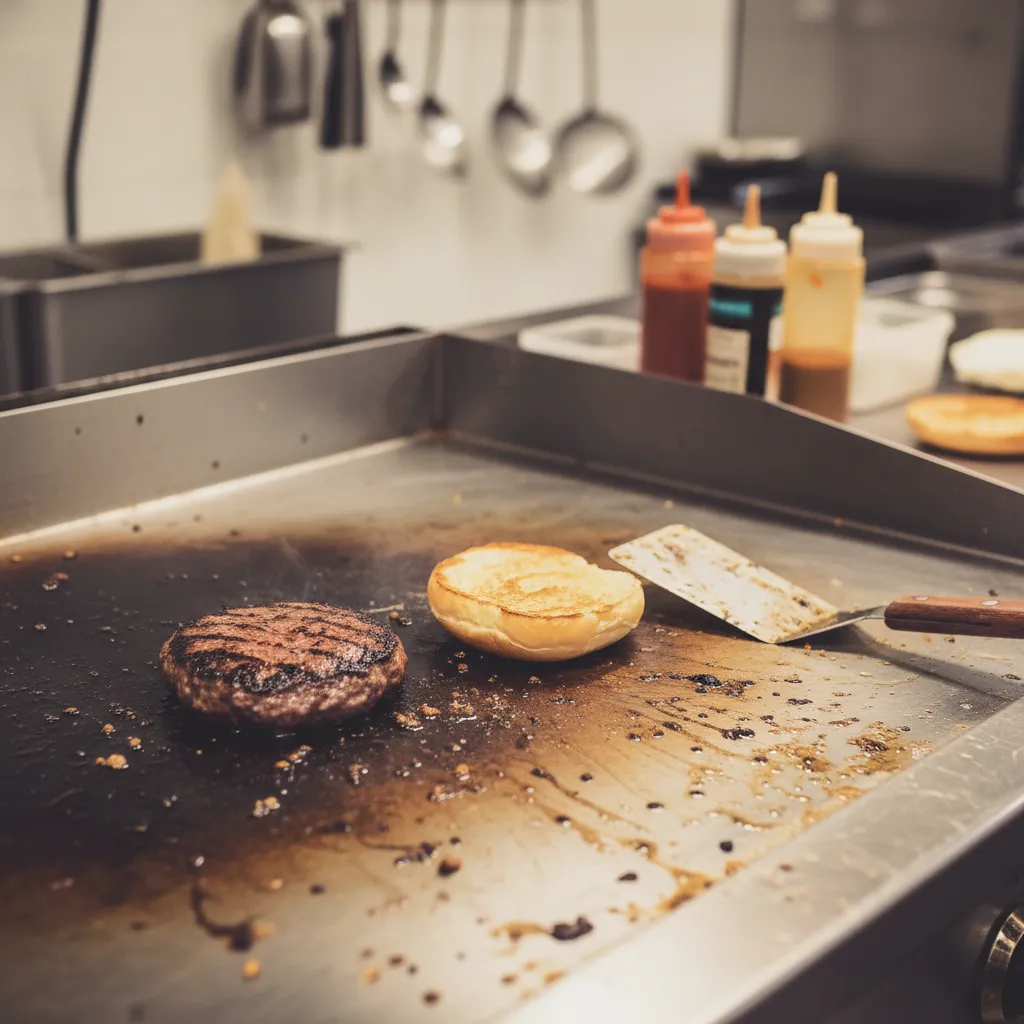
In many diners and steakhouses, a large flat-top grill is used to toast buns alongside burgers and steaks. This creates a surface covered in crumbs.
The Script:
“For the grilled chicken/steak, is it prepared on a shared flat-top grill where buns are also toasted? If so, can the chef prepare my protein in a separate, clean sauté pan or on a foil-lined section of the grill to avoid crumbs?”
Uncovering Hidden Gluten in Sauces and Prep
Beyond the obvious bread and pasta, gluten hides in thickeners, marinades, and cooking mediums. You need to interrogate the components of the dish.
Pasta Water Protocols
If a restaurant offers gluten-free pasta, you must ensure they aren’t boiling it in the same water used for wheat pasta. This “pasta water” is essentially liquid gluten.
The Script:
“I see you offer gluten-free penne. Can you confirm that this is boiled in a fresh pot of water, or a dedicated gluten-free boiler? If you use a shared pasta cooker, I will choose a different dish.”
Sauces, Dressings, and Marinades
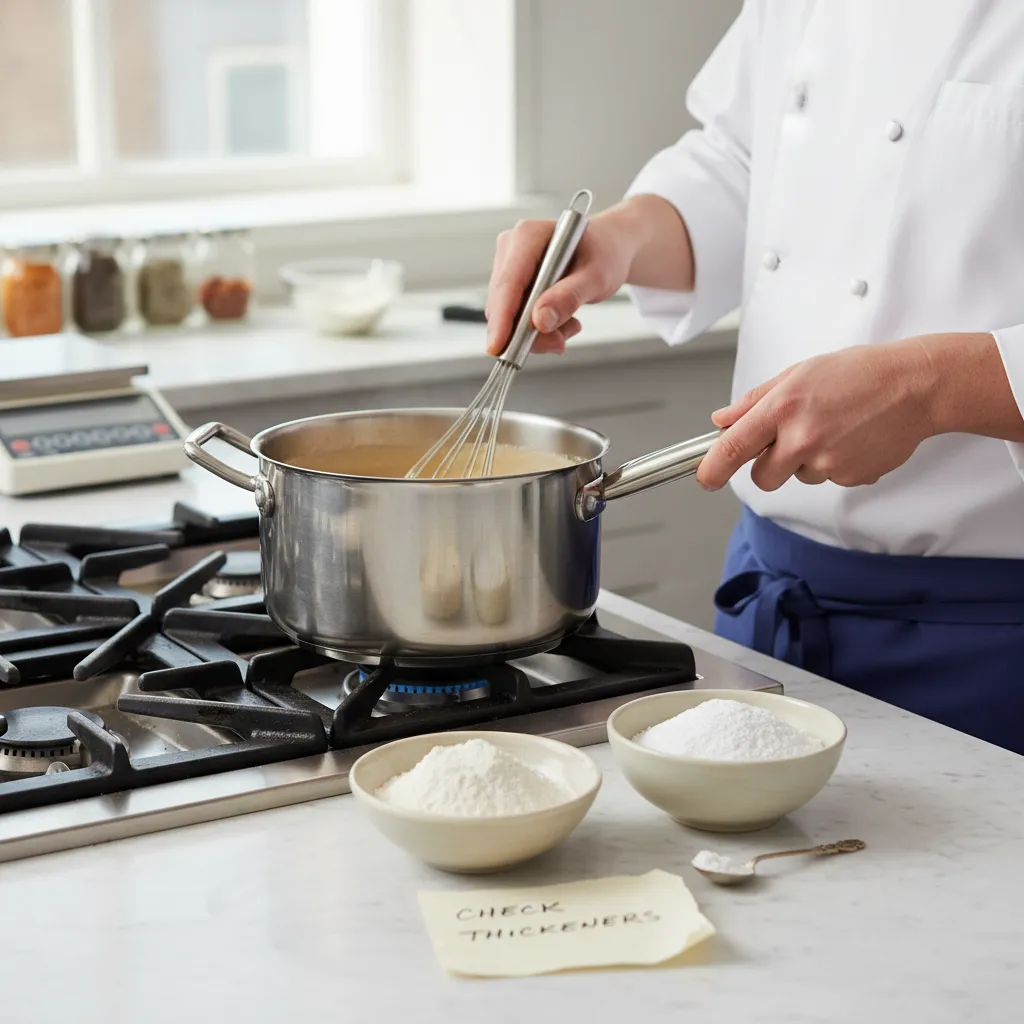
Many chefs use a roux (flour and butter) to thicken soups and sauces, or soy sauce (which contains wheat) in marinades.
The Script:
“Is the sauce for this dish thickened with cornstarch, arrowroot, or wheat flour? Also, has the meat been marinated in anything containing soy sauce or malt vinegar?”
Assessing Staff Knowledge and Attitude
Sometimes, the specific answers matter less than the attitude with which they are delivered. You are looking for competence and transparency. A server who writes nothing down and says “Yeah, yeah, it’s fine” is a danger. A server who says “I don’t know, let me ask the chef” is your best ally.
The “Gluten-Free” vs. “Celiac-Safe” Distinction
Test the staff’s understanding of the terminology. Many kitchens view “gluten-free” as a lifestyle trend (low carb), whereas “Celiac” requires sterilization protocols.
The Script:
“I want to clarify that this isn’t a preference. If a crouton touches my salad and is then removed, I still cannot eat the salad. Does the kitchen staff understand cross-contact protocols, such as changing gloves and using clean utensils for my order?”
Listen for keywords in their response:
- Positive signs: “Dedicated area,” “Change gloves,” “Separate cutting board,” “Allergy alert.”
- Negative signs: “Low gluten,” “We pick it off,” “Most people are fine with it.”
Red Flags: When to Walk Away
Despite your best efforts to script the conversation, some environments are simply unsafe. Recognizing these red flags protects your health. If you encounter these responses, it is safer to order a pre-packaged drink and enjoy the company, but skip the food.
1. The “Remove It” Philosophy
If a server suggests, “The salad comes with bread, but we can just take it off before bringing it out,” they do not understand cross-contact. Crumb residue is sufficient to trigger an autoimmune reaction in Celiacs.
2. The Buffet Environment
Buffets are nightmares for cross-contact. Spoons are swapped between dishes, and food falls from one tray to another. Even if you ask a chef what is gluten-free on a buffet, the environment itself is compromised.
3. The Dismissive Attitude
If the staff rolls their eyes, sighs, or acts annoyed by your questions, do not eat there. An annoyed kitchen staff is a careless kitchen staff. Your health is more important than their convenience.
4. Pizza Places with Loose Flour
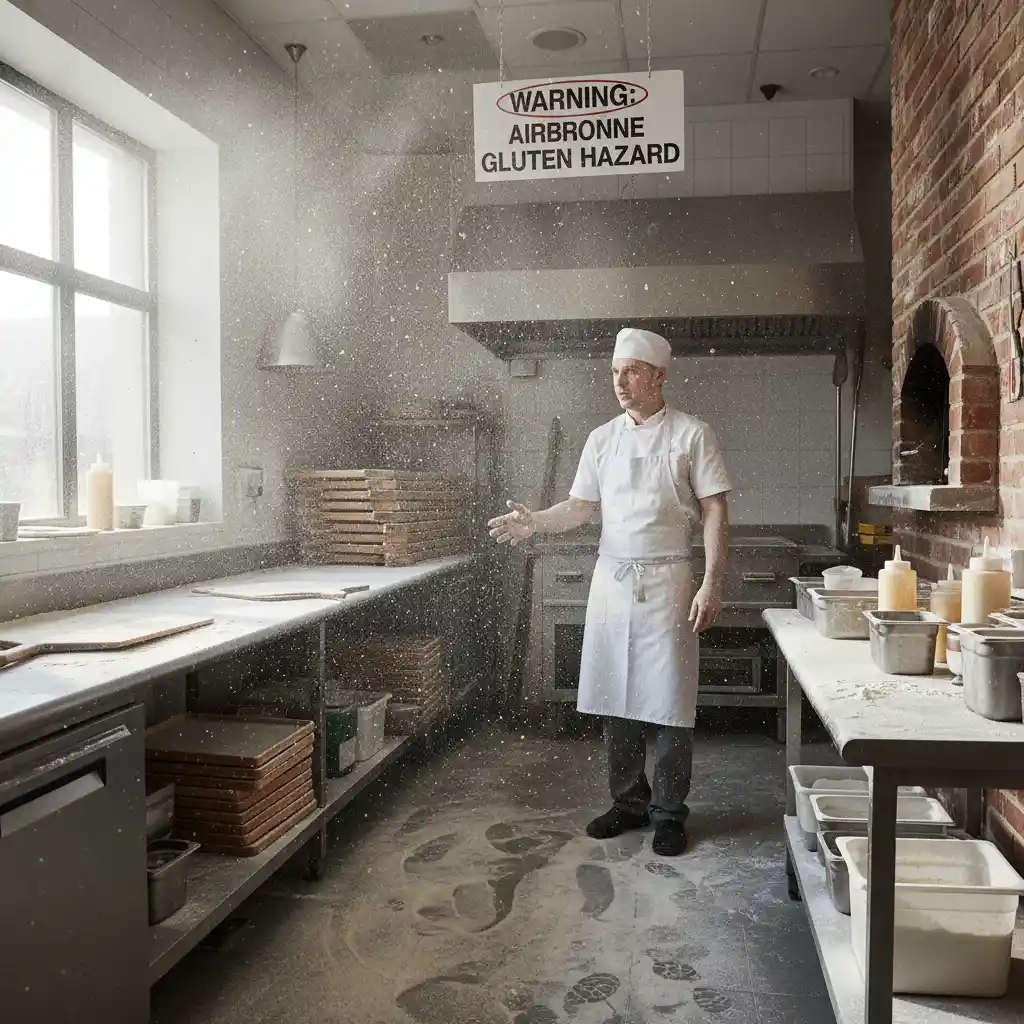
Unless a pizzeria has a completely separate room for gluten-free preparation, airborne flour is a significant risk. Flour can hang in the air for up to 24 hours. If you see chefs tossing dough in the open air near the “gluten-free” prep station, it is not safe.
Final Thoughts on Safe Dining
Dining out with dietary restrictions is a skill that improves with practice. By using these scripts, you move from a passive recipient of food to an active participant in your safety. Remember, asking questions to ask chef gluten free is not being “difficult”; it is being responsible. A professional chef respects a customer who knows what they need and communicates it clearly. Always trust your gut—if the answers don’t feel right, don’t eat.
People Also Ask
What should I say to the waiter about gluten allergy?
You should explicitly state: “I have a severe gluten allergy/Celiac disease. This is a medical condition, not a preference. I need to ensure my food is prepared with clean utensils and separate cookware to avoid cross-contact.” Always ask them to confirm safety protocols with the kitchen.
How do you politely ask if food is gluten-free?
Be direct but polite. Say, “Excuse me, could you help me navigate the menu? I have to eat strictly gluten-free for medical reasons. Which dishes can be prepared safely without any cross-contact with wheat?” This frames the request as seeking help rather than making demands.
What questions to ask at a restaurant with celiac disease?
Key questions include: “Do you use a dedicated gluten-free fryer?”, “Do you have a separate prep space?”, “Is pasta boiled in fresh water?”, and “How do you handle toasting gluten-free bread—is it done on a shared grill or a dedicated toaster?”
Can chefs accommodate gluten-free requests during rush hour?
It is more difficult during rush hour. It is highly recommended to dine during off-peak times or call ahead. If you are there during a rush, acknowledge it: “I know the kitchen is busy, but I have a severe allergy. If the kitchen cannot guarantee safety right now, please let me know so I can order something pre-packaged or safe.”
What is the difference between gluten-friendly and celiac-safe?
“Gluten-friendly” usually means the ingredients don’t contain gluten, but cross-contact is likely (shared fryers, shared surfaces). “Celiac-safe” means strict protocols are used to prevent any trace of gluten from touching the food, making it safe for those with autoimmune conditions.
How do I check if a marinade is gluten-free?
Ask the chef specifically about soy sauce, teriyaki, and malt vinegar. Ask: “Did you use tamari (gluten-free soy sauce) or regular soy sauce in the marinade?” and “Are there any pre-made spice rubs used that might contain anti-caking agents with wheat?”