
Gluten-free Asian food options rely heavily on naturally gluten-free staples like rice noodles, jasmine rice, and mung bean starch. Safe choices typically include Vietnamese Pho, Thai curries made with coconut milk, and Indian vegetable dishes. However, strict avoidance of standard soy sauce, wheat-based thickeners like hoisin, and shared deep-fryers is essential for Celiac safety.
Navigating the vibrant and diverse landscape of Asian cuisine can be a minefield for those with Celiac disease or non-celiac gluten sensitivity. While ingredients like rice, ginger, garlic, and chilies are naturally safe, the ubiquitous presence of wheat-brewed soy sauce and hidden thickeners creates significant risks. This guide provides the strategic knowledge required to dine out and cook authentic Asian dishes without compromising your health.
The Soy Sauce Problem: The Silent Gluten Source
The most significant barrier to enjoying gluten-free Asian food options is soy sauce. In traditional brewing methods, particularly in Chinese and Japanese cuisines, soy sauce is made by fermenting a mixture of mashed soybeans and wheat. The wheat provides sugars that aid fermentation, but it leaves behind residual gluten that makes the final product unsafe for anyone with gluten-related disorders.
Because soy sauce is a foundational ingredient used in marinades, stir-fry sauces, soup bases, and dipping condiments, it renders many seemingly safe dishes—like steamed vegetables or grilled meats—unsafe. Even a splash of standard soy sauce in a large wok is enough to trigger a reaction in a person with Celiac disease.
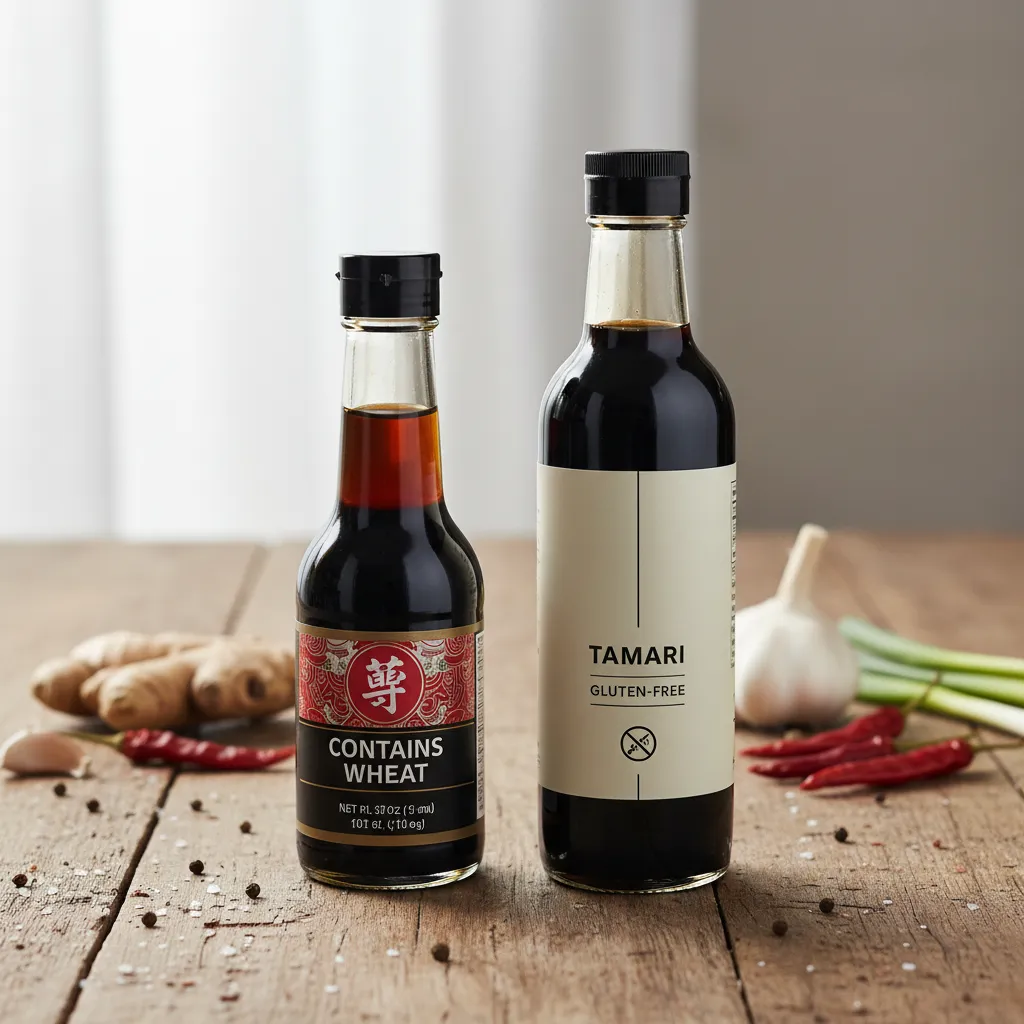
The Solution: Tamari and Coconut Aminos
Fortunately, alternatives exist. Tamari is a Japanese form of soy sauce that is traditionally made with little to no wheat. However, modern commercial brands vary, so one must always look for the “Gluten-Free” certification label. Tamari has a richer, smoother flavor than regular soy sauce and works perfectly as a 1:1 substitute.
Coconut Aminos is another popular alternative, made from the sap of coconut blossoms. It is naturally soy-free and gluten-free, with a slightly sweeter profile and lower sodium content, making it excellent for dipping sauces.
Cuisine-by-Cuisine Safety Guide
Not all Asian cuisines pose the same level of risk. Some culinary traditions rely heavily on wheat noodles and soy sauce, while others prioritize rice, fish sauce, and spices. Understanding these distinctions is key to finding safe gluten-free Asian food options.
Thai Cuisine: A Safer Bet
Thai food is often considered one of the safest Asian cuisines for gluten-free diners. The flavor profiles are built on fish sauce (nam pla), lime, lemongrass, chilies, and coconut milk, rather than soy sauce.
- Safe Options: Pad Thai (rice noodles), Tom Yum Soup (check for chili paste ingredients), Green and Red Curries, Som Tum (Papaya Salad).
- Risks: Some restaurants may add soy sauce to Pad Thai or use oyster sauce in stir-fries. Always confirm that the chef uses fish sauce exclusively.
Vietnamese Cuisine: Fresh and Rice-Based
Vietnamese cuisine is another excellent source of gluten-free Asian food options due to its heavy reliance on rice products and fresh herbs.
- Safe Options: Pho (rice noodle soup), Gỏi Cuốn (fresh summer rolls wrapped in rice paper), rice vermicelli bowls (Bun).
- Risks: Hoisin sauce, often served as a condiment for Pho, usually contains wheat. Avoid the brown sauce and stick to Sriracha (check the brand) and lime. Banh Mi sandwiches are made with wheat baguettes and are strictly off-limits.
Indian Cuisine: Naturally Low Gluten
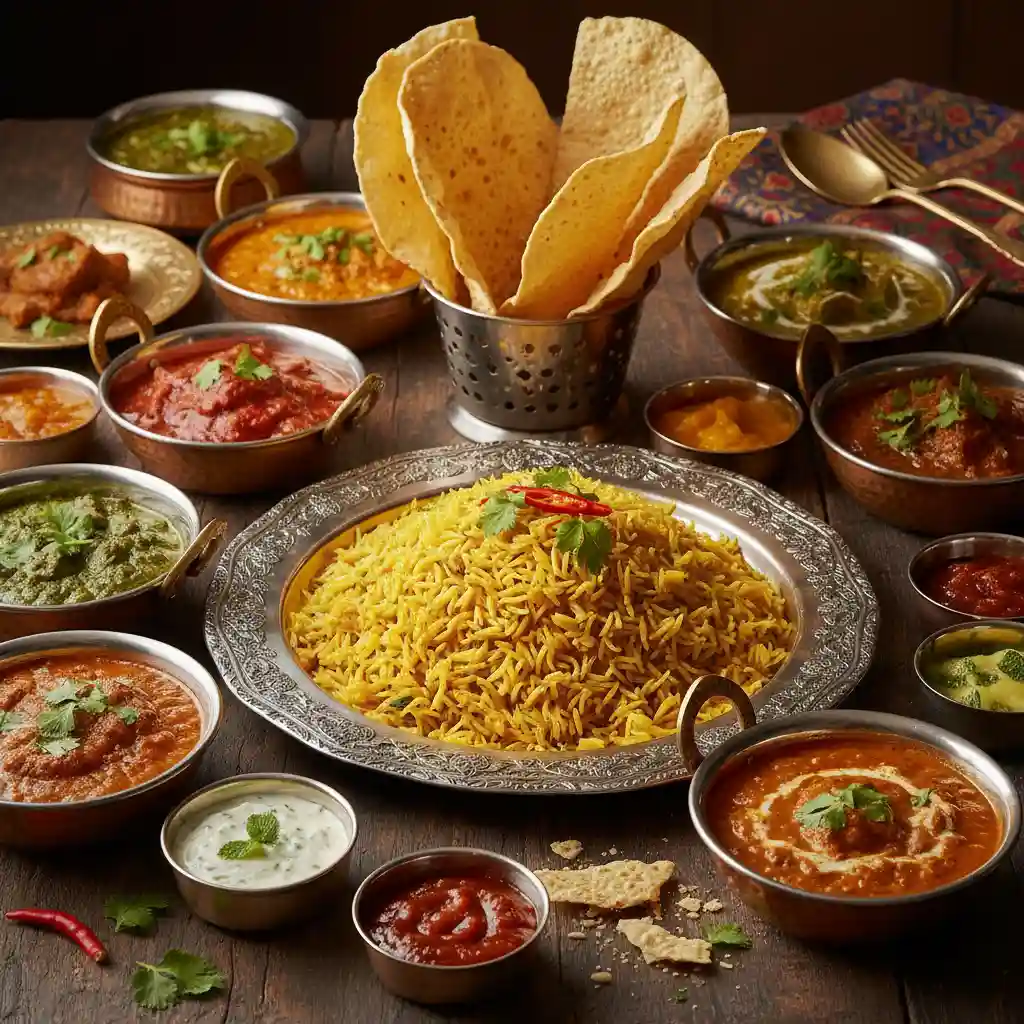
South Asian cuisine, particularly from Southern India, offers a plethora of gluten-free choices. Lentils, chickpeas, rice, and vegetables form the backbone of the diet.
- Safe Options: Curries (tikka masala, korma), Dosas (fermented rice and lentil crepes), Biryani, dishes made with Besan (chickpea flour) like Pakoras (if fried in dedicated oil).
- Risks: Naan, Roti, and Paratha breads are wheat-based. Hing (asafoetida) is a spice often cut with wheat flour to keep it free-flowing; ask if the restaurant uses compounded Hing.
Japanese and Chinese Cuisine: High Alert
These cuisines are the most challenging due to the ubiquity of soy sauce and wheat noodles.
- Japanese Risks: Tempura (wheat batter), Udon and Ramen noodles (wheat), Imitation Crab (surimi contains wheat starch), Eel sauce.
- Chinese Risks: Wonton wrappers, egg noodles, soy sauce in almost every brown sauce, breaded meats (General Tso’s).
- Safe Strategies: Stick to Sashimi (plain fish) or plain steamed rice and vegetables. Bring your own travel-sized Tamari.
Hidden Wheat: Gochujang, Hoisin, and More
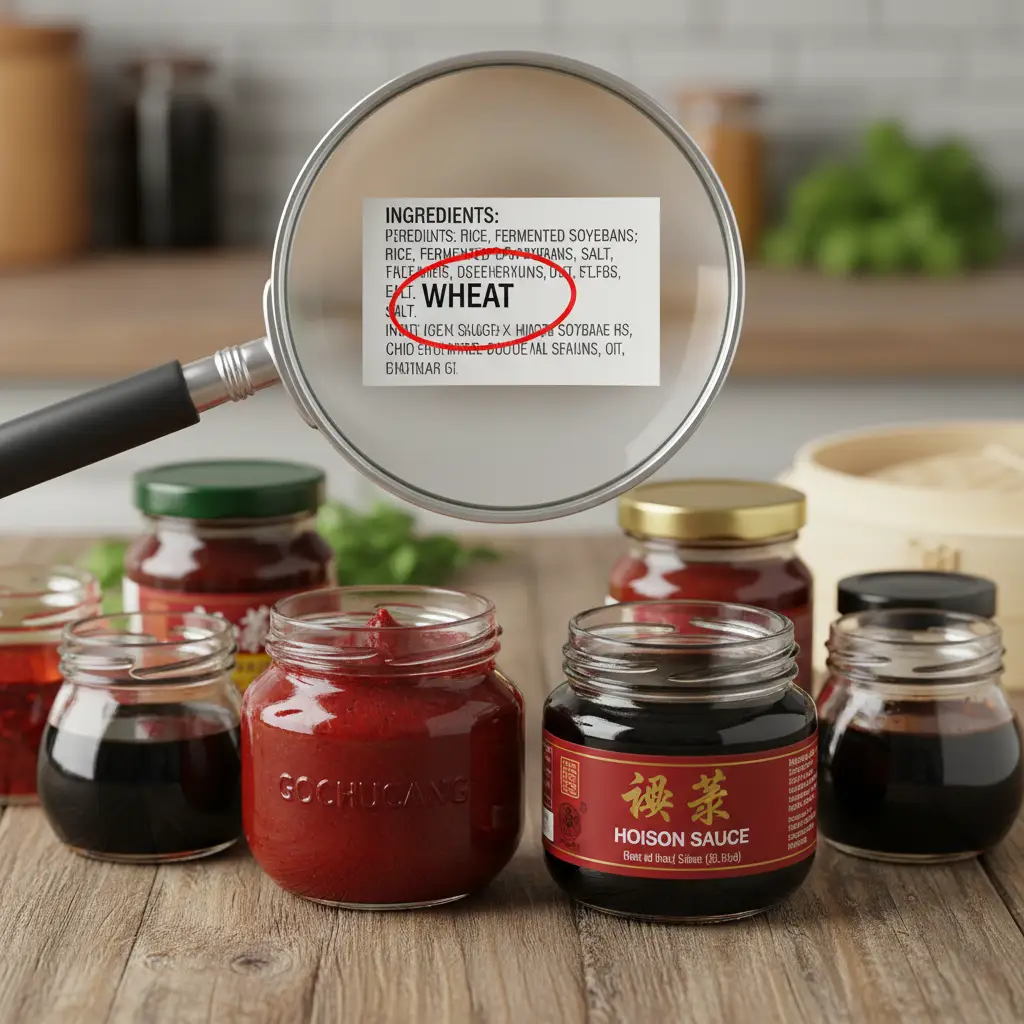
Beyond soy sauce, several thick pastes and condiments act as hidden reservoirs of gluten. These ingredients are often used to enhance flavor and texture but can cause severe illness in Celiacs.
What is the risk with Gochujang?
Gochujang is a fermented Korean chili paste that gives dishes like Bibimbap and Tteokbokki their signature heat and depth. Traditionally, and in most commercial varieties, fermented wheat or barley malt is used in the production process. This makes most standard Korean BBQ marinades and spicy soups unsafe unless the restaurant specifically uses a gluten-free brand of Gochujang.
Is Hoisin Sauce gluten-free?
Generally, no. Hoisin sauce, often called Chinese barbecue sauce, is typically thickened with wheat flour or sweet potato starch that may be cross-contaminated. It is a primary ingredient in Mu Shu Pork and a dipping sauce for Peking Duck. Always assume Hoisin contains gluten unless the bottle says otherwise.
Other Hidden Sources
- Imitation Crab (Surimi): Found in California rolls and seafood salads. It is pulverized fish held together with wheat starch binders.
- Oyster Sauce: While high-quality oyster sauce can be gluten-free, cheaper versions are often thickened with wheat.
- Black Vinegar: Chinkiang vinegar is made from glutinous rice but often includes wheat or barley in the fermentation starter.
Safe Options: Rice Noodles and Curries
If you are craving noodles, you do not have to abstain completely. Asian cuisine offers a fantastic variety of noodle textures made from gluten-free starches.
Rice Noodles (Vermicelli, Stick, Wide)
Rice noodles are the staple of Southeast Asia. They range from the thin vermicelli used in Vietnamese Bun bowls to the wide, flat noodles found in Thai Pad See Ew. When buying these for home, the ingredients should simply be rice flour and water.
Glass Noodles (Cellophane Noodles)
These translucent noodles are typically made from mung bean starch, sweet potato starch, or potato starch. They have a chewy, gelatinous texture and are commonly used in Korean Japchae (sweet potato starch noodles) or Thai Yum Woon Sen salads. They are naturally gluten-free and absorb sauces beautifully.
Soba Noodles (Buckwheat)
Buckwheat is naturally gluten-free (it is a seed, not wheat), but caution is required. Many commercially available Soba noodles are a blend of wheat flour and buckwheat flour to improve texture. You must look for “100% Buckwheat” or “Ju-wari Soba” to ensure they are safe.
Making Safe Stir-Fry at Home
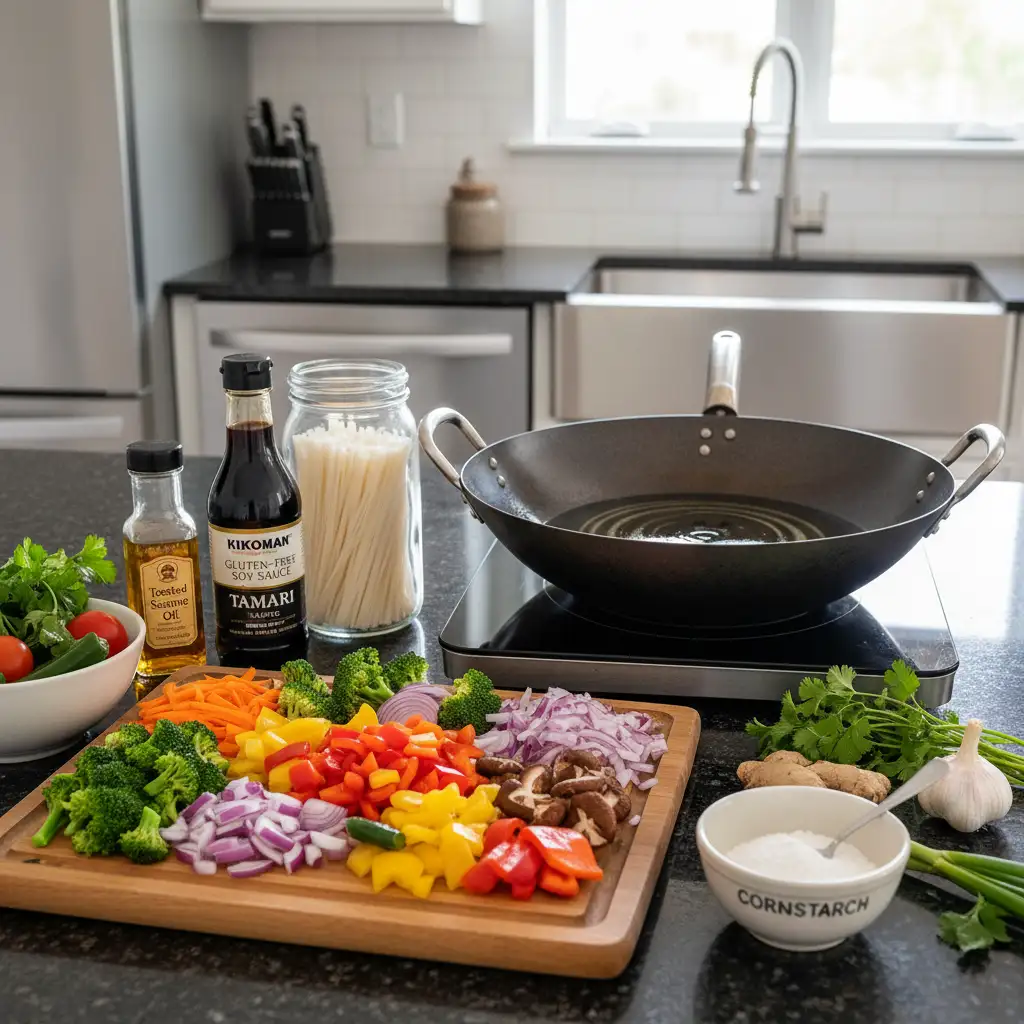
Cooking Asian food at home is the safest way to enjoy these flavors because you control the supply chain. Creating a gluten-free Asian pantry is an investment that pays off in delicious, safe meals.
Essential Gluten-Free Pantry Swaps
- Soy Sauce Replacement: San-J Tamari or Big Tree Farms Coconut Aminos.
- Thickener: Cornstarch, Arrowroot powder, or Tapioca starch instead of wheat flour for thickening sauces.
- Vinegar: Rice vinegar is usually safe (check labels), but avoid malt vinegar.
- Breadcrumbs: Use crushed gluten-free panko or crushed rice Chex for breading katsu-style dishes.
Preventing Cross-Contamination
If you have a mixed household, cross-contamination is a real threat. A wok that has been used with regular soy sauce may harbor gluten in its seasoned patina (carbon buildup). It is highly recommended to have a dedicated gluten-free wok or stainless steel skillet that can be scrubbed thoroughly. Do not use wooden utensils that have touched gluten, as wood is porous and retains proteins.
Crucial Tips for Dining Out
When visiting an Asian restaurant, communication is your primary defense. Language barriers can sometimes complicate matters, so using a translated Gluten-Free Restaurant Card is advisable.
- Ask about the Marinade: Meat is often marinated in soy sauce before it is even cooked. Ask for “plain” meat or meat steamed with no seasoning.
- Beware the Wok: In busy Chinese kitchens, woks are rarely washed with soap between dishes; they are rinsed with water. This means residue from the previous gluten-filled chow mein can end up in your gluten-free fried rice. Ask if the kitchen can use a clean pan.
- Avoid the Fryer: Unless the restaurant has a dedicated gluten-free fryer, avoid anything fried. Tempura, egg rolls, and breaded meats will contaminate the oil.
- Verify the broth: In soup places, ensure the base stock does not contain soy sauce or hydrolyzed wheat protein.
People Also Ask
Is Panda Express orange chicken gluten-free?
No, Panda Express Orange Chicken is not gluten-free. The chicken is breaded with wheat flour, and the sauce contains soy sauce which includes wheat. Cross-contamination is also very high in fast-food environments.
Are rice noodles always gluten-free?
Yes, plain rice noodles made from rice flour and water are naturally gluten-free. However, some fresh rice noodles sold in markets may contain wheat starch to prevent sticking, so always read the ingredient label.
Can Celiacs eat sushi?
Celiacs can eat sushi, but with caution. Sashimi is generally safe. You must avoid imitation crab, eel sauce, spicy mayo (sometimes contains gluten), and tempura crunch. Always bring your own gluten-free soy sauce and ask the chef to change gloves.
Is Pad Thai gluten-free?
Traditional Pad Thai is made with rice noodles and is often gluten-free, but it is not guaranteed. Some restaurants add soy sauce or use commercial sauces containing wheat. Always ask the server to confirm if the sauce is gluten-free.
What Asian sauces contain gluten?
Common Asian sauces containing gluten include soy sauce, hoisin sauce, oyster sauce, black bean sauce, teriyaki sauce, ponzu, and gochujang. Always look for certified gluten-free versions of these condiments.
Is Miso soup gluten-free?
Not always. While miso paste is made from fermented soybeans, it can sometimes include barley (mugi miso) or wheat. Additionally, the dashi broth used in the soup may contain soy sauce or wheat-based flavor enhancers.