
A successful gluten free Afghan biscuits recipe relies on substituting standard wheat flour with a high-quality gluten-free baking blend and using certified gluten-free cornflakes to maintain the signature crunch. Combine 200g softened high-fat butter, 1/2 cup sugar, 1 1/4 cups GF flour, 1/4 cup cocoa, and 2 cups GF cornflakes, baking at 180°C for 15 minutes to achieve the classic New Zealand texture.
Reclaiming Kiwi Classics: A Gluten-Free Approach
For those navigating the New Zealand gluten-free lifestyle, the thought of missing out on heritage baking can be disheartening. The “Big Three” of Kiwi desserts—Afghan Biscuits, Anzac Biscuits, and the Pavlova—are staples at every potluck, school fundraiser, and Christmas dinner. Fortunately, modern ingredient technology and a deeper understanding of food chemistry allow us to replicate these textures almost identically.
The challenge with gluten-free baking, particularly with a gluten free Afghan biscuits recipe, lies in structure and hydration. Wheat flour provides elasticity; without it, baked goods can become crumbly or dense. However, because Afghans are naturally a “short” biscuit (high butter content, low liquid), they are one of the easiest recipes to adapt successfully if you understand the role of cornflakes and cocoa butter.

The Ultimate Gluten Free Afghan Biscuits Recipe
This recipe has been formulated to prevent the common “grainy” texture associated with rice flour blends. We utilize a high-fat butter content to ensure the cornflakes bind correctly without the need for excessive xanthan gum.
Ingredients
- Butter: 200g (softened, not melted)
- Sugar: 1/2 cup (caster sugar is preferred for finer texture)
- Gluten-Free Flour: 1 1/4 cups (use a premium NZ blend like Edmonds GF or Bakels)
- Cocoa Powder: 1/4 cup (high-quality Dutch-processed)
- Gluten-Free Cornflakes: 2 cups (lightly crushed)
- Topping: 50g Dark Chocolate (melted) and Walnut halves
Step-by-Step Instructions
1. Preparation: Preheat your oven to 180°C (160°C fan bake). Line a baking tray with baking paper. This is crucial as GF biscuits are more delicate when hot and can stick to unlined trays.
2. Creaming: Beat the butter and sugar until pale and creamy. Do not rush this step. In gluten-free baking, the aeration of the butter provides the lift that gluten usually supports.
3. Dry Ingredients: Sift the flour and cocoa powder into the butter mixture. Stir thoroughly until combined. The mixture may look dry initially; keep mixing until a dough forms.
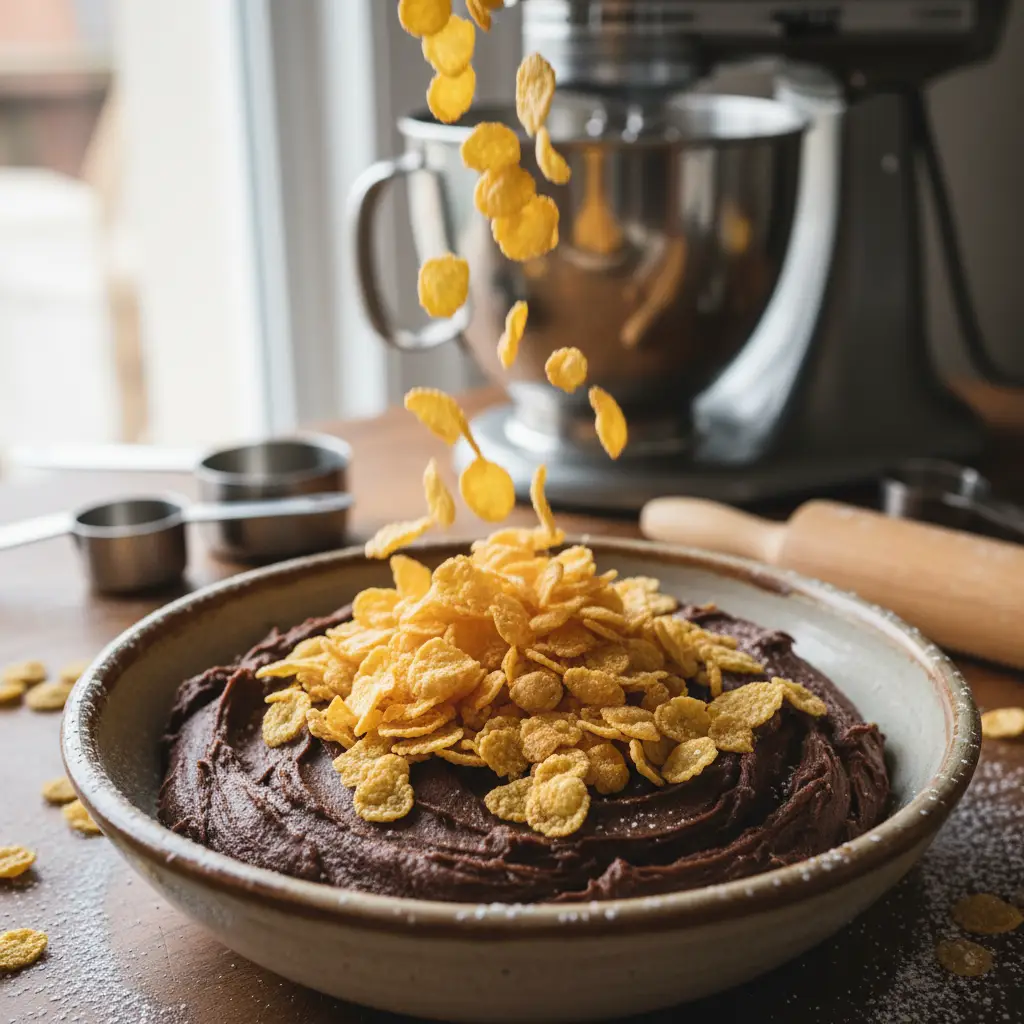
4. Adding the Crunch: Fold in the gluten-free cornflakes. Avoid crushing them into dust; you want distinct shards to provide the structural integrity of the biscuit.
5. Shaping: Spoon mounds (approx. tablespoon size) onto the tray and flatten slightly. GF Afghans do not spread as much as wheat versions, so shape them how you want them to finish.
6. Baking: Bake for 12–15 minutes. They will feel soft to the touch when removed from the oven. Do not move them. Allow them to cool completely on the tray to firm up.
7. Icing: Once cold, top with a teaspoon of melted chocolate and a walnut half.
The Secret to Crunchy GF Cornflakes for Afghans
The defining characteristic of a good Afghan is the crunch. In a standard recipe, malt-sweetened cornflakes are used. However, malt flavoring is derived from barley, which contains gluten. Therefore, selecting the right cereal is critical for safety and texture.
Avoiding the “Soggy” Factor
Gluten-free cornflakes are typically made from maize and sugar, often lacking the malt coating that protects wheat-based flakes from absorbing moisture too quickly. When mixed into buttery dough, some generic GF cornflakes can turn into a mushy paste.
Professional Tip: Look for brands that are “toasted” rather than just extruded. In New Zealand, brands like Hubbards or Nestlé Gluten Free offer specific variations. If you find your local brand is too soft, toast the cornflakes on a dry baking tray for 5 minutes at 150°C before adding them to your dough. This “double-baking” technique creates a moisture barrier, ensuring that your gluten free Afghan biscuits recipe results in a crunch that rivals the original.
Chewy vs. Crisp: Perfecting the GF Anzac Biscuit
The Anzac biscuit presents a unique challenge for the gluten-free community in New Zealand and Australia. Under the Food Standards Code, oats cannot be labelled “gluten-free” in this region due to the protein avenin, which mimics gluten, and the high risk of wheat contamination in processing.
The Oat Substitute Dilemma
To create a safe Anzac, you must replace rolled oats. The two best professional alternatives are:
- Quinoa Flakes: These provide a high-protein, nutty profile similar to oats but can be slightly bitter. They produce a crisper biscuit.
- Rice Flakes: These are neutral in flavor and soften well, mimicking the “chew” of traditional oats.

Achieving the Chew
The debate between chewy and crisp Anzacs is settled by the ratio of Golden Syrup and sugar. For a chewy GF Anzac:
- Increase Golden Syrup: Use 3 tablespoons instead of 2. The invert sugars attract moisture from the air, keeping the biscuit soft.
- Brown Sugar vs. White Sugar: Use 100% soft brown sugar. The molasses content adds moisture.
- Rest the Dough: Let the dough sit for 30 minutes before baking. This allows the rice flour and flakes to hydrate fully, preventing a gritty texture.
Pavlova Safety: Checking Icing Sugar and Cream
The Pavlova is naturally gluten-free, relying on egg whites and sugar. However, for those with Coeliac disease, the danger lies in the additives and toppings. A professional baker never assumes ingredients are safe without verification.
The Icing Sugar Trap
Icing sugar (powdered sugar) requires an anti-caking agent to prevent it from turning into a rock. In New Zealand, this agent is usually tapioca starch or maize starch, which are gluten-free. However, some imported brands or bulk-bin generic brands may use wheat starch.
Always check the label of your icing sugar before using it to sweeten the cream or dust the finished Pavlova. If wheat starch is present, it is not safe.
Cream and Cross-Contamination
When preparing the topping, ensure your mixing bowl for the cream has not been used recently for flour-based baking. Scratches in plastic bowls can harbor microscopic gluten particles. Use a stainless steel or glass bowl for whipping cream to ensure your Pavlova remains a safe centerpiece.

Top NZ Butter Brands for Baking
In gluten-free baking, fat is flavor, but it is also structure. Without gluten, the emulsification of fat and liquid holds the crumb together. New Zealand produces some of the world’s best dairy, but not all butter is created equal for baking.
Why Fat Content Matters
Standard butter is approximately 80-81% milk fat, with the rest being water and milk solids. Premium butters can reach 83-85% milk fat. Lower water content is preferable for the gluten free Afghan biscuits recipe because excess water can dissolve the sugar too rapidly, causing the biscuit to spread and lose its shape.
Recommended Brands
- Lewis Road Creamery: Known for high fat content and rich flavor. Excellent for shortbreads and Afghans where butter is the primary flavor profile.
- Anchor Standard: A reliable workhorse. Consistent water content makes it predictable for Anzacs and general baking.
- Westgold: Produced on the West Coast, this butter often has a rich, golden color and high fat content, ideal for creating a tender crumb in GF baking.
Troubleshooting Common GF Baking Issues
Even with the best recipe, things can go wrong. Here is a professional diagnostic guide for your Kiwi classics.
My Afghans Crumbled into Dust
This is the most common complaint. It typically means the ratio of dry ingredients to butter was too high, or the biscuits were moved while hot. Gluten-free flour absorbs fat differently than wheat flour. If your dough feels too crumbly before baking, add 1 tablespoon of extra softened butter. Ensure you allow them to cool completely on the tray.
My Anzacs Spread into One Giant Biscuit
This usually indicates the oven was too cool or the butter was melted too much before mixing. In GF baking, if the butter is hot when it hits the sugar, the structure collapses before the flour sets. Wait for your melted butter/syrup mixture to cool to lukewarm before combining with dry ingredients.
Frequently Asked Questions
Why do my gluten-free Afghans crumble?
Gluten-free Afghans crumble primarily because they lack the elastic protein gluten binding them together. This can be caused by moving them while they are still hot (GF baking is very fragile straight out of the oven) or using a flour blend that lacks sufficient xanthan gum or guar gum binders. Ensure you let them cool completely on the tray to set the structure.
What are the best gluten-free cornflakes in NZ?
For baking, Hubbards Gluten Free Cornflakes and Nestlé Gluten Free Corn Flakes are widely recommended in New Zealand. They offer a good crunch that holds up to mixing. Always double-check the packaging to ensure there is no barley malt extract listed in the ingredients.
Can I use coconut oil instead of butter for Afghans?
Yes, you can use coconut oil, but the texture will change. Butter contains milk solids that caramelize and add flavor. Coconut oil has a lower melting point, which may cause the biscuits to spread more. If using coconut oil, chill the dough for 15 minutes before baking to help retain the shape.
Is standard icing sugar gluten-free in NZ?
Generally, yes. Most standard icing sugar in New Zealand uses tapioca or maize starch as an anti-caking agent. However, you must check the label, especially on imported goods or “icing mixture” packets, as some international brands still utilize wheat starch.
How do I make GF Anzacs chewy?
To achieve a chewy texture in GF Anzacs, use a high ratio of Golden Syrup and brown sugar. Brown sugar contains molasses, which retains moisture. additionally, using rice flakes instead of quinoa flakes can result in a softer, chewier texture closer to the traditional oat version.
How long do GF Afghans last?
Gluten-free Afghans will last for up to one week if stored in an airtight container in a cool, dark place. Because they lack preservatives and rely on butter, they can go stale faster than commercial biscuits. They also freeze very well; freeze them without the chocolate icing for best results.