
The cost of gluten-free food in New Zealand is typically 200% to 500% higher than standard equivalents, particularly for staples like bread and pasta. To manage a mixed-diet budget effectively, households should prioritize naturally gluten-free whole foods while strictly segregating high-cost specialized items like baked goods to prevent cross-contamination and financial waste.
The Reality of Grocery Pricing in NZ: Quantifying the Coeliac Premium
Living with Coeliac disease or non-coeliac gluten sensitivity in New Zealand presents a significant financial challenge. When analyzing the cost of gluten free food NZ consumers face, the disparity is most evident in processed staples. Understanding these price differences is the first step in creating a sustainable household budget.
Recent market surveys across major New Zealand supermarkets (such as Woolworths, New World, and Pak’nSave) highlight a stark contrast. While a standard loaf of wheat bread may cost between $1.50 and $4.00, a certified gluten-free loaf of comparable size often ranges from $6.00 to $9.00. This is not merely a slight markup; it is often a 300% to 500% price increase. The production costs associated with gluten-free certification, specialized ingredients (like almond meal, xanthan gum, and rice flour), and the requirement for dedicated manufacturing facilities contribute to this premium.
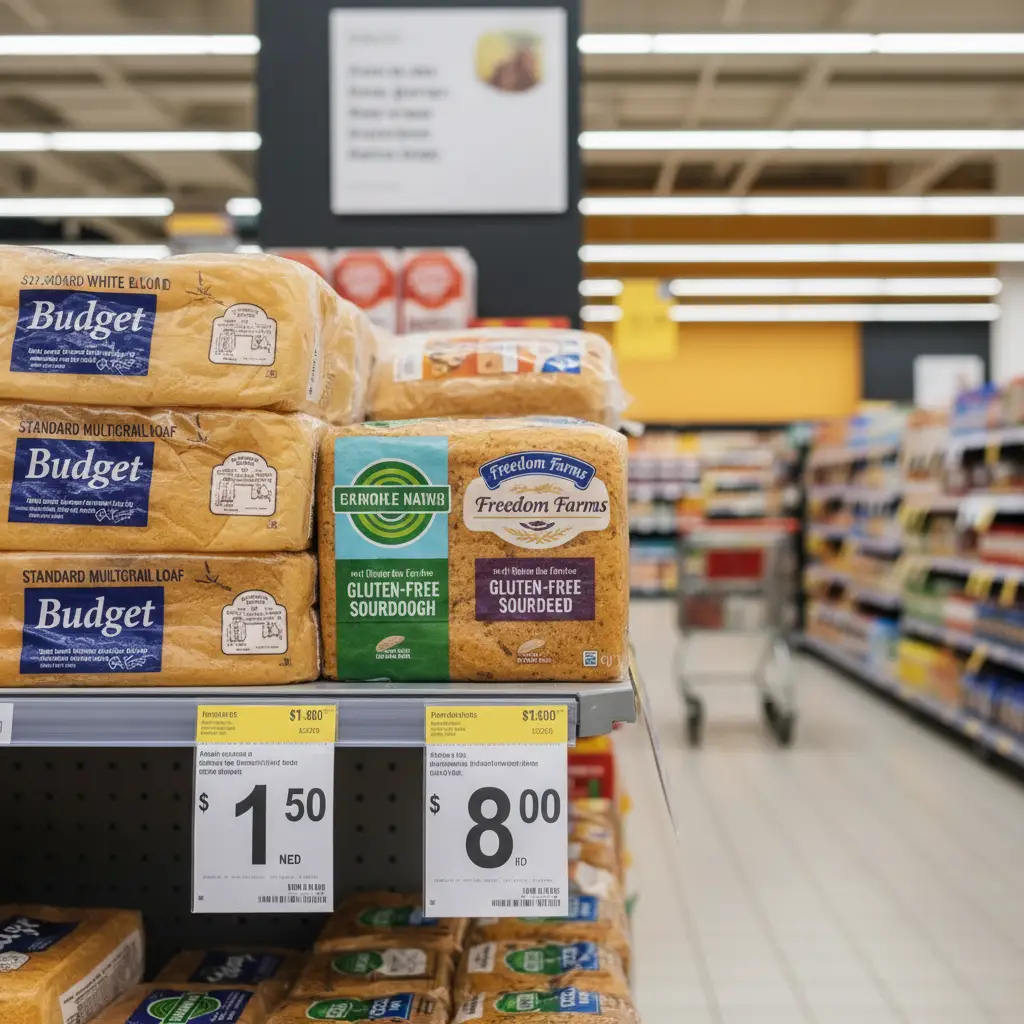
The “Coeliac Tax” Breakdown
It is essential to categorize where the money is going. In a mixed diet household—where some members eat gluten and others do not—buying exclusively gluten-free products for everyone is financially unsustainable for most Kiwi families. The price gap varies by category:
- Bread and Bakery: The highest disparity. A family of four eating entirely GF toast for breakfast could spend upwards of $40 per week on bread alone, compared to $6 for standard bread.
- Pasta: Standard pasta is often less than $1.50 for 500g. Gluten-free pasta (typically corn or rice-based) usually starts at $3.50 and can go up to $6.00 for premium brands like San Remo or Barilla GF.
- Crackers and Biscuits: Often double the price for half the volume.
- Cereals: Certified GF cereals often carry a premium of $3-$4 per box over standard wheat-based options.
By acknowledging these figures, households can move toward a strategic “mixed diet” approach, ensuring safety for the coeliac family member without bankrupting the entire grocery budget.
Strategic Separation: What to Share vs. What to Keep Apart
The most effective way to balance safety and budget is to categorize your pantry into “Shared” and “Separate” zones. This prevents the costly mistake of feeding expensive gluten-free specialty items to family members who do not require them, while also minimizing the risk of cross-contamination.
Foods to Share (The Safe Middle Ground)
To maximize budget efficiency, the core of your main meals should be consumed by everyone. Cooking two entirely different dinners every night is expensive and time-consuming. Focus on starches and bases that are naturally gluten-free and affordable in New Zealand:
- Rice: Jasmine, Basmati, and Brown rice are inexpensive staples. Buy in 5kg or 10kg sacks.
- Potatoes and Kumara: A classic NZ staple. Whether mashed, roasted, or boiled, these are safe for everyone and cost-effective.
- Quinoa and Polenta: Excellent alternatives to couscous (which is wheat-based).
- Rice Noodles: Often cheaper than GF pasta and authentic for Asian dishes.
Foods to Separate (The Budget Savers)
This is where strict segregation saves money. The gluten-eating members of the household should continue to consume standard wheat products for these specific items, provided strict hygiene is maintained.
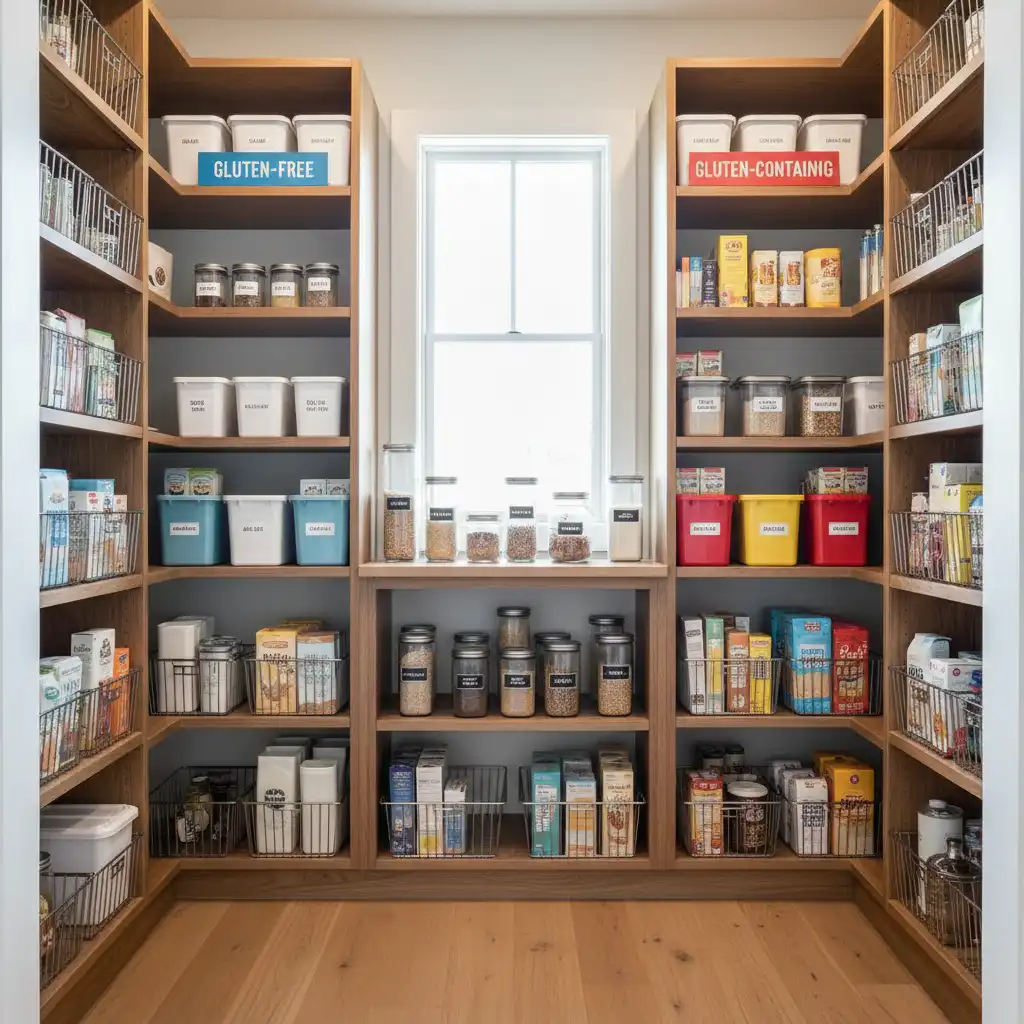
- Bread: Do not share GF bread. It is too expensive. Keep standard bread for non-coeliacs. Crucial Safety Tip: Use separate toasters or toaster bags. Store gluten bread below GF bread in the pantry to prevent crumbs falling into the safe food.
- Pasta: If you are making a pasta bake, it may be easier to use GF pasta for everyone. However, for spaghetti bolognese, cook two pots. A 500g bag of standard pasta costs $1; the GF equivalent is $4. Over a year, this small change saves hundreds of dollars.
- Baking: If baking a birthday cake for the whole family, make it gluten-free. If making school lunch muffins for non-coeliac children, use standard flour (carefully cleaning the kitchen afterward).
Bulk Buying and Freezer Management
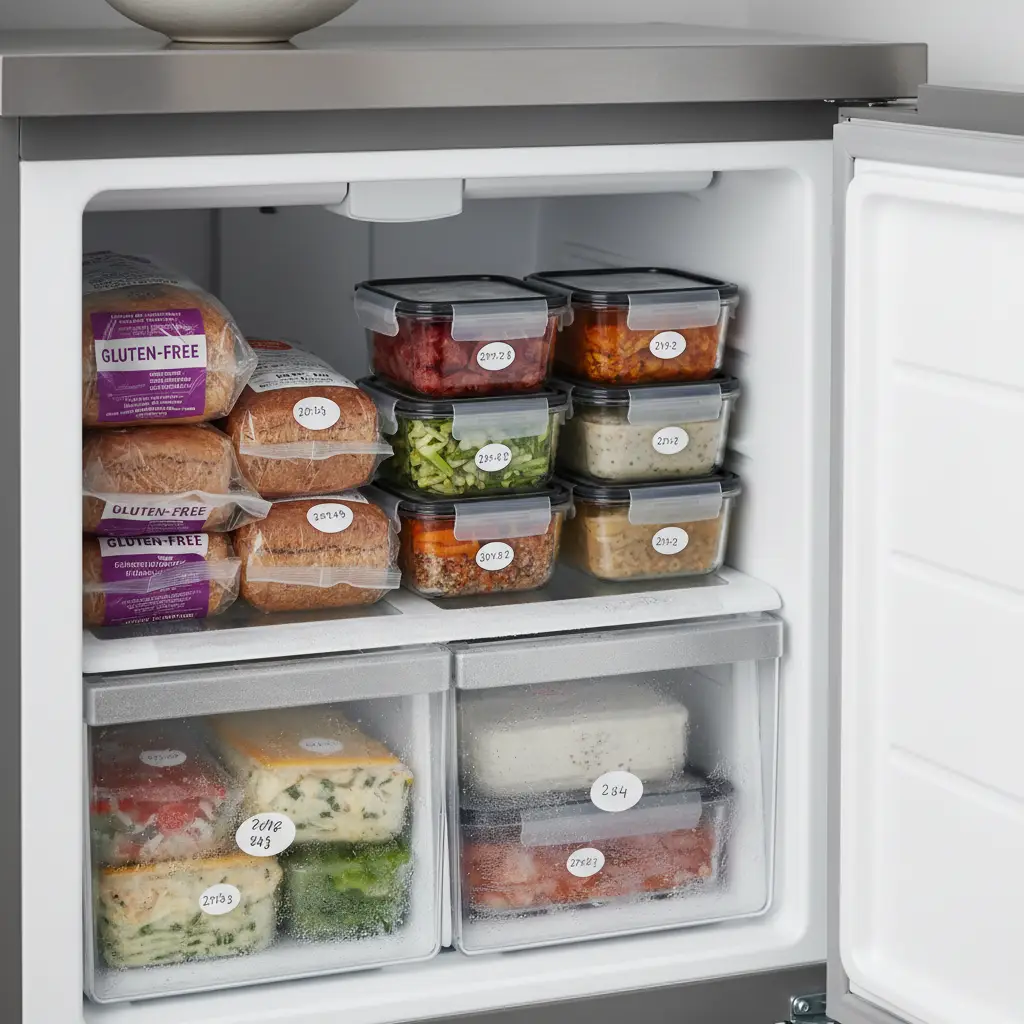
When managing the cost of gluten free food NZ, the freezer is your most valuable asset. Gluten-free baked goods lack the preservatives and structural integrity of wheat products, meaning they go stale incredibly fast—often within 24 hours of opening. This leads to food waste, which is essentially throwing money away.
How to Shop Smart in NZ
Avoid the “health food” aisle for generic items. Instead, look for bulk suppliers or international sections.
- Bin Inn and Bulk Bins: Stores like Bin Inn allow you to buy GF flours (rice, tapioca, buckwheat) in bulk. Warning: Always check for cross-contamination warnings on bulk bins. Many Coeliacs prefer sealed bags. If buying bulk sealed bags (e.g., 5kg Bakels GF flour), you save significantly per 100g compared to small supermarket boxes.
- Asian Supermarkets: These are goldmines for rice noodles, rice paper, soy sauce (check for GF labeling or Tamari), and rice flour at a fraction of the supermarket price.
- Freezing Bread: Never leave GF bread in the pantry. As soon as you buy it, separate the slices (put baking paper between them if they stick) and freeze the loaf. Toast straight from frozen. This ensures you never throw away half a $8 loaf because it went moldy.
The Power of Naturally Gluten-Free Meal Planning
The most effective way to lower your grocery bill is to stop trying to replicate a wheat-based diet with expensive substitutes. Processed GF food is where the high cost lies. A diet based on whole foods is naturally gluten-free and healthier.
The “Meat and Three Veg” Advantage
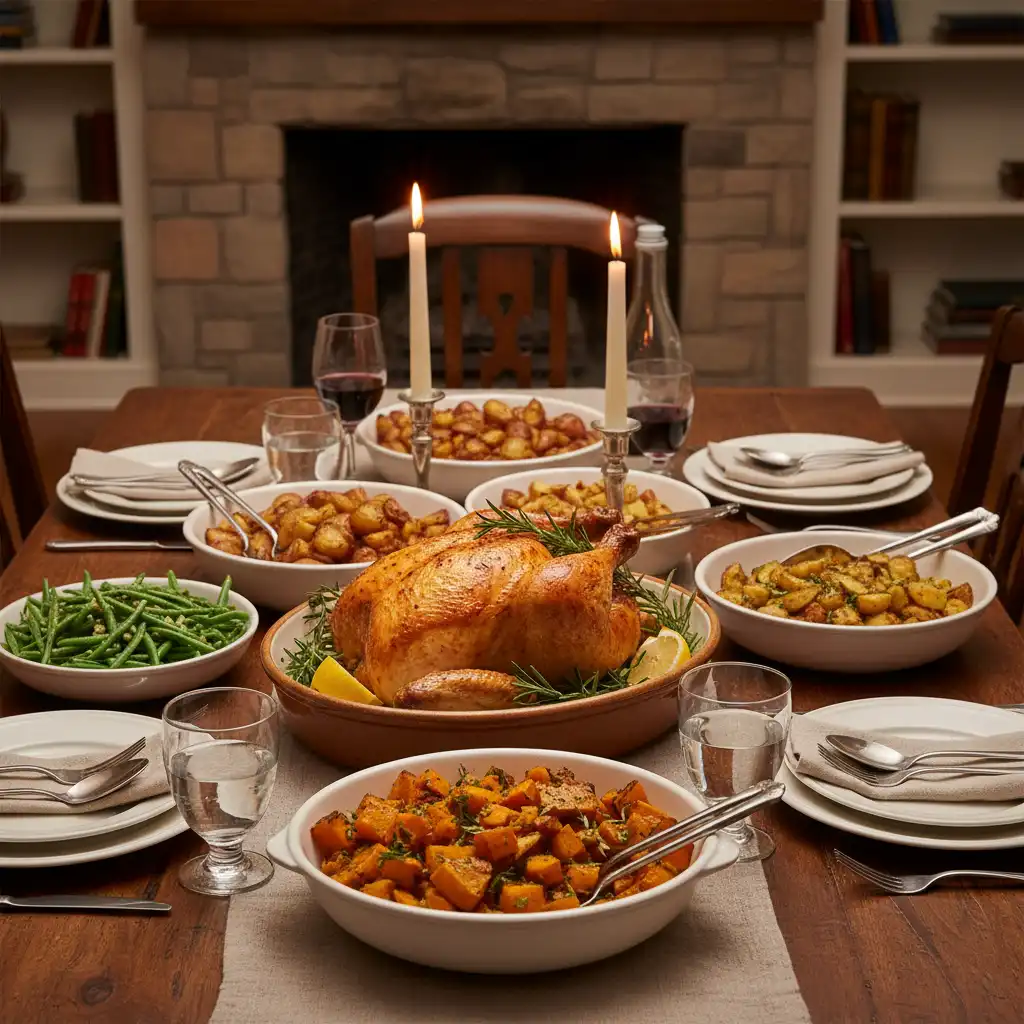
New Zealand’s traditional “meat and three veg” dinner is naturally gluten-free provided you watch the gravy and marinades. By focusing on fresh produce, meat, dairy, and eggs, you eliminate the “Coeliac Tax” almost entirely.
Meal Ideas that Cost the Same for Everyone:
- Roast Chicken: Use GF stuffing or skip it. The rest of the meal (roast veggies, chicken) is safe. Thicken gravy with cornflour (usually GF, but check the packet) instead of wheat flour.
- Curries: Most Indian and Thai curries are naturally GF if thickened with coconut milk or nut pastes. Serve with rice. This is a high-volume, low-cost meal for mixed families.
- Mexican Bowls: Use corn chips or corn tortillas (check ingredients for wheat blends). Beans, rice, mince, and salsa are affordable and naturally safe.
- Risotto: Arborio rice is naturally gluten-free and creates a creamy, luxurious meal without needing expensive substitutes.
Mitigating Hidden Costs and Cross-Contamination
Budgeting isn’t just about the receipt at the checkout; it’s about avoiding the costs of getting sick (time off work, doctor visits) and the cost of replacing contaminated items.
Condiment Strategy
A major source of cross-contamination in mixed households is the “double dip” in jars of butter, jam, or mayonnaise. If a knife touches wheat toast and goes back into the jar, the whole jar is unsafe for a Coeliac.
The Budget Solution:
- Squeeze Bottles: Buy mayonnaise, tomato sauce, and mustard in squeeze bottles. This eliminates the knife contact entirely, allowing everyone to share the same bottle safely.
- Labeling: For items that must be in jars (like peanut butter), buy two. Clearly label one “GF” with a permanent marker or bright sticker. While buying two seems more expensive, it is cheaper than contaminating a jar and having to throw it out or risking the health of the coeliac family member.
The WINZ Disability Allowance
In New Zealand, if you have a diagnosed chronic condition like Coeliac Disease that incurs extra costs, you may be eligible for the Disability Allowance through Work and Income (WINZ). This is a weekly payment that can help offset the higher cost of gluten free food NZ residents face. You will need your GP to sign a form verifying the diagnosis and the necessity of the diet.
People Also Ask
Why is gluten-free food so expensive in NZ?
Gluten-free food is more expensive due to the higher cost of raw ingredients (like almond or rice flour), the need for dedicated manufacturing facilities to prevent cross-contamination, and the costs associated with mandatory gluten testing and certification to meet strict Food Standards Australia New Zealand (FSANZ) requirements.
Is there financial help for Coeliacs in NZ?
Yes, New Zealand residents with diagnosed Coeliac Disease may be eligible for the Disability Allowance through Work and Income (WINZ). This allowance is designed to help cover the additional costs of the specialized diet required to manage the condition.
What is the cheapest gluten-free flour in NZ?
Rice flour and cornflour (corn starch) are generally the cheapest gluten-free flours in New Zealand, especially when bought from Asian supermarkets or in bulk bins. Pre-mixed gluten-free baking blends are significantly more expensive.
Can you share a toaster in a mixed gluten-free house?
No, you cannot safely share a toaster as crumbs from wheat bread can contaminate gluten-free bread. You should either buy a dedicated 2-slice toaster for gluten-free bread or use reusable “toaster bags” which encase the gluten-free bread while it toasts in a shared appliance.
Are oats gluten-free in New Zealand?
Under current FSANZ laws, oats cannot be labelled as “gluten-free” in New Zealand due to the protein structure being similar to gluten and high risks of contamination. However, some Coeliacs can tolerate “wheat-free” oats under medical guidance. Always consult your dietitian.
Is it cheaper to bake gluten-free bread or buy it?
It is generally cheaper to bake gluten-free bread if you buy flours in bulk and bake regularly. However, the initial cost of ingredients (xanthan gum, different flours) can be high. For occasional use, buying a loaf and freezing it may be more economical to avoid ingredient waste.