
Explaining coeliac disease to family requires defining it as a serious autoimmune condition where gluten triggers the immune system to attack the body, rather than a simple food intolerance. To ensure safety, you must clearly communicate strict protocols regarding cross-contamination, separate cooking utensils, and the necessity of dedicated gluten-free zones within the shared kitchen environment.
Living with Coeliac disease in New Zealand presents unique challenges, particularly when it involves shared living spaces. Whether you are moving into a new flat or navigating life with your whānau, the safety of your home environment is paramount. It is not merely about what you eat; it is about the invisible traces of gluten that can linger on cutting boards, inside toasters, and in shared condiments.
The burden of education often falls on the person with the diagnosis. While this can feel exhausting, establishing clear boundaries and fostering understanding is the only way to ensure your physical health and mental peace of mind. This guide provides a comprehensive strategy for having these difficult conversations and setting up a kitchen that works for everyone.
Understanding the Basics: What to Tell Them
Before you can expect your flatmates or family to adhere to strict safety rules, they must understand the “why” behind them. Many people confuse Coeliac disease with a fad diet or a mild intolerance. Your first step is to correct this misconception professionally and firmly.

Autoimmune vs. Allergy
Explain that Coeliac disease is an autoimmune condition. Use the analogy of a “system override.” When you ingest gluten, your body doesn’t just digest it poorly; your immune system identifies it as a threat and launches an attack on your own small intestine. This damage prevents nutrient absorption and can lead to severe long-term health issues, including osteoporosis and infertility.
The “Crumb” Concept
The most difficult concept for non-Coeliacs to grasp is the scale of contamination required to cause damage. Use the “visualize a crumb” technique. Explain that a visibly microscopic amount of gluten—enough to fit on the head of a pin—is enough to trigger this autoimmune reaction. This helps move the conversation from “don’t eat bread” to “we need to be careful with the knife used to cut the bread.”
Having ‘The Chat’ with New Flatmates and Whānau
Initiating the conversation about kitchen safety can feel awkward, especially in New Zealand culture where we often try not to “make a fuss.” However, your health is non-negotiable. Whether you are interviewing potential flatmates or sitting down with parents, the approach should be structured and serious.
Timing is Everything
Do not have this conversation while you are cooking dinner or when tensions are high. Schedule a specific time for a “house meeting” or a family sit-down. This signals that the topic is significant and requires their full attention.
Scripting the Conversation
If you are nervous, it helps to have a script. Try an opening like this:
“I love living here/being part of this whānau, but I need to talk about my medical needs regarding food. I have Coeliac disease, which is a serious autoimmune condition. To stay healthy and avoid getting sick, I need our kitchen to operate in a specific way. I’m not asking you to change your diet, but I am asking for your help in changing how we handle food preparation to keep me safe.”
Setting Non-Negotiables
Be clear about your non-negotiables immediately. If you require a gluten-free household, state that upfront. If you are willing to live in a mixed household, outline the absolute rules (e.g., “No flour usage in the kitchen due to airborne particles” or “My cookware is off-limits”).
Creating a Visual Kitchen Guide and Zoning System
Human memory is fallible. Even the most well-intentioned flatmate might forget which chopping board is yours. The solution is to remove the reliance on memory by implementing visual cues and physical zoning.
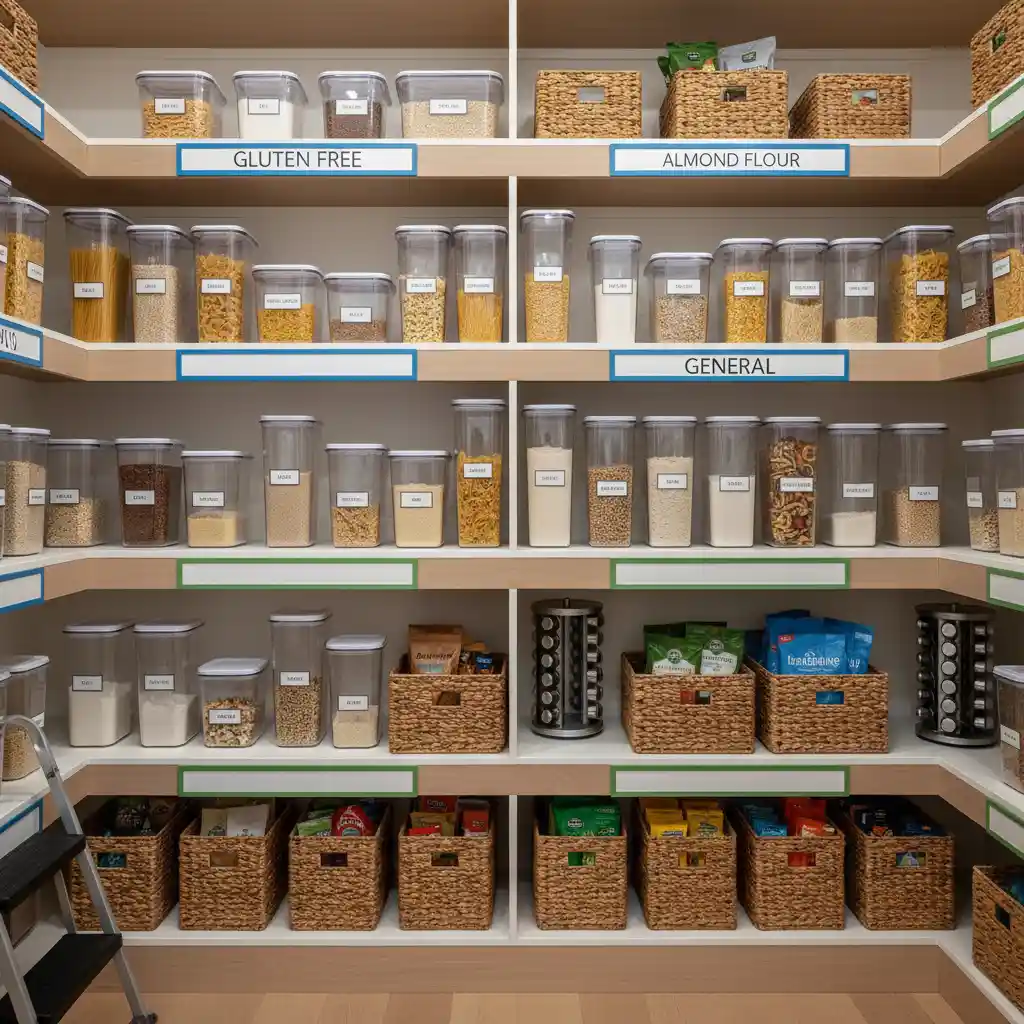
The “Top Shelf” Rule
Gravity is the enemy of the Coeliac. In a shared pantry and fridge, always claim the top shelves. If a flatmate spills a bag of regular flour or drops breadcrumbs, they will fall downward. By keeping your gluten-free products above the gluten-containing items, you eliminate the risk of gravity-assisted cross-contamination.
Color-Coding the Kitchen
Invest in a set of bright, distinctive stickers or colored tape (e.g., neon green). Apply this to everything that is strictly gluten-free:
- Utensils: Tongs, spatulas, and wooden spoons (which are porous and trap gluten) should be separate.
- Cookware: Colanders and sieves are notoriously difficult to clean perfectly; keep your own.
- Sponges and Scrubbers: Gluten gets trapped in cleaning equipment. Use a different color sponge for gluten-free washing up.
The Kitchen Chart
Create a simple, visual chart to stick on the fridge. It acts as a passive reminder for everyone in the house. Include simple icons representing:
- Wash Hands: Before touching GF food.
- Clean Surfaces: Wipe down counters before GF prep.
- No Double Dipping: The golden rule of condiments.
Handling Crumbs: The Butter, Jam, and Toaster Protocol
The most common source of friction in a mixed household is the “double dip.” This occurs when a knife is used on regular toast, dipped into the butter or jam, and then put back into the container, leaving behind gluten crumbs. For a Coeliac, that tub is now contaminated.
The Squeeze Bottle Solution
Eliminate the risk entirely by switching to squeeze bottles for condiments like mayonnaise, ketchup, and mustard. If a knife never enters the container, cross-contamination cannot occur. For items like jam or peanut butter, buy two jars and label one clearly with a large “GF” or your name.
The Butter War
Butter is often the hardest battleground. You have two options:
- Separate Containers: You have your own butter dish, kept on your shelf in the fridge.
- The “Scoop” Method: Teach flatmates to scoop a chunk of butter onto a plate before spreading it on their toast, rather than going back and forth from toast to tub. However, this relies on compliance and is high-risk. Separate containers are safer.
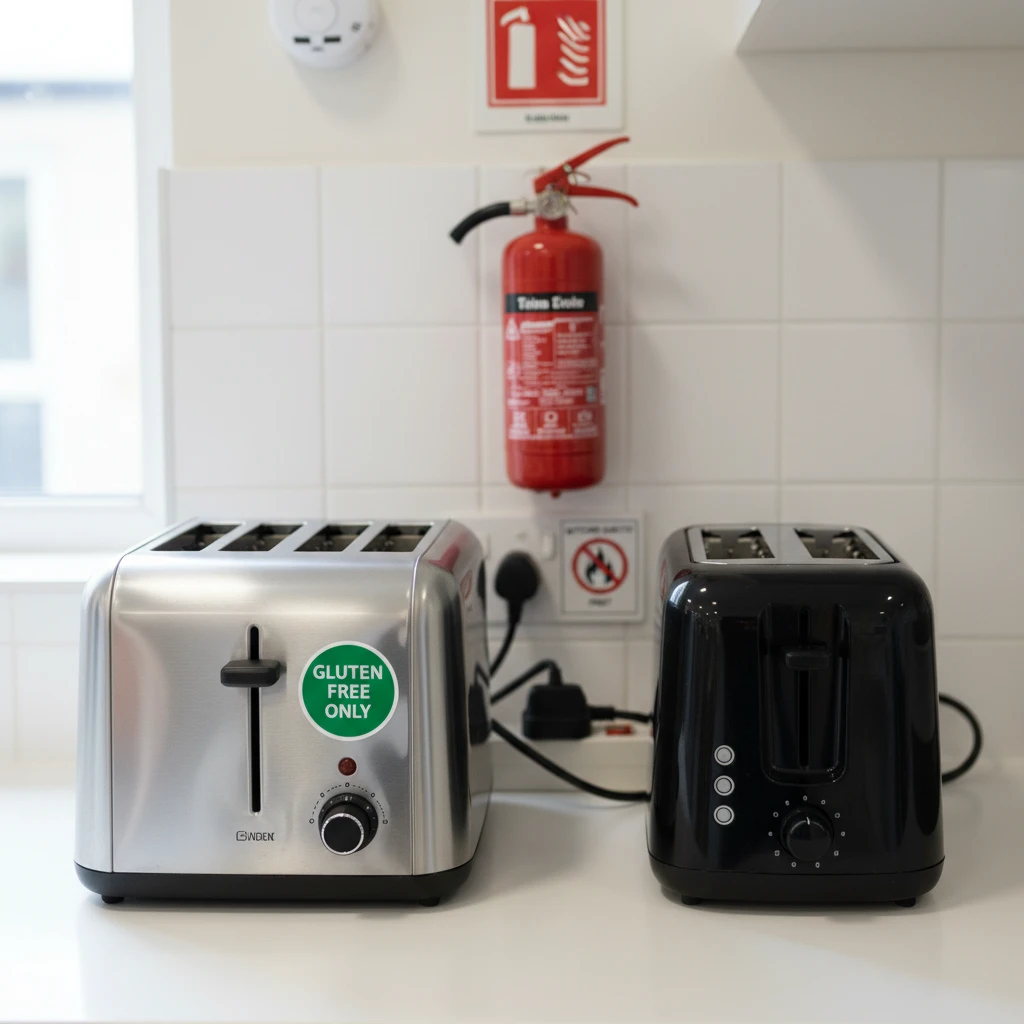
Toaster Trauma
You cannot share a toaster. Toasters are essentially crumb collectors. Even toaster bags can break or leak. The safest protocol is to have a dedicated 2-slice toaster for gluten-free bread. Label it aggressively. If counter space is limited, keep your toaster in a cupboard when not in use to prevent accidental usage by a sleepy flatmate.
Dealing with Skepticism and Lack of Understanding
Inevitably, you may encounter a family member or flatmate who believes you are being “dramatic” or that “a little bit won’t hurt.” This skepticism is dangerous and must be addressed directly.
Facts Over Emotion
When someone challenges your strictness, respond with medical facts rather than defensive emotion. Phrases like “My doctor has explained that any gluten intake causes intestinal lesions” are harder to argue with than “I get a tummy ache.”
The “Glutening” Aftermath
If you feel comfortable, explain the reality of what happens when you get “glutened.” Describe the days of brain fog, the severe pain, the fatigue, and the time off work. When people realize that a careless crumb can cost you three days of livelihood and health, they are often more empathetic.
Handling the “Fad Diet” Accusation
Clarify the difference between the gluten-free diet trend and Coeliac disease. Acknowledge that while some people choose to avoid gluten for wellness reasons, you have a genetic autoimmune disease. The strictness isn’t a choice; it’s a medical prescription.
Strategies for Shared Meals and Social Events
Food is a central part of Kiwi culture, from Sunday roasts to flat dinners. You shouldn’t have to isolate yourself to stay safe.

The “Safe Chef” Rule
If you are sharing a meal, offer to be the head chef. This gives you control over the ingredients and the preparation surface. If others are cooking, ask to come into the kitchen and prepare your portion first, before any gluten ingredients (like flour for gravy or breadcrumbs) are introduced.
Foil is Your Friend
When using a shared oven, use aluminum foil liberally. Cover your trays to prevent crumbs from racks above falling onto your food. Never place your food directly on the oven rack.
BBQ Safety
Summer BBQs are a staple in New Zealand. Ensure a section of the grill is cleaned thoroughly and covered with a grill mat or foil for your food. Alternatively, cook your meat first on the clean grill before the sausages (which often contain gluten binders) or marinated meats are cooked.
Maintaining Relationships While Staying Safe
Constant vigilance can make you feel like the “fun police.” It is important to balance safety with relationship maintenance.
Express Gratitude
When your flatmates or whānau get it right, thank them. Positive reinforcement goes a long way. “Thanks so much for wiping down the bench before making your sandwich, I really appreciate you looking out for me,” reinforces the behavior you want to see.
Pick Your Battles
Be strict about safety, but try to be flexible where it doesn’t matter. If they want to eat gluten-filled takeaways, let them enjoy it—just ask them to dispose of the containers properly. Showing that you respect their food choices helps them respect your medical needs.
Explaining Coeliac disease to family and flatmates is an ongoing process, not a one-time conversation. It requires patience, clear communication, and a visual system that makes compliance easy. By setting these foundations early, you create a home that is not only safe for you but comfortable for everyone.
How do I explain cross-contamination to a child?
Use the “glitter” analogy. Explain that gluten is like glitter—if you touch it, it sticks to your hands, and then gets on everything you touch afterwards. Just like we don’t want glitter in our dinner, we don’t want gluten in our special food. This visual helps children understand how easily it spreads.
What if my flatmates refuse to follow the rules?
If flatmates consistently refuse to follow safety protocols despite clear communication, your health is at risk. You may need to keep all your kitchenware and non-perishable food in your bedroom. Ultimately, if the environment remains unsafe, you may need to prioritize your health and look for a new living situation.
Can I share a dishwasher with non-Coeliacs?
Generally, yes. Modern dishwashers that are well-maintained and clean effectively are safe. However, ensure plates are rinsed of large crumbs before loading, and check that the filter is cleaned regularly to prevent recirculating gluten particles.
Is it rude to bring my own food to a family dinner?
Not at all. It is better to bring your own safe food than to risk getting sick or causing anxiety for the host. Let the host know in advance: “I’m really looking forward to coming! To make things easy and ensure I stay safe, I’ll bring my own plate so you don’t have to worry about dietary requirements.”
How do I handle a shared sponge in the kitchen?
Do not share sponges. Sponges are porous and trap gluten particles easily. Use a separate sponge, ideally a different color or shape, and store it in a separate spot so it isn’t used by mistake on gluten-containing cookware.
What is the most common place for hidden gluten in a shared kitchen?
Beyond the toaster, the silverware drawer is a common culprit. If crumbs fall from the counter into the drawer, or if utensils are put away with residue, they can contaminate your food. Using a cutlery tray divider or keeping your essential utensils in a separate container can help.