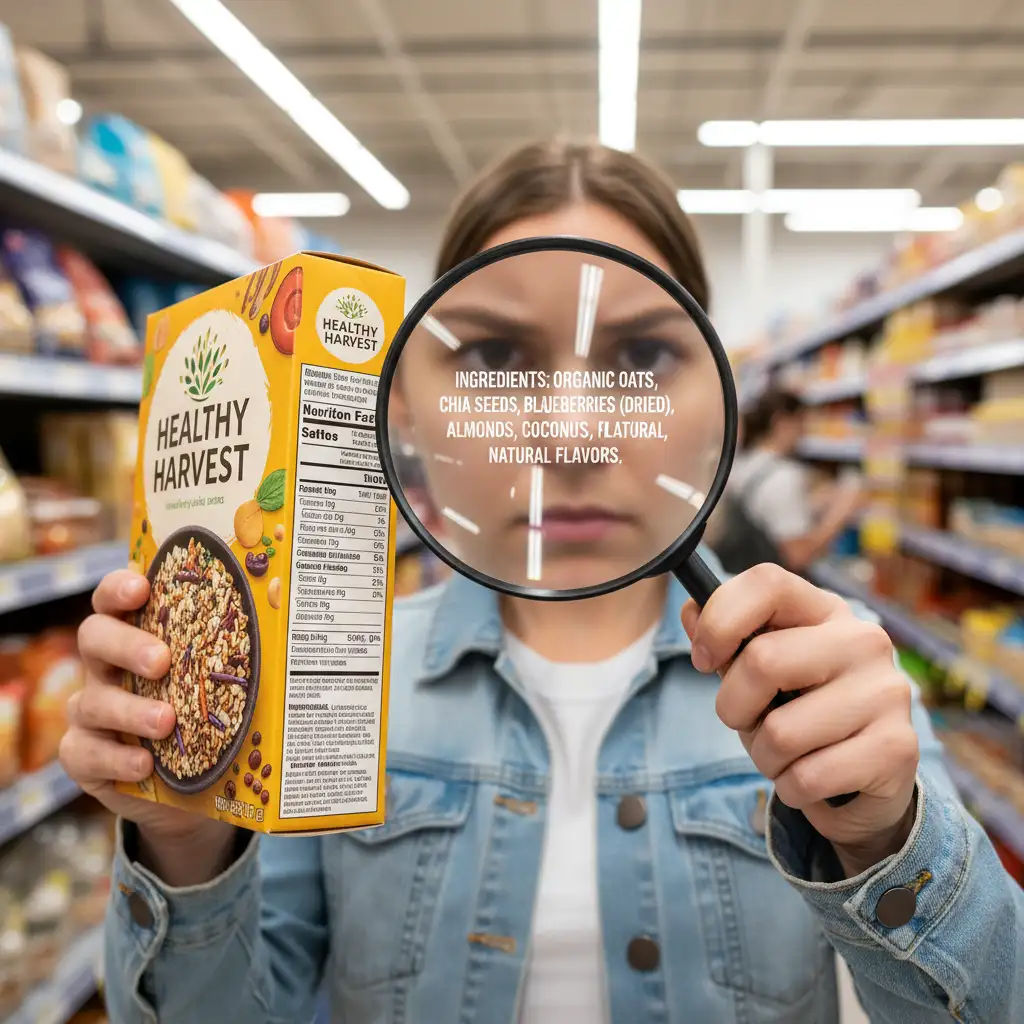
To read labels for gluten effectively, first inspect the package for a third-party “Certified Gluten-Free” seal, which indicates strict testing. If absent, review the “Contains” statement for the word “Wheat.” Crucially, scan the entire ingredient list for non-wheat gluten sources like barley, rye, malt, brewer’s yeast, and non-certified oats, which are not legally required to be listed in allergen warnings.
For individuals managing Celiac disease or non-celiac gluten sensitivity, the grocery store can feel like a minefield. A single misinterpretation of a nutrition label can lead to days of illness and long-term intestinal damage. While gluten-free living has become a popular trend, the medical necessity of strict avoidance requires a level of vigilance that goes beyond marketing buzzwords. Understanding the nuance of food labeling laws, hidden ingredient names, and cross-contamination warnings is the single most important skill for protecting your health.
The Basics of Label Reading
Mastering the art of label reading is akin to learning a new language. It requires a systematic approach every time you pick up a product, regardless of whether you have bought it a hundred times before. Manufacturers frequently change formulations, suppliers, or manufacturing facilities without explicit notice on the front of the package. The only way to ensure safety is to read the label every single time.
Where to Look First?
When assessing a product, your eyes should follow a specific hierarchy of information to make a quick but accurate determination of safety:
- The Certification Seal: Look for a logo from a reputable third-party certifying organization (such as GFCO). This is the gold standard.
- The “Gluten-Free” Claim: Look for the words “Gluten-Free” printed on the package. In many jurisdictions, this legally binds the manufacturer to meet specific safety thresholds (usually 20 parts per million).
- The “Contains” Statement: Located adjacent to the ingredient list, this bolded text highlights top allergens. However, relying solely on this is a common rookie mistake, as we will discuss in the legal section.
- The Ingredient List: The final and most critical check. This is where hidden sources of gluten like malt or flavored vinegars reside.
FALCPA and Global Labeling Laws
To truly understand how to read labels for gluten, you must understand the laws that dictate what manufacturers are required to disclose. In the United States, the governing regulation is the Food Allergen Labeling and Consumer Protection Act (FALCPA).
What is FALCPA?
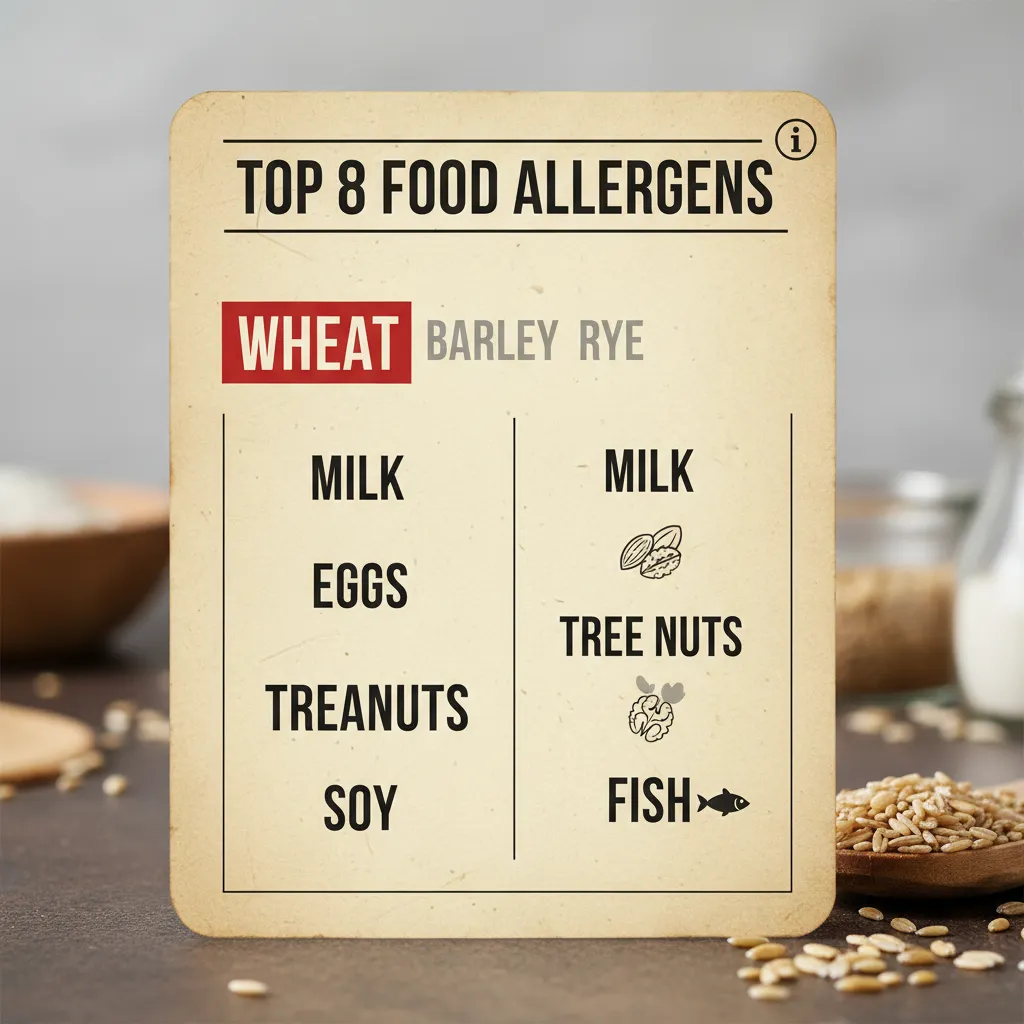
Passed in 2004, FALCPA requires that food labels clearly identify the food source names of all ingredients that are—or contain any protein derived from—the eight major food allergens. These allergens are milk, eggs, fish, crustacean shellfish, tree nuts, peanuts, soybeans, and wheat.
The Critical Gap in FALCPA: While FALCPA is a massive help for those with wheat allergies, it is imperfect for those with Celiac disease. The law requires the disclosure of wheat, but it does not require the disclosure of barley or rye. This means a product can look safe according to the “Contains” statement (e.g., “Contains: Milk, Soy”) but still contain barley malt flavoring in the fine print. This is why you cannot stop reading at the bold allergen warning.
The FDA “Gluten-Free” Ruling
Separate from FALCPA, the FDA issued a ruling defining the term “gluten-free” for voluntary labeling. If a manufacturer chooses to print “Gluten-Free” on their package, the product must contain less than 20 parts per million (ppm) of gluten. This standard is based on analytical methods and clinical evidence suggesting that most people with Celiac disease can tolerate trace amounts below this threshold without intestinal damage.
Identifying Safe vs. Unsafe Ingredients
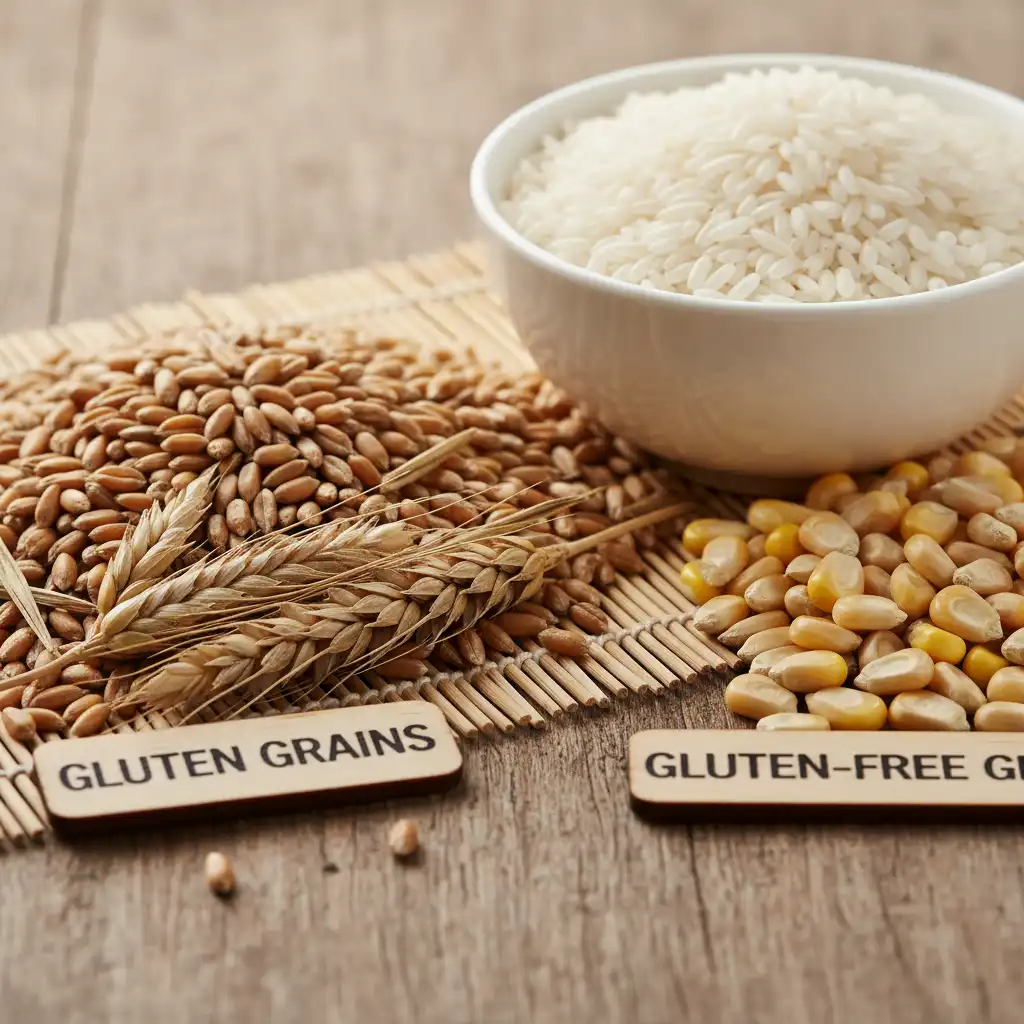
Once you move past the regulatory stamps, you enter the complex world of ingredient decoding. Gluten can hide behind scientific names and vague descriptors. A proficient label reader categorizes ingredients into three buckets: Definite No, Cautionary, and Safe.
The “Definite No” List (The BROW Acronym)
The most basic mnemonic for gluten avoidance is BROW: Barley, Rye, Oats, and Wheat. While oats are naturally gluten-free, they are frequently contaminated during farming and processing. Therefore, regular oats are considered unsafe unless labeled gluten-free.
Beyond the basics, you must watch for these specific terms that indicate the presence of gluten:
- Wheat Derivatives: Bulgur, Couscous, Durum, Einkorn, Emmer, Farina, Farro, Graham, Kamut, Matzo, Seitan, Semolina, Spelt, Triticale.
- Barley Derivatives: Malt (unless specified as corn/rice malt), Malt Extract, Malt Syrup, Malt Vinegar, Brewer’s Yeast (a byproduct of beer brewing).
- Rye Derivatives: Triticale (a hybrid of wheat and rye).
The Tricky “Cautionary” Ingredients
These ingredients cause the most confusion because they can be derived from various sources, some safe and some unsafe.
What is Modified Food Starch?
Modified food starch is a texturizer used in everything from soups to candies. In North America, if the starch is derived from wheat, the label must say “Modified Wheat Starch” or include “Wheat” in the contains statement (thanks to FALCPA). If it simply says “Modified Food Starch,” it is most likely derived from corn, potato, or tapioca and is safe. However, in international products or imported goods, this rule may not apply strictly, so caution is advised.
What about Dextrin?
Dextrin can be made from corn, tapioca, or wheat. In the US, if it is wheat-based, it must be labeled. However, “Maltodextrin” is almost exclusively corn-based in the US and is considered safe by Celiac organizations, even if wheat-derived, because the processing removes the protein (though many sensitive individuals still avoid it).
Natural Flavors
“Natural Flavors” is a black box ingredient. Generally, if wheat is used as a carrier for the flavor, it must be disclosed. However, barley malt can technically be hidden under “Natural Flavors” in some jurisdictions without a specific allergen callout. If a product is not certified gluten-free and contains “Natural Flavors,” many experts recommend contacting the manufacturer or choosing a different product.
The Role of Certification
Why do some products carry a generic “Gluten-Free” text while others have a specific logo inside a circle? The difference lies in verification.
Self-Substantiated Claims
A manufacturer can print “Gluten-Free” on their label based on their own internal testing or supplier guarantees. They are legally liable if the FDA tests the product and finds it contains more than 20ppm of gluten, but there is no requirement for third-party auditing before the product hits the shelf.
Third-Party Certification
Third-party certification involves an independent organization auditing the manufacturing facility, testing protocols, and supply chain. This is the highest level of assurance for a consumer.
- GFCO (Gluten-Free Certification Organization): One of the most recognized seals. They require products to test below 10ppm of gluten, which is stricter than the FDA’s 20ppm standard.
- NSF International: Another major certifier that verifies compliance with FDA standards through rigorous auditing.
- Beyond Celiac: Endorses a Gluten-Free Certification Program (GFCP) that focuses on managing food safety management systems.
For those with high sensitivity, seeking out third-party certification reduces the risk of “silent” cross-contact that might occur in shared facilities.
Navigating Precautionary Statements
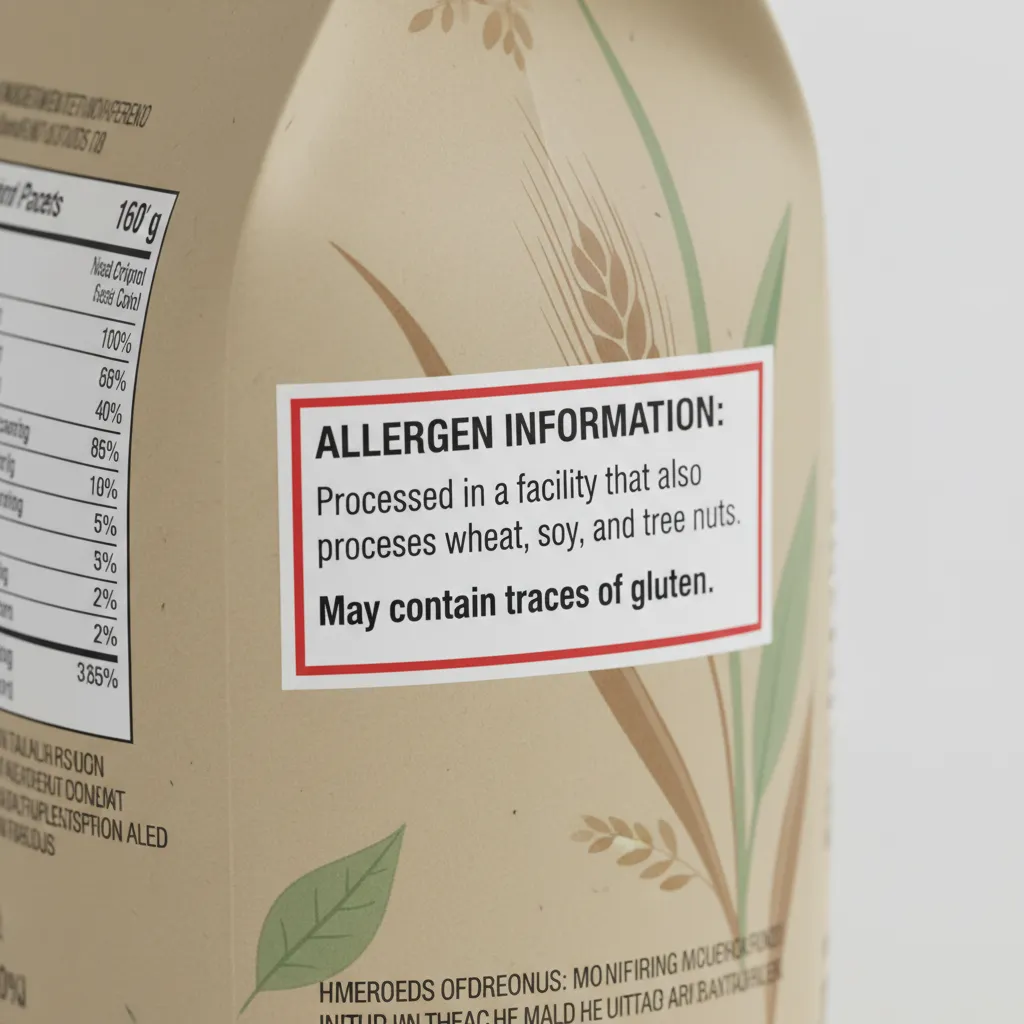
You have likely seen statements like “May contain traces of wheat” or “Processed in a facility that also handles wheat.” These are known as precautionary allergen labeling (PAL).
Are “May Contain” Products Safe?
It is important to understand that PAL statements are voluntary. A manufacturer is not required to warn you about shared equipment. Therefore, the absence of a “May contain” statement does not guarantee the product was made in a dedicated gluten-free facility.
However, if a product bears a “Gluten-Free” claim and a “May contain wheat” statement, the FDA requires that the product still meets the strict <20ppm standard. In this context, the warning usually implies that while wheat is present in the building, protocols are in place to prevent cross-contamination. Many strict Celiacs choose to avoid PAL products entirely to eliminate any risk of “hot spots” (where a small portion of the batch is contaminated), while others feel comfortable eating them if the product is certified.
Frequently Asked Questions
Is yeast gluten-free?
Baker’s yeast and nutritional yeast are generally gluten-free. However, Brewer’s yeast is a byproduct of beer making and contains gluten. Always check the type of yeast listed. Yeast extract can also be a hidden source of barley, so look for a gluten-free label on products containing yeast extract.
Does “Wheat-Free” mean “Gluten-Free”?
No. A product can be wheat-free but still contain spelt, rye, or barley. For example, 100% Rye Bread is wheat-free but definitely not gluten-free. Always look for the specific “Gluten-Free” label.
How do I read labels for alcohol?
Distilled spirits are generally gluten-free even if made from wheat, as the distillation process removes the protein. However, beers, lagers, and malt beverages are not gluten-free unless they are made from gluten-free grains (like sorghum) and labeled as such. “Gluten-removed” beers are controversial and not recommended for Celiacs.
Are oats gluten-free?
Oats are naturally gluten-free but are highly susceptible to cross-contamination in the field and processing plant. You must only consume oats that are specifically labeled “Gluten-Free” or “Certified Gluten-Free.” Regular commercial oats are unsafe.
What is the difference between “Gluten-Free” and “No Gluten Ingredients”?
“Gluten-Free” is a regulated term requiring <20ppm gluten content. “No Gluten Ingredients” is an unregulated claim. A product with “No Gluten Ingredients” might be processed on shared equipment with high risk of cross-contamination and has not been tested to meet the FDA standard.
Can I trust the “Contains” statement for gluten?
In the US, the “Contains” statement only covers Wheat. It does not cover Barley or Rye. Therefore, you cannot rely solely on the “Contains” statement to identify all gluten sources. You must read the full ingredient list.