Gluten free shopping in New Zealand supermarkets primarily involves navigating the three major chains: Woolworths (formerly Countdown), New World, and PAK’nSAVE. Most stores feature dedicated “Health” or “Free From” aisles for shelf-stable items like pasta and flour, while fresh gluten-free bread and chilled goods are often integrated into standard departments or located in specific freezer sections to prevent cross-contamination.
For those living with Coeliac disease or gluten intolerance, navigating the aisles of New Zealand’s grocery duopoly can be a daunting task. Whether you are a local resident adjusting to a new diagnosis or a traveler exploring the Land of the Long White Cloud, understanding the layout, product availability, and labeling laws is crucial for a safe and budget-friendly shop. This comprehensive guide breaks down exactly how to master gluten free shopping in New Zealand supermarkets.
Where are the Gluten Free Sections in NZ Supermarkets?
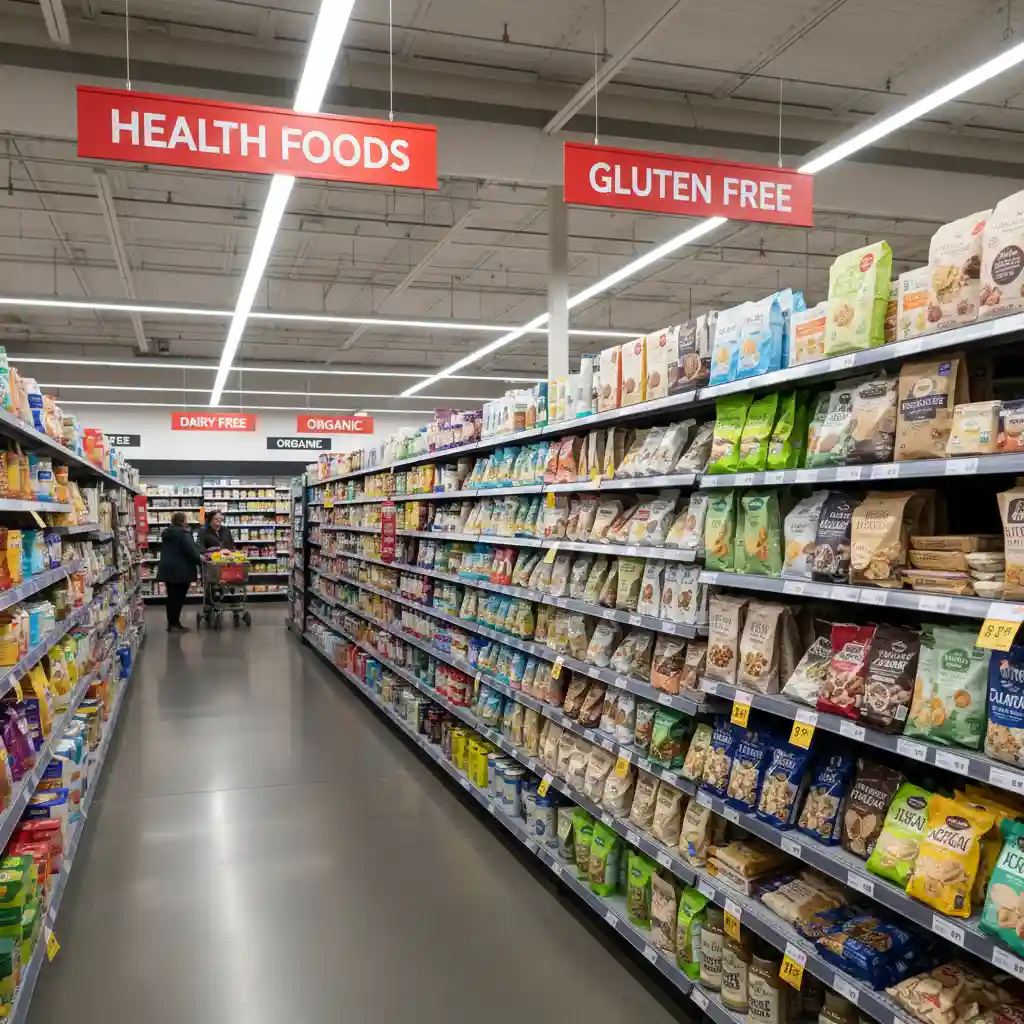
Finding safe food starts with knowing where to look. Unlike some international grocery stores where gluten-free items are fully integrated with their gluten-containing counterparts, New Zealand supermarkets generally adopt a hybrid approach. This means you will find a dedicated “Health Food” or “Free From” aisle for many dry goods, but you must visit other departments for fresh items.
Woolworths (Formerly Countdown)
Woolworths typically has the most standardized layout across the country. You will almost always find a dedicated “Health & Nutrition” aisle. Here, they stock their private label “Macro” range alongside international and local GF brands. However, do not stop there. Gluten-free bread is usually found in the main bakery aisle but on a separate shelf (often top shelf or distinct bay) to minimize crumb contamination. Frozen GF goods, including pies and pastry, have a dedicated section in the freezer aisle, often highlighted with purple ticketing.
New World
New World supermarkets are owner-operated, meaning the layout can vary significantly from town to town. Generally, they offer a premium selection of gluten-free goods. Look for the “Gluten Free” signage in the dry goods area. New World often excels in stocking artisan local brands like Venerdi or Rebel Bakehouse. Their deli sections may carry GF ham and salami, but always ask the staff to change gloves and clean the slicer, or opt for pre-packaged meats to ensure safety.
PAK’nSAVE
As the budget option, PAK’nSAVE focuses on bulk buying and lower margins. Their range is often smaller than New World or Woolworths, but the prices are significantly lower. The GF section is usually a small segment of the “Specialty” aisle. Be prepared to hunt harder here; items are often stacked in cut-off cardboard boxes on industrial shelving. Frozen gluten-free items are typically grouped together, but double-check the labels as stock placement can be less disciplined than in premium stores.
Which Store Brand Offers the Best Gluten Free Value?
Private label (store brand) products are the secret weapon for cost-effective gluten free shopping in New Zealand supermarkets. The price difference between branded goods and store brands can be upwards of 30%, making this a critical area for commercial investigation.
Woolworths’ Macro Range
Verdict: Best for Variety and Health.
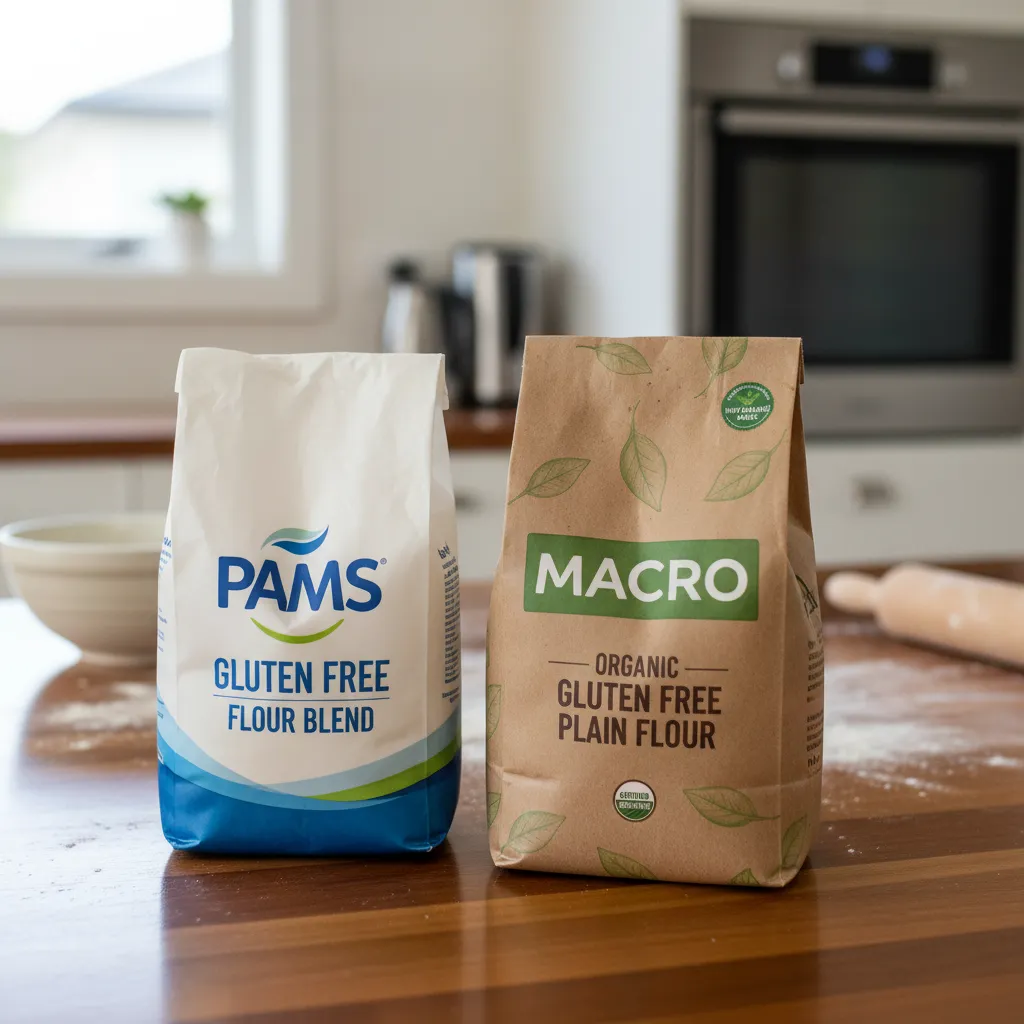
The Macro Wholefoods Market range is extensive. It is not just about being gluten-free; many of these products are also organic or lower in sugar. Their GF flour blends are reliable, and their snack range (chips, crackers) is excellent. The Macro GF pasta is decent, though it can be starchier than Italian corn-based brands. They also offer a wide range of GF sauces and marinades which are clearly labeled.
Foodstuffs’ Pams & Pams Finest
Verdict: Best for Budget Staples.
Found in New World and PAK’nSAVE, the Pams brand is iconic in NZ. Pams offers gluten-free pasta, baking mixes, and canned goods at very competitive prices. Their “Pams Finest” range occasionally features gourmet GF cookies or crackers that rival premium brands in taste but cost significantly less. However, always check the back of standard Pams products (like spices or sauces) carefully, as they are not exclusively a health brand and manufacturing lines may vary.
Value Range
Verdict: Use with Caution.
The Value brand (white packaging) is the lowest price tier. While some basic items like rice or canned beans are naturally gluten-free, this brand rarely certifies products as gluten-free due to the potential for cross-contamination in factories that process multiple grains. Unless it explicitly says “Gluten Free” on the packet, it is safer to stick to Pams or Macro.
Are Bulk Bins Safe for Coeliacs?
New Zealand has a strong culture of bulk food shopping, popularized by stores like Bin Inn and the bulk sections within New World and PAK’nSAVE. While this is an eco-friendly way to shop, it presents a massive risk for those requiring a strict gluten-free diet.
The Verdict: Avoid Standard Bulk Bins.
In a supermarket environment, scoops are frequently moved between bins by customers. A scoop used for wheat flour could easily be placed into the almond flour bin, rendering the “gluten-free” product unsafe. Furthermore, flour dust settles in the air and on surrounding containers.
The Safe Alternative:
Some specific bulk stores (like certain Bin Inn locations) are now introducing gravity-fed dispensers which reduce risk, or keeping gluten-free products in a completely separate area. However, for strict Coeliacs, the safest option is always sealed, pre-packaged goods. If you must buy bulk, look for stores that pre-pack bulk items into sealed bags themselves in a controlled environment, rather than allowing customers to dispense product.
Price Comparison for Staples: What Will You Pay?
Living gluten-free in New Zealand carries a “Coeliac Tax.” Understanding the baseline prices for staples helps you identify a good deal when you see one. Below is a commercial investigation into average pricing across the major supermarkets (prices are estimates in NZD and subject to fluctuation).
Gluten Free Bread (Loaf)
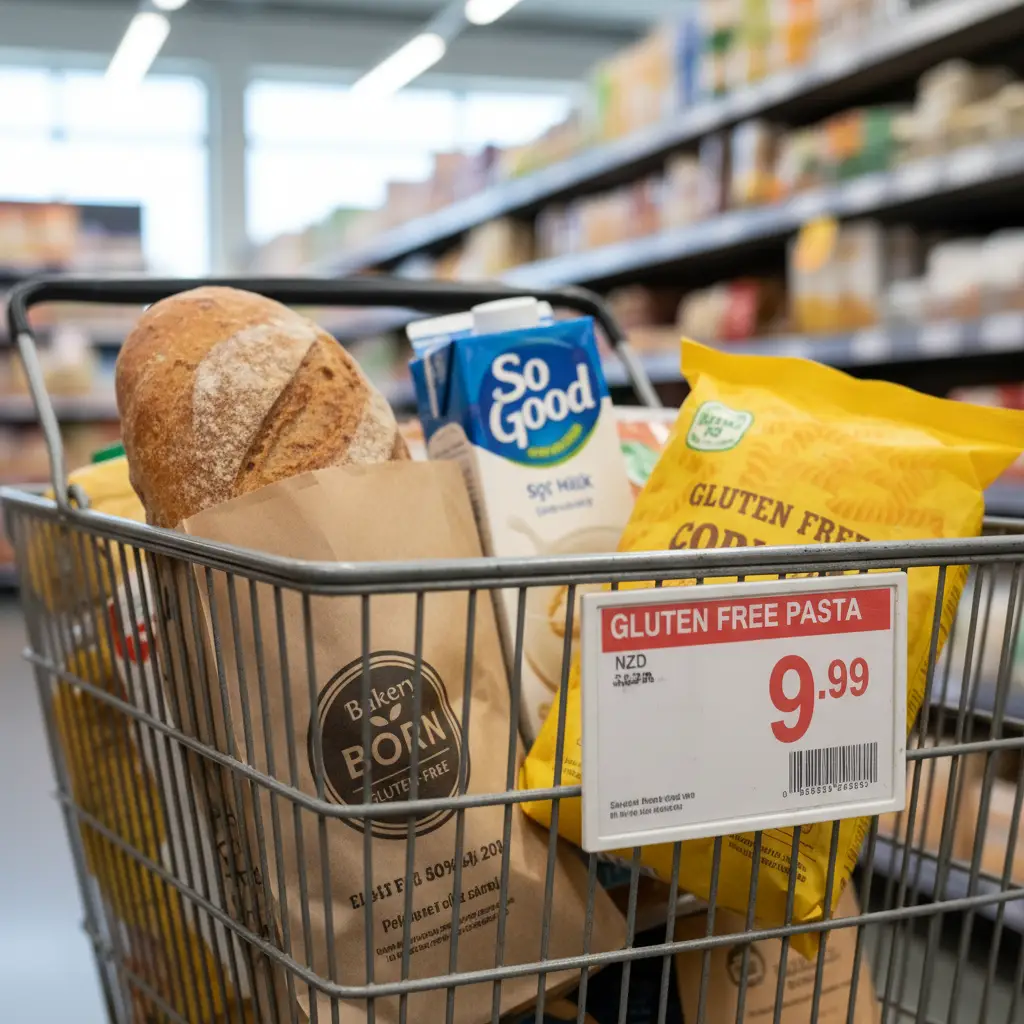
- Average Price: $7.50 – $9.00
- Top Brands: Vogel’s (very popular, dense), Venerdi (Paleo options, expensive but high quality), Bakels (often cheaper).
- Budget Tip: Woolworths and New World often mark down bread nearing its best-before date. GF bread freezes exceptionally well, so buy discounted loaves and freeze them immediately.
Gluten Free Pasta (500g)
- Average Price: $3.00 – $5.50
- Top Brands: San Remo (widely available, good texture), Barilla (excellent, often more expensive), Store Brands (Pams/Macro – cheapest).
- Budget Tip: San Remo GF pasta frequently goes on sale for under $3.00. Stock up during these weeks.
Gluten Free Flour (Baking Blend)
- Average Price: $5.00 – $7.00 per kg
- Top Brands: Edmonds (trusted heritage brand), Bakels, Macro.
- Budget Tip: Edmonds standard GF flour is arguably the most versatile for the price point and is available in almost every supermarket.
How to Read Gluten Free Labels in New Zealand?
New Zealand (along with Australia) has the strictest labeling standards in the world regarding gluten. This is a massive advantage for shoppers.
The FSANZ Code
Under Food Standards Australia New Zealand (FSANZ), for a product to be labeled “Gluten Free,” it must contain no detectable gluten. This is stricter than the US or UK standard of 20 parts per million (ppm). If a product in NZ says “Gluten Free,” it is incredibly safe.
The Crossed Grain Logo
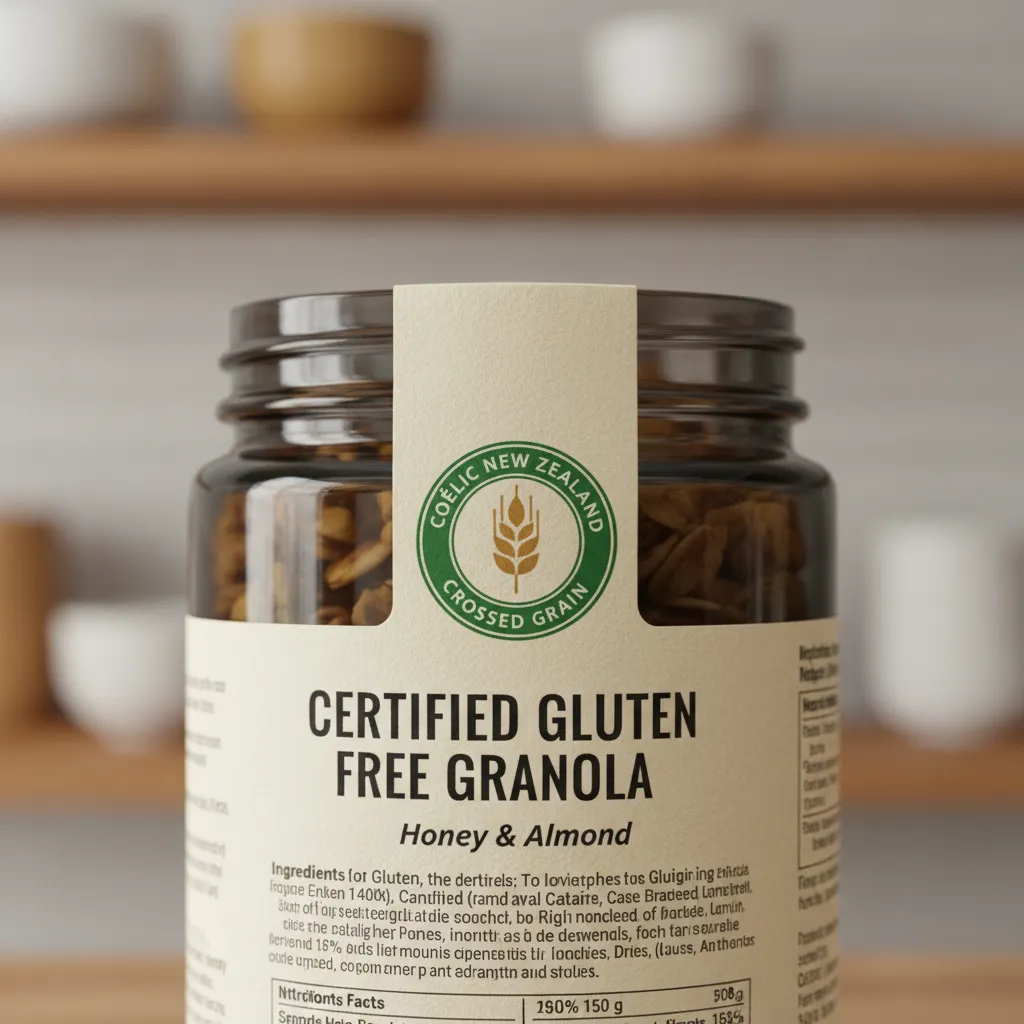
Look for the Coeliac New Zealand Crossed Grain Logo. This is an endorsement that the product is not only tested but the manufacturing process has been audited. While products without the logo can still be safe (if they meet the FSANZ definition), the logo provides an extra layer of assurance.
Warning Statements
Watch out for “May contain traces of gluten” or “Packed on equipment that also processes wheat.” In New Zealand, allergen declaration is mandatory. If wheat, rye, barley, or oats are present as an ingredient, they must be declared in bold on the ingredients list.
Essential Tips for International Travelers
If you are visiting New Zealand, the supermarket landscape might surprise you. Here are three critical tips for tourists:
- Oats are NOT Gluten Free here: In NZ and Australia, oats are not considered gluten-free due to the high risk of contamination and the protein avenin, which mimics gluten. You will not find “Gluten Free Oats” labeled as such in supermarkets. You may find “Wheat Free Oats,” but Coeliac NZ recommends avoiding oats unless you have undergone an oat challenge under medical supervision.
- Shop Seasonally: Fresh produce prices fluctuate wildly. Buying out-of-season fruit can destroy your budget. Stick to seasonal produce to save money for expensive GF substitutes.
- Loyalty Cards: Sign up for a “Onecard” (Woolworths) or “Clubcard” (New World) immediately. Tourists can usually get a temporary card or register online. The shelf price for members is often significantly lower than for non-members.
People Also Ask
What is the cheapest supermarket for gluten free food in NZ?
PAK’nSAVE is generally the cheapest supermarket for gluten free staples due to their low-margin warehouse model. However, their range of specialty gluten free items is smaller compared to New World or Woolworths.
Is Vogel’s gluten free bread safe for Coeliacs?
Yes, Vogel’s produces a specific Gluten Free range that is made in a separate environment to ensure safety. It is one of the most popular GF bread brands in New Zealand, known for its ability to hold together well for sandwiches.
Can I trust ‘may contain traces’ warnings in NZ?
Yes, you should take them seriously. New Zealand labeling laws are strict. If a product states it may contain traces of gluten, there is a genuine risk of cross-contamination during the manufacturing process, and it is not suitable for Coeliacs.
Are oats gluten free in New Zealand?
No. Under Australia and New Zealand food standards, oats cannot be labeled as gluten free. Even pure oats contain a protein called avenin which reacts similarly to gluten in about 20% of Coeliacs. Consequently, products containing oats are not labeled gluten free.
What is the ‘Coeliac Tax’ in New Zealand?
The ‘Coeliac Tax’ refers to the price disparity between standard goods and gluten free alternatives. In New Zealand, gluten free items can cost anywhere from 20% to 500% more than their wheat-based counterparts, particularly for bread, pasta, and crackers.
Where can I buy gluten free pies in New Zealand?
Gluten free pies are widely available in the freezer section of Woolworths and New World supermarkets. Brands like I Love Pies, Maketu Pies, and specific store-brand options offer certified gluten free meat and vegetarian pies.