Reading food labels for gluten in New Zealand requires checking the ingredients list for mandatory allergen declarations required by FSANZ. Any ingredient derived from wheat, rye, barley, or oats must be explicitly declared on the label. Look for the “Gluten Free” claim, which strictly signifies no detectable gluten, or the Coeliac New Zealand Crossed Grain logo for guaranteed safety.
Understanding FSANZ Standards: The Gold Standard
When it comes to reading food labels gluten free NZ, consumers are protected by some of the strictest food safety standards in the world. Food Standards Australia New Zealand (FSANZ) governs the Code that dictates how allergens must be presented on packaging. Unlike some international jurisdictions where labelling laws can be ambiguous, the rules in New Zealand and Australia are designed to be explicitly clear for those with Coeliac disease.
Under Standard 1.2.3 of the Food Standards Code, the presence of specific allergens must be declared. This includes the four gluten-containing cereals: wheat, rye, barley, and oats. If a product contains any of these cereals, or ingredients derived from them, they must be listed on the label, regardless of the amount present.
The Definition of “Gluten Free” in NZ
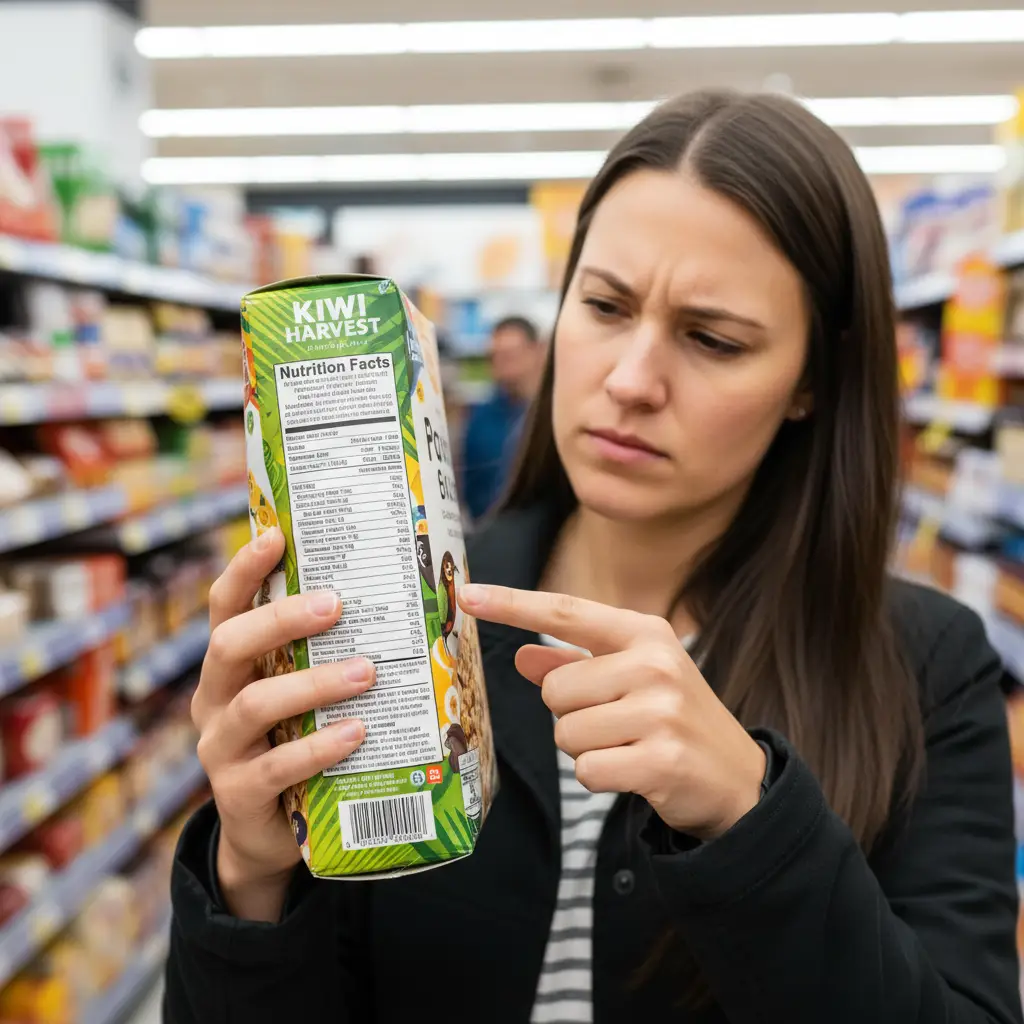
One of the most critical distinctions for New Zealand consumers is the definition of the term “Gluten Free.” In many parts of the world, such as the UK, USA, and Europe, a product can be labelled gluten-free if it contains less than 20 parts per million (ppm) of gluten. However, in New Zealand and Australia, the standard is significantly stricter.
To carry a “Gluten Free” claim in NZ, a product must contain no detectable gluten. This implies strict testing protocols where the result must be nil. Consequently, a product that is considered gluten-free in Europe might not meet the criteria for a gluten-free label in New Zealand if it contains trace amounts of gluten, even if those amounts are below 20ppm. This distinction is vital for those with high sensitivity to gluten.
Decoding the Ingredients List: What to Look For
The ingredients list is your primary source of truth. While front-of-pack marketing claims like “Made with Natural Ingredients” or “Healthy Choice” can be distracting, the back of the pack tells the real story. When scanning the ingredients list, you are looking for specific keywords.
Manufacturers are required to declare allergens using their common names. This means you won’t just see a chemical number; you should see the word “Wheat” or “Barley” in parentheses or bold text if it is the source of an ingredient. For example, a thickener might be listed as Thickener (1400). If that thickener is derived from wheat, the label must state Thickener (Wheat) or Thickener (1400 from Wheat).
The Bold Text Convention
While not legally mandatory in every single instance historically, most reputable manufacturers in New Zealand now use bold text to highlight allergens in the ingredients list (e.g., Wheat flour, Milk solids). This voluntary industry standard helps consumers identify risks quickly. However, you should not rely solely on bold text; always read the full list to ensure no gluten sources are hidden in plain text.
Identifying Barley Malt, Wheat Glucose Syrup, and Additives
Navigating food additives and derivatives is often the most confusing part of reading food labels gluten free NZ. Many ingredients sound like they contain gluten but are actually safe, while others are hidden dangers.
Wheat Glucose Syrup: Surprisingly Safe
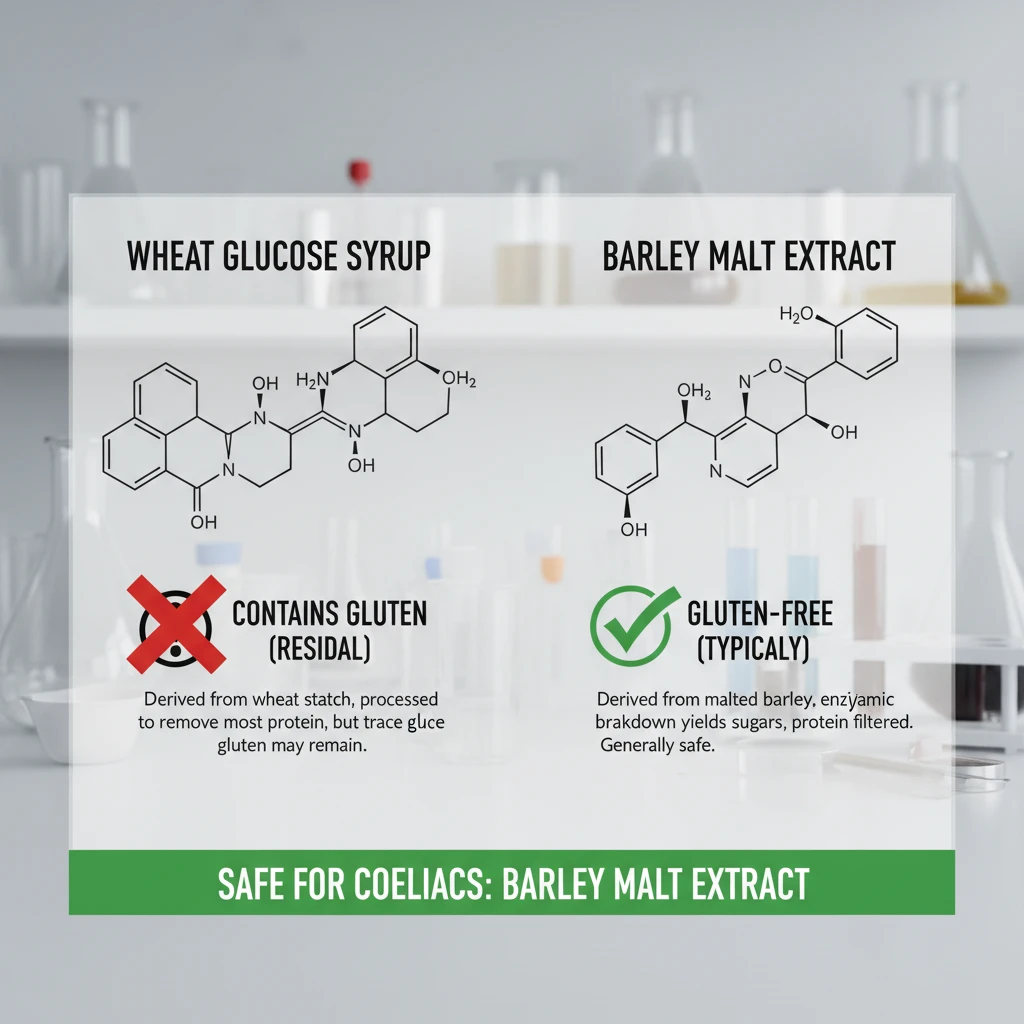
A common source of anxiety is seeing “Glucose Syrup (from Wheat)” on a label. Surprisingly, this is generally considered safe for people with Coeliac disease. The processing of glucose syrup involves a high level of hydrolysis and purification, which effectively removes the gluten protein from the wheat source. The end product is a sugar, not a protein.
According to Coeliac New Zealand and FSANZ, glucose syrup derived from wheat is so highly processed that the gluten content is negligible or non-existent. Therefore, strict gluten-free diets usually allow for wheat glucose syrup and wheat dextrose, provided the product does not have other gluten sources.
Barley Malt Extract: The Hidden Enemy
Conversely, Barley Malt Extract is a definite “avoid.” Unlike glucose syrup, malt extract is not highly processed to remove proteins; it is a flavouring agent derived directly from barley. It contains gluten and is commonly found in cereals, chocolates, and even some frozen desserts.
If you see “Malt Extract” listed without a grain source specified, you must assume it is barley unless the product is certified gluten-free. In New Zealand, if it is derived from barley, the label should declare “Barley.” This is a frequent culprit in products like cornflakes, which are naturally gluten-free as a grain but become unsafe due to the malt flavouring.
Caramel Colour (150)
Caramel colour is another ingredient that causes confusion. In New Zealand and Australia, caramel colour is almost exclusively derived from corn or sugar cane. Even if derived from wheat, the processing is similar to glucose syrup, rendering it gluten-free. Unless the label explicitly states “Caramel Colour (Wheat)” and the product does not claim to be gluten-free, it is generally considered safe.
The ‘May Contain’ Warning Explained
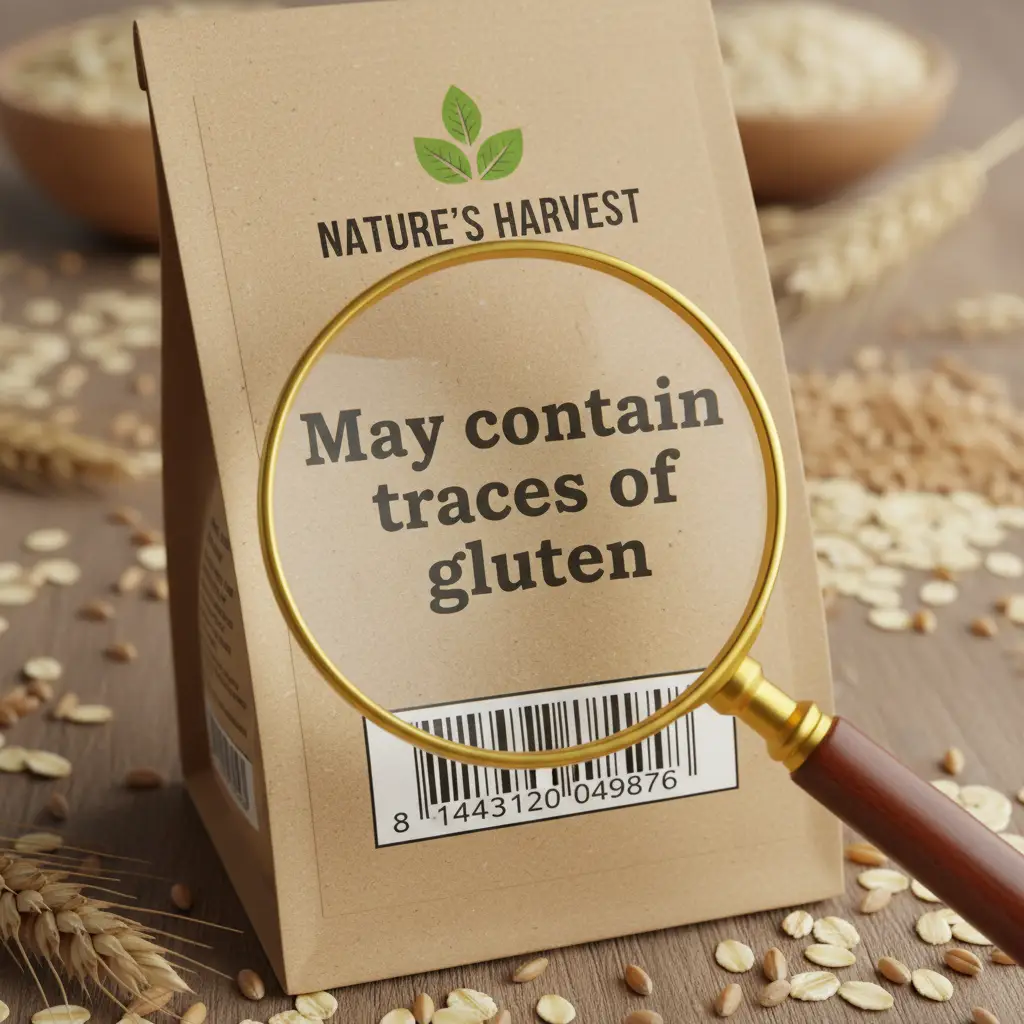
Precautionary Allergen Labelling (PAL), commonly known as “May Contain” statements, represents a grey area in food labelling. Phrases like “May contain traces of gluten” or “Processed on equipment that also processes wheat” are voluntary statements used by manufacturers to warn of potential cross-contamination risks.
Are These Warnings Mandatory?
No, PAL statements are not mandatory. This means a product without a “May contain” warning is not automatically risk-free, although the absence of such a warning usually implies the manufacturer is confident in their segregation processes. However, if a product does have this warning, Coeliac New Zealand advises that these products should be avoided.
The risk level can vary wildly. One factory might use the warning because they bake wheat bread in the same room; another might use it because a raw ingredient supplier couldn’t guarantee 100% purity. Because you cannot assess the risk level from the supermarket aisle, the safest approach for a diagnosed Coeliac is to treat “May contain” as “Does contain.”
The Coeliac NZ Crossed Grain Logo
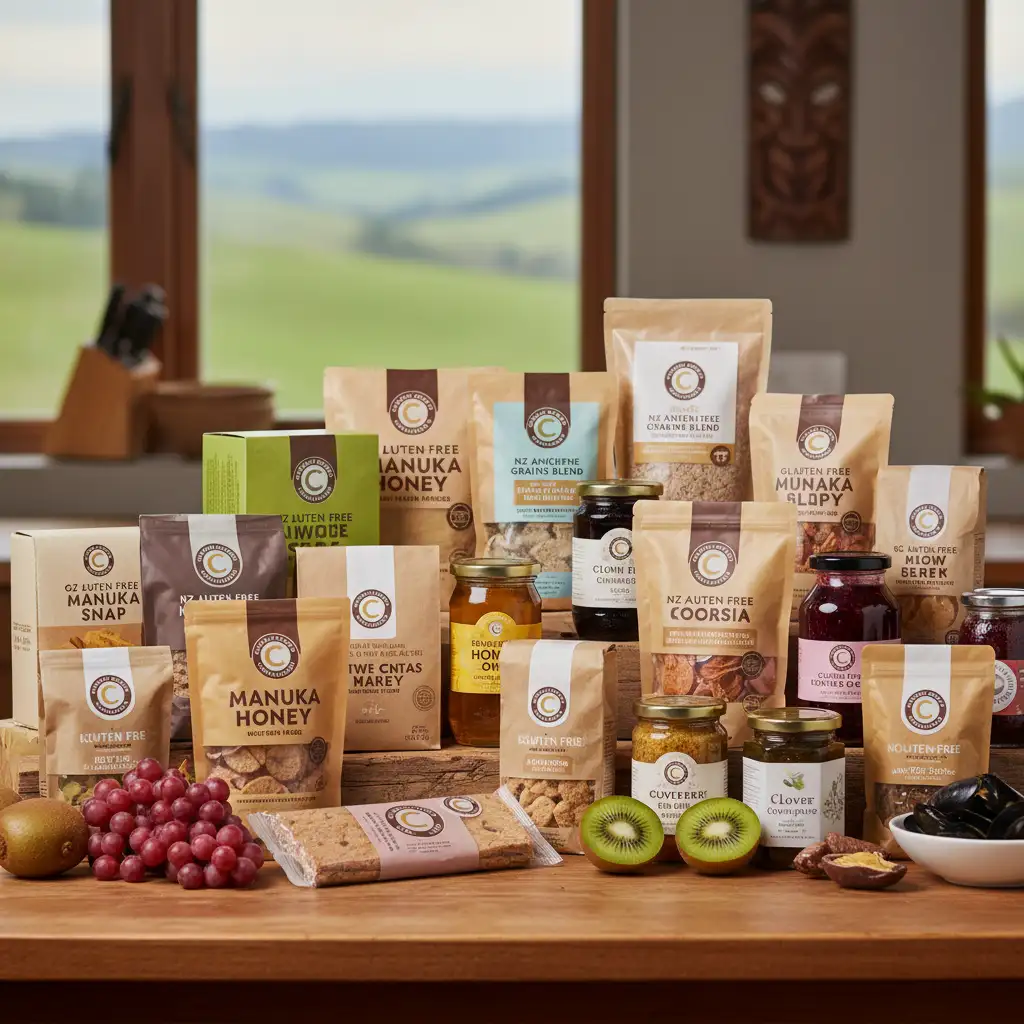
The most reliable shortcut when reading food labels gluten free NZ is the Crossed Grain Logo. This symbol is an internationally recognised trademark used by Coeliac New Zealand to endorse products that are safe.
Products displaying this logo have been tested to be gluten-free (no detectable gluten) and are subject to regular auditing. The manufacturer pays a licensing fee and agrees to strict manufacturing protocols.
Why Trust the Logo?
- Independent Verification: It removes the guesswork. You don’t need to decipher complex chemical names.
- Audit Trails: Manufacturers are held accountable for their supply chains.
- No Detectable Gluten: It aligns with the strict FSANZ standard of no detectable gluten, offering higher security than the international 20ppm standard.
Imported Food Label Risks
New Zealand imports a significant amount of food from the UK, USA, and Asia. While importers are legally required to ensure their labelling complies with FSANZ standards, errors can happen, or stickers can fall off.
The “Gluten Free” Discrepancy
A major risk involves products imported from Europe or the USA labelled “Gluten Free.” In those regions, “Gluten Free” allows for up to 20ppm of gluten. This means a product containing Codex Wheat Starch (wheat starch with gluten removed to a low level) might be labelled Gluten Free in the UK. In New Zealand, unless that product has been re-tested to show no detectable gluten, it technically should not carry the Gluten Free label under local laws.
However, you may find imported goods in specialty shops or international aisles that retain their original packaging. Always check the ingredients list on imported goods. If you see “Wheat Starch” on a product from Europe labelled Gluten Free, proceed with extreme caution or avoid it unless you are comfortable with the 20ppm limit (consult your dietitian or GP regarding your personal tolerance levels).
Furthermore, allergen declaration laws differ abroad. In the US, for example, barley and rye are not considered “major allergens” in the same way wheat is, and might be hidden under “natural flavourings.” In NZ, barley must be declared. When buying parallel imported goods (goods brought in outside standard distribution channels), be extra vigilant.
Common Pitfalls and Hidden Gluten
Even seasoned label readers can be caught out by formulation changes. Here are common pitfalls to watch for:
- Sauces and Marinades: Soy sauce is the classic example, often containing wheat. Tamari is the safe alternative, but always check the label.
- Stock Cubes: Many powdered stocks use wheat flour as a free-flowing agent.
- Processed Meats: Sausages and burger patties often use wheat-based rusk or breadcrumbs as fillers. Always look for the GF label on sausages.
- Confectionery: While chocolate is often safe, wafer inclusions or barley malt flavouring in fillings can be dangerous.
- Oats: In New Zealand, oats are not considered gluten-free due to the high risk of cross-contamination during growing and processing, and because a protein in oats (avenin) mimics gluten for some coeliacs. Even “wheat-free” oats are generally not suitable for a strict gluten-free diet in NZ unless specifically advised by a specialist.
People Also Ask
What is the difference between “Gluten Free” and “Low Gluten” in NZ?
In New Zealand, “Gluten Free” means the product contains no detectable gluten. “Low Gluten” indicates the product contains less than 200ppm of gluten (approx 20mg per 100g). “Low Gluten” products are generally not suitable for people with Coeliac disease but may be acceptable for those on a gluten-reduction diet.
Is yeast extract gluten free in NZ?
Yeast extract can be derived from brewer’s yeast (a by-product of beer brewing, which involves barley) or baker’s yeast. If it is derived from barley, it must be declared on the label in NZ (e.g., “Yeast Extract (Barley)”). If the source is not declared, it is usually safe, but sticking to certified GF products is safer for sensitive individuals.
Do I need to worry about numbers like 1400 or 1422?
These are thickeners/starches. If they are derived from wheat, the label must state “Wheat” (e.g., “Thickener (1422 from Wheat)”). If the label just says “Thickener (1422)” without mentioning wheat, it is derived from a gluten-free source like maize, tapioca, or potato.
Can I eat oats if I have Coeliac disease in New Zealand?
Generally, no. Under FSANZ code, a product containing oats cannot be labelled “Gluten Free.” This is because oats contain avenin and are highly prone to wheat contamination. Coeliac NZ recommends avoiding oats unless you are doing an “Oat Challenge” under medical supervision.
Is Spelt gluten free?
No, Spelt is an ancient strain of wheat. It contains gluten and is not safe for people with Coeliac disease, despite some health myths suggesting it is easier to digest.
What if a product has no ingredients list?
Some fresh foods (like fruit, vegetables, or fresh meat) or very small packages may not have full ingredients lists. However, if the food is unpackaged or made on-site (like at a bakery deli), the seller must still be able to provide allergen information upon request. If they cannot confirm it is gluten-free, do not eat it.