
Setting up a gluten-free kitchen involves a systematic process of deep cleaning, replacing porous cookware like wooden spoons and scratched non-stick pans, and establishing strict cross-contact protocols. Whether creating a fully dedicated space or a shared environment, success relies on clear labeling, color-coded tools, and organized pantry zoning to ensure safety for those with Celiac disease.
Receiving a diagnosis of Celiac disease or Non-Celiac Gluten Sensitivity (NCGS) is often a moment of mixed emotions: relief at finding an answer to chronic health issues, followed immediately by the overwhelming realization that your lifestyle must change. The kitchen, once a place of comfort, can suddenly feel like a minefield. However, transforming your cooking space into a safe haven is the single most impactful step you can take toward healing your gut and reclaiming your health.
Dedicated vs. Shared Kitchens: Making the Choice
Before you begin scrubbing shelves or tossing out flour, you must decide on the fundamental structure of your kitchen. This decision usually hinges on household composition. If everyone in the home is willing to go gluten-free, a dedicated kitchen is the “gold standard” for safety. However, in families where only one member has Celiac disease, a shared kitchen is often the reality.
The Dedicated Gluten-Free Kitchen
In a 100% gluten-free kitchen, no gluten-containing ingredients are allowed to enter the home. This eliminates the risk of airborne flour dust and cross-contact from shared surfaces. This is the safest option and significantly reduces the mental load of cooking, as you never have to wonder if a counter was wiped down properly.
The Shared Kitchen: Managing the Risk
If a dedicated kitchen isn’t feasible, you must implement a rigorous “Shared but Safe” protocol. This requires distinct zoning and unwavering rules. The key to a shared kitchen is not just cleanliness, but separation.
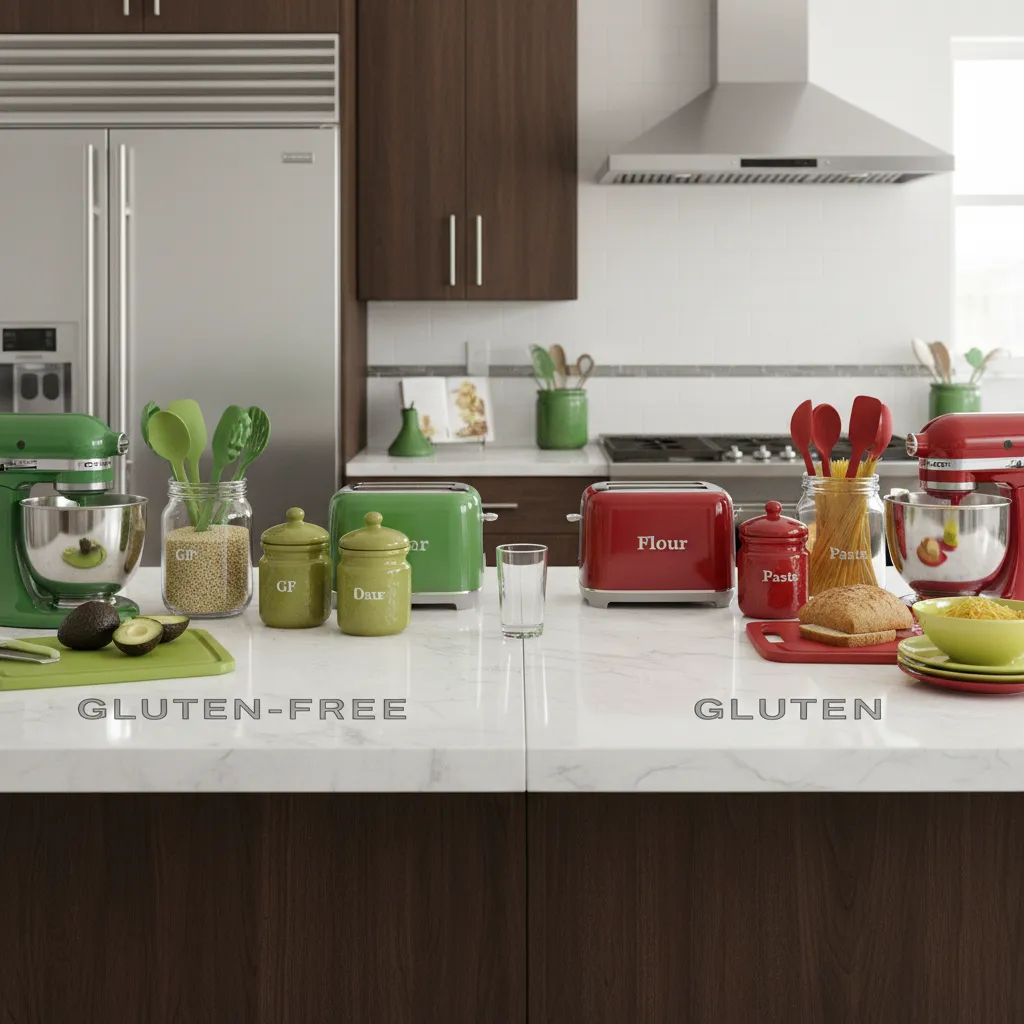
- The Golden Rule of Zoning: Establish a dedicated area that is always gluten-free. This should include a specific prep counter and a specific cabinet. Gluten can enter the gluten-free zone (by accident), but gluten-free items should never travel into the gluten zone and back again.
- Color Coding: Visual cues are essential for preventing mistakes. Adopt a color system—for example, green for gluten-free and red for gluten. Apply this to cutting boards, sponges, colanders, and toaster ovens.
- No Flour Rule: Even in a shared kitchen, loose wheat flour should be banned. Flour dust can linger in the air for up to 24 hours and settle on clean surfaces. If family members must eat gluten, stick to pre-made breads or pasta that do not generate dust.
Decontaminating Your Space: The Deep Clean
Once you have established your zones, the next phase is decontamination. Gluten is a sticky protein, not a bacteria; you cannot “kill” it with bleach. It must be physically removed through friction and washing. Setting up a gluten-free kitchen requires a level of cleaning that goes beyond standard hygiene.
The Initial Scrub-Down
Start at the top of your kitchen and work your way down. Dust settles, and you do not want to clean your counters only to knock gluten dust onto them from the top of the cupboards later.
- Cabinet Interiors: Vacuum the corners of every drawer and cabinet. Crumbs accumulate in the back corners. Follow this with a warm, soapy wash.
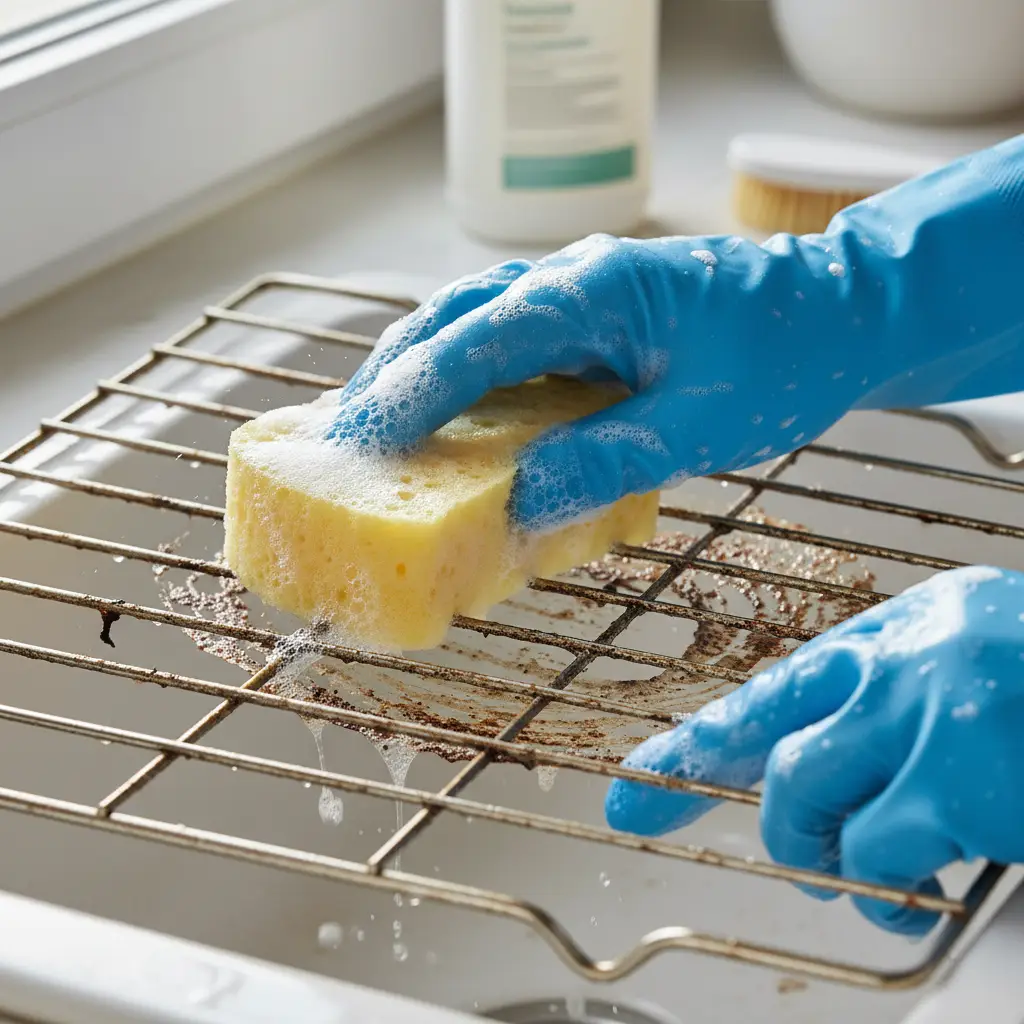
- Oven and Microwave: If you have a self-cleaning oven, run the cycle. If not, you must scrub the racks and the interior walls meticulously. For the microwave, clean the ceiling of the unit—splatters often go unnoticed there and can drip into fresh food.
- Refrigerator Seals: The rubber gaskets on refrigerator doors are magnets for crumbs. Use a toothbrush to scrub inside the folds of the seal.
- Silverware Drawers: Empty the drawer completely. Often, crumbs fall through the organizer tray and settle in the drawer itself. Wash the tray and the drawer interior.
Essential Equipment: What to Keep and What to Replace
One of the most expensive but necessary parts of setting up a gluten-free kitchen is replacing cookware. Not all materials can be effectively cleaned of gluten. Porous materials trap microscopic gluten particles in scratches and fissures, releasing them later into hot food.
Items You MUST Replace
Do not attempt to clean these items. If they have been used with gluten, they are no longer safe for a Celiac patient.
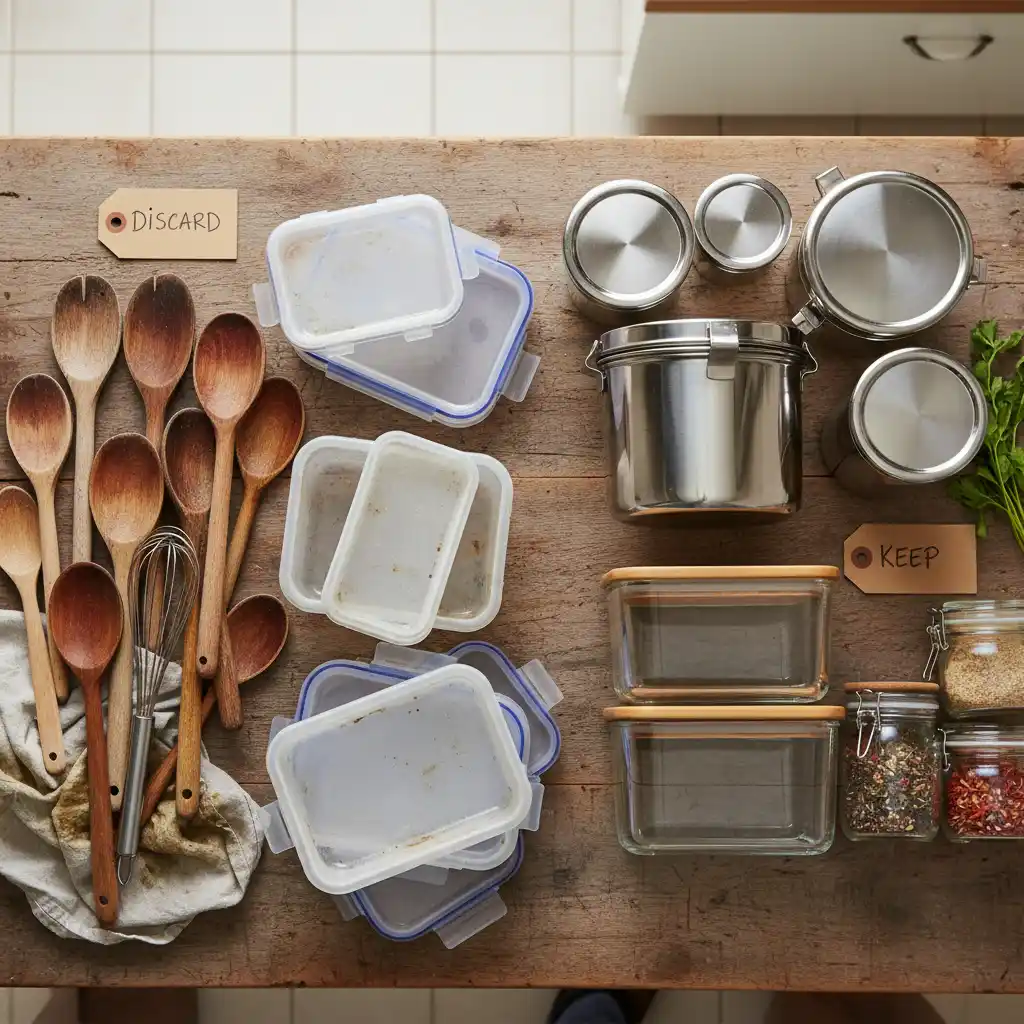
- Wooden Items: Cutting boards, spoons, rolling pins, and salad bowls. Wood is porous and absorbs gluten juices and oils.
- Non-Stick Cookware: If your Teflon or non-stick pans have even a single scratch, they must go. Gluten protein binds to the exposed metal and the coating edges.
- Cast Iron: Unless you are willing to completely strip the seasoning down to bare metal and re-season from scratch, used cast iron is unsafe.
- Plastic Containers: Old Tupperware with scratches, stains, or bite marks cannot be fully decontaminated.
- Colanders and Sieves: The mesh in strainers is impossible to clean perfectly. Dough and pasta water leave residue in the crevices that the dishwasher cannot reach.
- Toasters: You cannot clean the heating elements of a toaster. You must buy a new toaster and label it strictly gluten-free.
Items That Are Safe to Keep (After Scrubbing)
Non-porous materials are generally safe to keep, provided they are scrubbed thoroughly with steel wool or a heavy-duty scouring pad to remove all residue.
- Stainless Steel: Pots, pans, and cutlery.
- Glass and Pyrex: Baking dishes, mixing bowls, and lids (check the plastic seals on lids carefully).
- Ceramics: Plates and bowls, provided there are no cracks or crazing in the glaze.
- Solid Metal Utensils: Spatulas and ladles made of single-piece metal.
Pantry Organization and Storage Protocols
Organizing your pantry is your first line of defense against accidental cross-contact. In a shared kitchen, the layout of your food storage is critical. The goal is to prevent gravity and confusion from compromising your safety.
The Gravity Rule
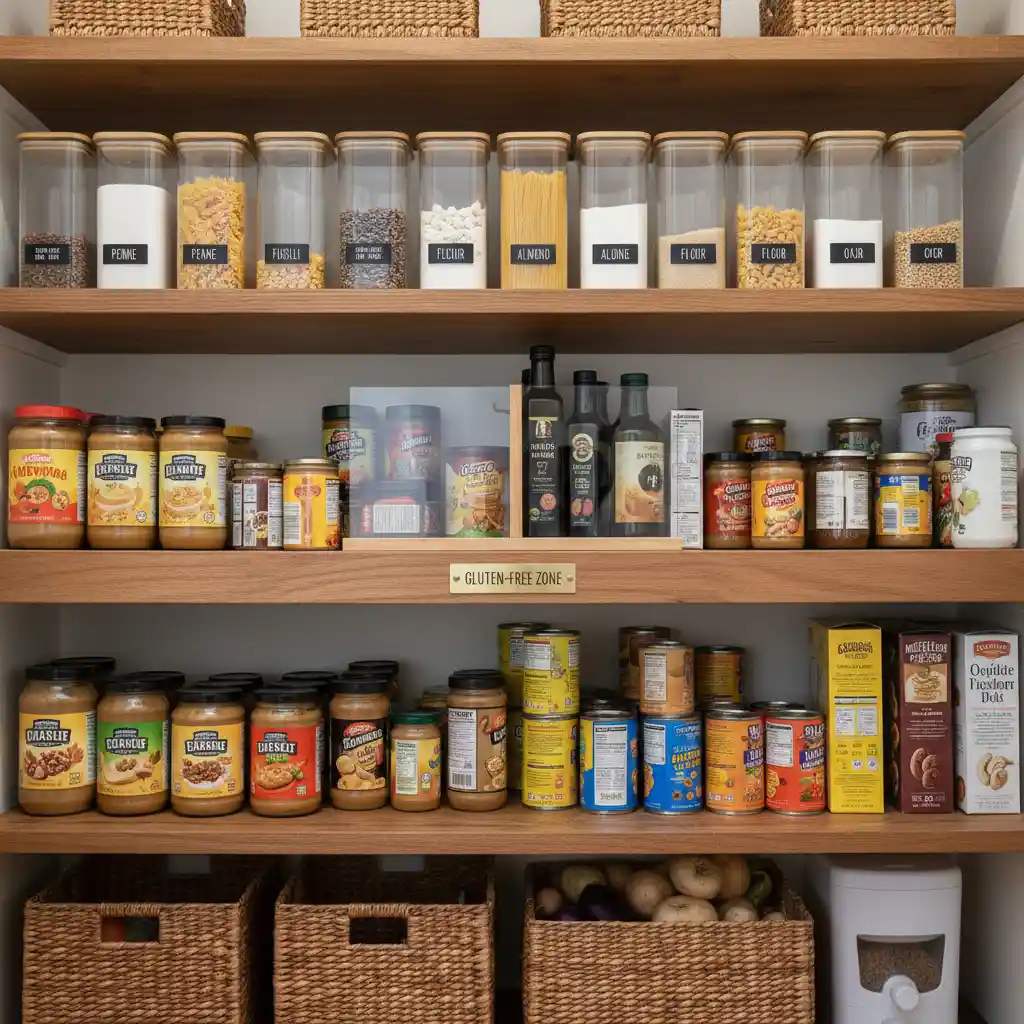
Always store gluten-free items on the top shelves and gluten-containing items on the bottom shelves. This ensures that if a bag of wheat flour spills or crumbs fall from a cracker box, they fall onto the floor or other gluten items, not into your safe food. Never reverse this order.
Container Strategy
Flour bags leak. Sugar bags leak. To maintain a safe environment, decant your gluten-free flours, grains, and pastas into airtight, hard plastic or glass containers. This protects the food from airborne cross-contact and makes it easier to label.
Labeling Systems
Do not rely on memory. Use bright, bold stickers to label everything. In a shared household, it is often more effective to label the “Gluten” items with a warning sticker (e.g., a red dot) rather than just labeling the GF items. This signals to everyone: “Wash your hands after touching this.”
Maintenance and Ongoing Safety Habits
Setting up the kitchen is a one-time project, but keeping it safe is a daily practice. Behavioral changes are just as important as physical changes.
The “No Double-Dipping” Decree
The fastest way to contaminate a safe kitchen is through condiments. If a knife touches wheat toast and then goes back into the jar of peanut butter, that entire jar is now unsafe. To solve this:
- Squeeze Bottles: Switch to squeeze bottles for mayonnaise, mustard, and ketchup. This physically prevents knife contact.
- Dedicated Jars: If you must use a jar (like for jam), buy two. Label one “GF ONLY” and the other with a name or color code.
Dishwashing Protocols
Can gluten-free and gluten dishes be washed together? In a dishwasher, generally yes. The high heat and water pressure are sufficient to remove gluten, provided the dishes are spaced correctly and the filter is cleaned regularly. However, for hand washing:
- Sponges: Sponges are notoriously difficult to clean. In a shared kitchen, use separate sponges. A simple way to manage this is to cut the corner off the gluten-free sponge so it is tactilely different.
- Dish Towels: Use separate towels for drying hands and drying dishes. Better yet, air dry your gluten-free dishes to avoid contamination from a towel that may have wiped up crumbs.
People Also Ask
Do I really need to buy a new toaster for a gluten-free kitchen?
Yes, absolutely. Toasters are impossible to clean internally. The heating coils and trays retain crumbs from wheat bread that can adhere to your gluten-free bread during toasting. A dedicated gluten-free toaster is a mandatory investment for safety.
Can I use the same dishwasher for gluten and gluten-free items?
Yes, you can usually use the same dishwasher. Ensure that plates are rinsed of large debris before loading. The combination of detergent, hot water, and agitation is sufficient to remove gluten. However, always check the dishwasher filter at the bottom regularly to ensure it isn’t clogged with glutenous pasta or residue.
Is it safe to use a convection oven in a shared kitchen?
Convection ovens circulate air using a fan. If you are cooking gluten-free food at the same time as gluten-containing food, there is a risk of airborne flour or crumbs being blown onto the safe food. It is safer to cook gluten-free items separately or to cover them tightly with foil if using the convection setting.
How do I clean my oven racks from gluten?
To clean oven racks, remove them and soak them in hot, soapy water. Use a steel wool pad to scrub away all baked-on grease and carbon buildup. Gluten protein can be trapped in this residue. If the racks are heavily soiled and cannot be cleaned, consider buying replacement racks.
Can I keep my wooden cutting board if I sand it down?
It is not recommended. While sanding removes the top layer, deep knife cuts can harbor microscopic gluten particles deep within the wood grain. Given the low cost of cutting boards relative to the health risk, it is safer to replace wooden boards with non-porous plastic or composite boards designated for gluten-free use.
What is the best way to sponge wash dishes in a shared kitchen?
In a shared kitchen, never use the “community sponge” for gluten-free cookware. Gluten is sticky and gets trapped in the sponge fibers. Keep a separate, colored sponge solely for gluten-free items, or use a dish brush which is easier to rinse clean and holds fewer particles than a sponge.